
A catalogue listing does not prove that the required lacquer is in stock, suitable for your substrate or available with both components of a 2K system. By checking batch status, formulation, application limits, test evidence and delivery conditions, you can compare Pune suppliers before approving a trial or repeat order.
Key takeaways
- Request batch number, available quantity, dispatch point, and written stock confirmation.
- Match the PU lacquer system and pack size to your process and production volume.
- Control substrate preparation, mixing, viscosity, temperature, and film thickness during application.
- Run trials and review test results before approving repeat supply from a Pune supplier.
How to confirm real PU clear lacquer stock in Pune
A catalogue entry does not prove p u clear lacquer availability in pune. Treat a Pune supplier’s listing as available stock only after the supplier confirms a specific batch, quantity and dispatch point in writing.
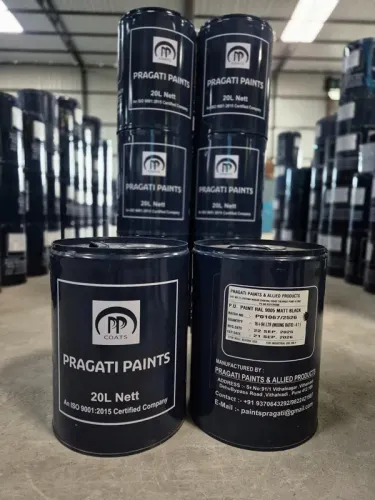
1. Ask for the current batch number, manufacturing date, expiry date and remaining shelf life. Request a photograph of the label if the material is ready for collection. A listing without batch evidence may describe a regular product rather than stock on hand.
2. Confirm the exact system: 1K moisture-curing PU, 1K PU-modified lacquer or 2K polyurethane. For 2K material, verify that the resin and isocyanate hardener are both available, with the stated mixing ratio and matching batch details. Do not accept “PU clear” as a sufficient identification.
3. Record the pack sizes, minimum order quantity and quantity available in each pack. Ask whether standard gloss, low-VOC, non-yellowing or custom-pack versions are held locally or brought from another warehouse.
4. Separate “stock in Pune” from “available for delivery to Pune.” Ask for the dispatch location, collection option and lead time to Bhosari, Pimpri-Chinchwad, Chakan, Talegaon or Ranjangaon. Distance matters when shelf life and controlled transport affect a 2K product.
5. Obtain the product data sheet and safety data sheet before approval. Check storage temperature, transport conditions, flammable-solvent controls and isocyanate precautions, then ask how the supplier supports repeat orders. A p u clear lacquer supplier near pune should confirm these details rather than offer only a catalogue photograph.
Which PU lacquer system and pack configuration are you buying?
A quotation saying “PU clear” is incomplete. Ask whether it is 1K moisture-curing PU, 1K air-drying PU-modified lacquer, or 2K polyurethane with separate resin and isocyanate hardener; these systems do not share mixing, curing or storage requirements.
| Check | 1K system | 2K system |
|---|---|---|
| Pack configuration | One component; record net quantity and container type | Resin and hardener supplied together; record each quantity |
| Mixing and use | No hardener ratio; confirm moisture or air-cure mechanism | Confirm resin-to-hardener ratio, induction time, pot life and usable working time |
| Performance comparison | Compare stated dry-film thickness, gloss and resistance test results | Compare the same measurements after the specified full cure |
| Commercial comparison | Compare price per usable litre, shelf life and minimum order quantity | Compare combined kit price, component shelf lives and whether both are in stock |
Request these details from every industrial PU clear lacquer supplier:
- Product data sheet and safety data sheet, including binder chemistry, thinner, application method and curing conditions.
- Batch numbers, manufacturing dates, remaining shelf life and pack sizes.
- For 2K material, confirmation that the resin and hardener belong to the same system, with matching batch documentation.
- Delivery or collection point in Bhosari, Pimpri-Chinchwad, Chakan, Talegaon or Ranjangaon, plus repeat-order lead time.
Do not compare a two-litre 2K kit with a two-litre 1K tin by volume alone. Calculate usable mixed material, then check whether the quoted film thickness and resistance data were measured under identical test conditions.
Application controls that determine the finished film
A quotation is incomplete without the product’s technical data sheet (TDS) and safety data sheet (SDS). Ask an industrial PU clear lacquer supplier to state whether the system is 1K or 2K, its resin-to-hardener ratio, induction time, pot life, usable working time and shelf life.
Request these application fields in writing:
- Spray: gun type, nozzle size, air pressure, thinning ratio, recommended number of coats, flash-off interval, wet-film thickness and dry-film thickness.
- Brush or roller: approved tool, application technique, maximum coat thickness and recoat interval; a spray-only lacquer can leave brush marks, bubbles or uneven gloss.
- Film and finish: solids content, theoretical coverage, practical coverage, gloss level and the gloss-measurement angle. Practical coverage must allow for overspray, transfer loss and surface profile.
- Drying and curing: dust-free, touch-dry, handling, recoating and full-cure times at stated temperature and relative humidity.
- Safety: solvent ventilation, flammable-liquid storage, required PPE, waste handling and, for 2K products, controls for isocyanate-containing hardeners.
For p u clear lacquer availability in pune, check whether the stated limits suit your shop during monsoon. Record substrate and air temperature, relative humidity and dew point; stop if condensation is possible. Excess moisture can cause blush, soft film or gloss loss, while temperature changes alter evaporation and pot life.
Run a retained-sample trial using the supplier’s cure schedule. Compare gloss, adhesion, hardness, abrasion and chemical resistance against agreed limits, using ASTM D523, ASTM D3359 and ASTM D4060 where suitable.
Substrate preparation and choosing PU against epoxy or QD lacquer
Choose PU clear lacquer when you need UV stability, gloss retention, abrasion resistance and a tougher decorative film than quick-dry lacquer provides.
A 2K PU suits demanding metal, wood or machinery parts; epoxy is the better base system for corrosion protection, chemical immersion or high-build priming, while QD lacquer suits faster handling where resistance demands are modest.
| Option | Strength | Choose it when |
|---|---|---|
| PU clear lacquer | UV, abrasion and chemical resistance | Appearance and outdoor durability matter |
| Epoxy | Strong adhesion and barrier protection | Corrosion resistance and immersion service matter |
| QD lacquer | Fast drying and simpler handling | Speed matters more than maximum durability |
A q d clear lacquer supplier in pune may use QD to mean synthetic clear, quick-dry clear or clear enamel. Confirm the binder chemistry, outdoor exposure rating and test resistance instead of comparing the abbreviation.
Prepare each substrate as follows:
- Steel: Degrease, remove rust and mill scale by abrasive blasting or power-tool cleaning, then apply the specified anticorrosive primer. PU clear lacquer cannot repair inadequate corrosion protection.
- Aluminium: Degrease, abrade without polishing the surface, remove dust and apply an aluminium-compatible etch or adhesion primer.
- Wood: Ensure it is dry, sand with 120–180 grit, remove dust and seal porous grain before the clear coats.
- Plastic: Identify the polymer, clean and scuff it, then trial an adhesion promoter; polyethylene and polypropylene need special validation.
- Existing paint: Confirm full cure and compatibility, sand with 320–400 grit, clean thoroughly and test a small area.
Ask an industrial pu clear lacquer supplier for the safety data sheet and a compatibility trial before production.
How to qualify a supplier through trials, test results and repeat supply
Approve a supplier only after a retained sample passes your agreed film tests and the supplier demonstrates consistent batch documentation. A quotation from a p u clear lacquer supplier near pune is not production evidence.
1. Request the technical data sheet, safety data sheet, certificate of analysis and a dated trial batch. Confirm whether the system is 1K moisture-curing PU, 1K PU-modified lacquer or 2K PU; for 2K, record the resin-to-hardener ratio, induction time, pot life, shelf life and storage temperature.
2. Apply the sample to your actual substrate using the intended process. After the stated cure period, record gloss under ASTM D523, cross-cut adhesion under ASTM D3359, abrasion under ASTM D4060, pencil hardness, chemical resistance and yellowing or gloss change after your heat, UV and solvent exposure. Set acceptance limits before testing.
3. Compare the trial with your current coating, not just the supplier’s panel. Reject a result that looks attractive but fails adhesion, recoating, hardness or chemical resistance at the required film thickness.
4. If searching for a q d clear lacquer supplier in pune, ask whether “QD” means quick-dry clear, synthetic clear or clear enamel. Obtain the binder chemistry and test results; do not treat the abbreviation as proof of polyurethane performance.
5. Before recurring orders, request two or three batch certificates, confirm manufacturing batch traceability, minimum order, dispatch location, delivery time to your plant and local collection options. Check that the 2K stock arriving from Bhosari, Chakan or Ranjangaon leaves enough shelf life for use.
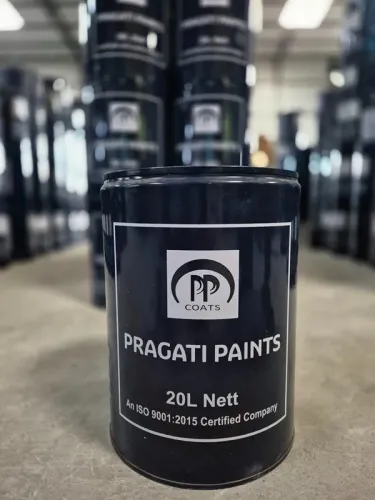
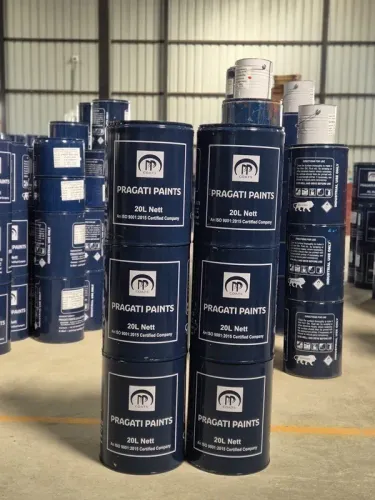
Pragati Paints & Allied Products should be assessed by this same evidence: a documented trial, agreed limits and repeat-batch consistency, not by product naming alone.
Related product
 | Industrial PU Paint (Polyurethane Clear Lacquer) is a high-performance transparent protective coating widely used to enhance the appearance, durability, and longevity of... View product → |
Frequently asked questions
How do you confirm genuine PU clear lacquer availability in Pune?
Ask the supplier to confirm a specific batch number, available quantity, dispatch point, and delivery timing in writing. A catalogue listing alone does not prove stock.
Which details must you check before buying PU clear lacquer?
Confirm whether the system is one-pack or two-pack, identify the required hardener or thinner, check the pack configuration, and match the quantity to your production schedule.
Which application controls affect the finished PU lacquer film?
Control substrate cleanliness, mixing ratio, induction time where specified, viscosity, application temperature, humidity, wet-film thickness, dry-film thickness, and curing time.
When should you choose PU clear lacquer instead of epoxy or QD lacquer?
Choose PU when the required balance includes clear appearance, weathering resistance, and finish retention. Compare epoxy for chemical and adhesion demands, and QD lacquer for simpler air-drying requirements.
How can you qualify an industrial PU clear lacquer supplier near Pune?
Run a controlled trial on your substrate, record application and curing conditions, review test results, and confirm the supplier can repeat the same specification, batch documentation, and delivery performance.