
The wrong primer can leave fabricated steel with poor intercoat adhesion, trapped solvent or inadequate corrosion protection, even when the finished surface looks sound. You will be able to match the coating system to the steel substrate, preparation standard, exposure conditions and application constraints before approving a product or quotation.
Key takeaways
- Use etch primer for adhesion, not as a high-build anticorrosive barrier.
- Apply etch primer only to clean, bare, compatible metal surfaces.
- Specify dry-film thicknesses for both primer and epoxy coats.
- Compare systems by preparation, recoat window, compatibility and corrosion protection.
What does an etch primer do that epoxy paint does not?
Etch primer does something epoxy paint does not: its acid component chemically reacts with clean metal to promote adhesion through a thin phosphate-containing conversion layer. It is not a high-build anticorrosive barrier, and its usual 5–15 µm dry film cannot replace a 50–125 µm epoxy primer.
The right answer depends on whether the failure risk is poor adhesion, corrosion or exposure durability.
| Option | Solves | Choose it when |
|---|---|---|
| Etch primer | Adhesion on clean, smooth metal | The substrate needs a thin bonding layer and the manufacturer approves the next coat |
| Direct-to-metal epoxy primer | Adhesion plus barrier protection | Prepared fabricated steel needs a simpler, thicker system without an unnecessary extra interface |
| Epoxy topcoat | Weather, chemical and appearance protection | A compatible primer already provides corrosion resistance |
| Zinc-rich primer | Sacrificial protection at steel damage | The specification requires cathodic protection; etch primer has too little zinc |
| Zinc phosphate primer | Barrier and inhibitive pigment protection | The specified system calls for phosphate protection without zinc-rich cathodic action |
| Complete multi-coat system | Coordinated protection | The environment, film thickness, stripe coats, repairs and recoat windows demand documented layers |
A sound epoxy paints etch primer comparison therefore compares the system, not one can’s price or coverage. For new steel, correctly prepared direct-to-metal epoxy often wins. Choose epoxy paints for metal fabrication only after confirming chemistry compatibility, recoat limits, dry-film thickness, VOC limits and repair instructions.
Never bury amine blush under epoxy; wash and abrade it as the product data sheet requires, or intercoat adhesion can fail.
Which fabricated-steel substrates can accept etch primer?
Identify the metal from fabrication records, mill certificates or a coating survey before selecting an etch primer for fabricated steel. A magnet helps distinguish carbon steel from aluminium, but it will not reliably identify every stainless grade or zinc-coated surface.
| Substrate | Compatible choice | Preparation before coating |
|---|---|---|
| Carbon steel | Etch primer or direct-to-metal epoxy primer | Degrease; remove mill scale, rust and weld spatter; abrasive-blast or power-tool clean; remove dust and verify the specified surface profile. |
| Stainless steel | Only an etch primer approved for the stainless grade, or a compatible epoxy primer | Degrease, abrade uniformly with uncontaminated abrasive and remove chloride and iron contamination; confirm compatibility first. |
| Aluminium | Aluminium-approved etch primer or epoxy primer | Remove oil and oxidation, abrade without gouging, clean promptly and coat before renewed oxidation. |
| Galvanised steel | Galvanised-compatible etch or epoxy primer | Remove grease and white rust; use the specified sweep blast or cleaning method. Never assume a carbon-steel acid primer is suitable. |
| Previously painted steel | Usually a compatible epoxy repair system, not automatic etch primer | Identify the old coating, clean and abrade sound film, remove loose areas and perform a small adhesion and solvent-compatibility test. |
An acid etch coat over unknown paint can soften, wrinkle or delaminate the old film. On new carbon steel, a direct epoxy primer is often more robust than adding an etch layer.
In an epoxy paints etch primer comparison, check the product data sheet for substrate approval, surface standard, film thickness, recoat window and compatible topcoat. An etch primer is a thin adhesion layer, not a high-build corrosion barrier.
How do fabrication details determine coating performance?
A sound coating can fail at a weld, edge or crevice because preparation leaves a weak point that paint cannot repair. ISO 8501-3 grades these fabrication imperfections; follow the project grade, including edge rounding and stripe-coating requirements.
1. Correct weld seams before cleaning. Remove spatter, slag, sharp ridges, overlap and visible undercut by grinding; smooth weld craters, exposed laminations and rough repairs. Fill pinholes or porosity where the specification requires it.
2. Remove burrs and oxidation from cut edges. Round sharp edges so the coating does not pull thin over the corner, and grind flame-cut slag or hardened, uneven surfaces.
3. Degrease the entire steel surface before abrasive blasting or power-tool cleaning. Remove mill scale, rust and loose old coating, then vacuum or blow away dust with clean, dry air. Check the surface profile against the selected coating’s product data sheet.
4. Inspect bolted joints, washers and nuts for burrs, oil and trapped debris. Tighten or repair loose joints, then seal exposed crevices with a compatible sealant when the design permits; preserve required drainage paths.
5. Weld shut or redesign inaccessible crevices before coating. An area a spray, brush or stripe coat cannot reach remains unprotected and can trap water behind an otherwise sound film.
6. Before applying an etch primer for fabricated steel or epoxy paints for metal fabrication, confirm dry steel, no condensation, clean weld margins and complete access. Stripe-coat welds and edges where specified, then check the first coat for misses, runs and contamination before proceeding.
How do you apply and recoat an etch-primer or epoxy system?
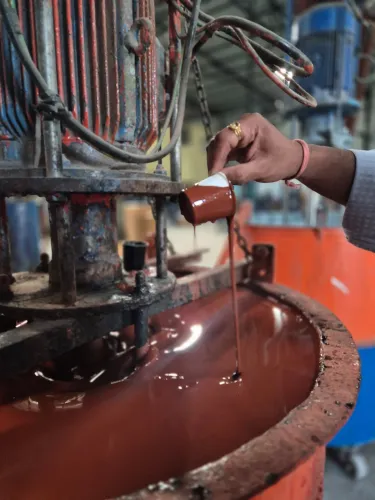
A correct final thickness will not rescue a coating mixed or recoated outside its product-data-sheet limits. In an epoxy paints etch primer comparison, the thin etch layer demands tighter control; epoxy paints for metal fabrication use thicker, more measurable coats.
Before coating, record these controls from the exact product data sheet:
- Mixing ratio: measure resin and hardener accurately; do not estimate by volume.
- Mixing method and induction time: observe the stated wait after mixing before application.
- Pot life: discard material when that time expires, even if it still looks fluid.
- Application and steel temperature: remain within the stated range; check steel with a surface thermometer.
- Humidity and condensation: keep relative humidity below the stated maximum and apply only when steel is above the dew point by the specified margin. Visible moisture disqualifies the surface.
- Dry-film thickness and coverage: use a wet-film gauge during application, then verify the cured film against the target.
- Drying and recoat: use the specified touch-dry, hard-dry and minimum/maximum recoat times, not appearance alone.
| System | Typical film and application control | Recoat warning |
|---|---|---|
| Etch primer | Apply a very thin, product-specific film, commonly 5–15 µm dry; excess film can trap solvent and weaken adhesion. | Overcoat only with epoxy products expressly approved by the data sheet. |
| Two-pack epoxy | Apply the specified coat, often about 50–125 µm dry; coverage changes with film thickness and surface profile. | Exceeding pot life or the recoat window can cause intercoat failure. |
How should you compare coating systems before buying?
A cheaper can does not mean a cheaper coating system. A fair epoxy paints etch primer comparison uses the same steel condition, preparation grade, service environment and target service life for every option.
| Option | Compare | Reject or select |
|---|---|---|
| Etch primer plus epoxy | Confirm the technical data sheet permits that exact epoxy, and record film thickness, recoat window and topcoat limit | Select for approved adhesion needs; reject an unapproved layer combination |
| Direct-to-metal epoxy | Compare corrosion class, surface profile, dry-film thickness and repair method | Often simpler for correctly prepared new carbon steel |
| Zinc-rich or zinc phosphate epoxy | Compare zinc content or barrier performance, stripe-coat requirements and weld-edge protection | Select when corrosion exposure demands a specified protective system |
Put these fields in the purchase request:
- Steel type and condition, including existing paint
- Preparation standard, such as ISO 8501-3 grade, blast or power-tool method, and surface profile
- Primer and topcoat product codes, chemistry, target dry-film thickness, VOC limit and recoat times
- Mixing ratio, pot life, application limits, repair procedure and batch traceability
Do not accept “compatible with epoxy” as evidence. Require the manufacturer’s written approval for the proposed layers; acid-containing etch primer over unknown old paint can wrinkle or delaminate it.
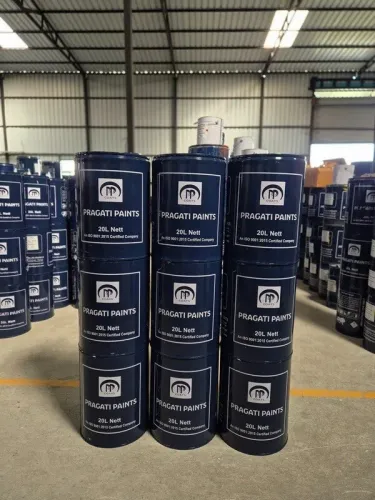
For fabricated-steel work in Chennai, choose a supplier that can provide current TDS and SDS documents, matching batches, test-panel advice and reliable delivery of the complete system. Pragati Paints & Allied Products is worth assessing against those records, not against a single-can price.
Related products
 | Expoxy Paint Etch Primer – The Ultimate Solution for Superior Adhesion on Metal Surfaces When coating smooth, non-porous, or galvanized metal surfaces, achieving... View product → |
 | Expoxy Paint Epoxy Primer – The Most Reliable Base Coat for Industrial Protection & Strong Adhesion When it comes to industrial painting, durability starts from... View product → |
Frequently asked questions
What does an etch primer do that epoxy paint does not?
Its acid component reacts with clean metal and forms a thin phosphate-containing conversion layer that improves adhesion. It does not replace a 50–125 µm epoxy primer for barrier protection.
Which fabricated-steel substrates can accept etch primer?
Etch primer is intended for clean, bare, suitably prepared metal. Remove oil, rust, mill scale, moisture and incompatible coatings before application, then confirm compatibility with the product data sheet.
How do fabrication details determine coating performance?
Weld spatter, sharp edges, crevices, bolt joints and heat-affected areas create weak points. Grind spatter, round sharp edges, clean welds and plan access so the specified film reaches every surface.
How do you apply and recoat an etch-primer or epoxy system?
Prepare and dry the steel, apply the etch primer within its specified film range, observe its overcoat window and apply the compatible epoxy system at its specified dry-film thickness. Follow the product data sheet for mixing, thinning, temperature and recoat limits.
How should you compare coating systems before buying?
Compare surface-preparation requirements, substrate compatibility, dry-film thickness, recoat window, curing conditions, chemical and corrosion resistance, expected service exposure and application records—not price alone.
Related products
 | Expoxy Paint High-Performance Protection for Steel Structures When it comes to long-term corrosion protection of metal surfaces, Epoxy Zinc Rich Primer is one of... View product → |
 | Industrial Expoxy Paint Epoxy High Build Zinc Phosphate Primer Advanced Corrosion Protection for Industrial Steel Structures Industrial environments demand coatings that deliver long-lasting corrosion protection,... View product → |
 | Expoxy Paint Epoxy Inorganic Zinc Silicate Primer Heavy-Duty Anti-Corrosive Protection for Extreme Industrial Conditions When it comes to the highest level of corrosion protection, especially in... View product → |
 | Expoxy Paint Premium Anti-Corrosive Protection for Industrial Metal Surfaces When industries need the highest level of corrosion resistance and strong adhesion,... View product → |