
An existing painted steel surface is not automatically ready for an epoxy high build zinc primer. You will be able to judge whether the retained coating can support recovery, select the right preparation grade, and compare primer options by corrosion mechanism, compatibility, film thickness, curing demands, and repair speed.
Key takeaways
- Overcoat only firmly bonded, dry, clean, and compatible coatings.
- Remove loose, blistered, cracked, contaminated, or incompatible areas before recovery.
- Compare zinc loading, film build, recoat window, and compatibility data.
- Record inspection findings and product evidence in the recovery specification.
Is the Existing Coating Sound Enough to Overcoat?
Overcoat only when the retained coating is firmly bonded, dry, clean, and compatible. Epoxy high build zinc primer recovery is not a method for burying failure beneath a new film.
Inspect the entire structure, not only its best-looking panels. Mark every suspect area:
- Blistering, peeling, cracking, delamination, or exposed steel
- Rust creep beneath the coating or active rusting
- Chalking, oil contamination, dampness, or water-trap corrosion
- Coating edges that lift under a scraper or show hollow, loose areas
Test adhesion in representative sound and marginal zones. Use ISO 2409 cross-cut classification or ASTM D3359 tape testing, and record both the rating and exact location.
| Check | Accept for trial recovery | Reject overcoating |
|---|---|---|
| Visual condition | Firm, intact coating with no active corrosion | Loose film, delamination, rust creep, or exposed steel |
| Adhesion | Consistent passing results in sound and marginal zones | Poorly adhered areas or isolated failures that cannot be removed |
| Unknown chemistry | Small epoxy test patch cures without softening, wrinkling, lifting, bleeding, loss of adhesion, or solvent attack | Any reaction after curing |
| Contamination | Dry, oil-free, and salt testing meets the written acceptance limit | Oil, dampness, or soluble-salt residue |
A solvent rub can reveal a soft or thermoplastic film, but it does not replace the compatibility patch. Treat galvanized steel separately: clean the zinc surface and perform its own adhesion assessment before selecting the primer.
What Surface Preparation Does a Recovery Repair Need?
Treat every repair as a new substrate, not as a place to hide contamination. A repeatable epoxy high build zinc primer maintenance sequence is:
1. Degrease first, then remove soluble salts with clean water or the agreed washing method. Perform a salt test and record the chloride acceptance limit in writing; visual cleanliness cannot detect residues that can cause osmotic blistering beneath the repair.
2. Allow the steel and retained coating to dry completely. Moisture trapped under epoxy can cause blistering, poor adhesion, and early corrosion.
3. Remove active rust, blisters, peeling film, and other failed coating. Use localized abrasive blasting where corrosion has penetrated the film or where the repair needs a clean steel edge.
4. Feather the sound coating around each repair so the primer does not end at a sharp step. Use sweep blasting to roughen firmly adhered coating only when the coating specification permits it.
5. Use power tools for controlled spot repairs where blasting is impractical. ISO 8501-1 St 3 identifies thorough power-tool cleaning; specify ISO 8501-1 Sa 2½, very thorough abrasive blast cleaning, when the system requires extensive exposure of clean steel.
6. Remove dust before priming, then stripe-coat welds, edges, corners, bolts, and other low-film-build details before the full coat.
Dust, oil, dampness, active rust, and loose coating are preparation failures, not minor defects an epoxy primer can correct.
When Should You Recover the Coating Instead of Removing It?
Recover the coating only when failure is limited and the retained film is proven stable. Choose spot repair when corrosion and adhesion failures are isolated, the surrounding coating passes testing, and the repair can be feathered into sound film.
| Option | Decision rule | Main risk |
|---|---|---|
| Spot repair | Remove failed coating, expose sound steel, and feather the edges when defects are isolated. | Patch edges can lift if the surrounding film is chalked or poorly bonded. |
| Sweep blasting | Roughen sound but smooth or chalked coating after confirming that the existing coating technology tolerates sweep blasting. | Excessive pressure can strip stable film or damage the substrate. |
| St 3 power-tool preparation | Use thorough power-tool cleaning when localized steel exposure is needed without mobilizing abrasive blasting equipment. | It may leave profile or contamination that abrasive blasting would remove. |
| Sa 2½ abrasive blasting | Select very thorough abrasive blast cleaning when failures are widespread, rust has spread beneath the film, contamination cannot be removed, layers are incompatible, or the specification demands continuous zinc-primer contact with steel. | Removal creates more waste, containment work, and downtime. |
Metallic zinc gives galvanic protection only where it contacts exposed steel. Applied over an insulating old coating, a zinc-rich primer acts mainly as an overcoat, not a direct zinc-to-steel repair.
Retained coating reduces removal time and waste, but patchiness, uncertain chemistry, and repeated repairs can make full removal the lower-risk epoxy high build zinc primer recovery route. That distinction matters in epoxy high build zinc primer maintenance: a cheaper repair becomes expensive when every shutdown adds another patch.
How Do Epoxy High Build Zinc Primer Options Differ?
The decisive difference among epoxy high build zinc primer options is the corrosion mechanism, not the word “zinc” on the label. Zinc phosphate supports barrier and inhibitive protection inside an epoxy film; it is not automatically a zinc-rich primer.
| Option | Corrosion mechanism | Main limitation |
|---|---|---|
| Epoxy high build zinc phosphate primer | Zinc phosphate pigment supports barrier and inhibitive protection | Match the recoat interval and required dry-film thickness to the existing coating |
| Epoxy zinc-rich primer | Metallic zinc dust can provide sacrificial galvanic protection on properly prepared exposed steel | Agitate continuously or at the specified intervals; settled zinc can leave a resin-rich film and reduce performance |
| Conventional epoxy primer | Barrier protection without zinc pigment | It cannot provide zinc-based galvanic protection |
| Alkyd zinc phosphate primer | Zinc phosphate protection in an alkyd binder | An incompatible epoxy solvent load can soften it or destroy adhesion |
| Quick-drying zinc phosphate primer | Faster return to the next repair stage | Recoat limits and film-build limits still control the system |
| Inorganic zinc silicate | Zinc-based protection suited to demanding heat or solvent service | Moisture, curing, and topcoat controls are stricter |
Choose only after checking immersion exposure, service temperature, retained-coating chemistry, and dry-film thickness. A zinc-rich epoxy over an insulating old coating acts mainly as an overcoat because its metallic zinc cannot contact steel.
For unidentified coatings, run a test patch and inspect for softening, wrinkling, lifting, bleeding, or solvent attack. Compare the complete system, not just primer price per litre; zinc loading, application controls, recoat time, and compatibility can decide whether the repair succeeds.
Which Primer Is the Defensible Choice for the Recovery Specification?
The defensible choice is the primer whose complete system matches the retained coating, exposure, and repair method—not the lowest price per litre.
| Option | Protection basis | Recovery fit |
|---|---|---|
| Epoxy zinc-rich | Metallic zinc can provide galvanic protection on exposed steel | Use only where preparation exposes sound steel and zinc settling, mixing, and overcoating controls are acceptable |
| Epoxy zinc-phosphate | Barrier and inhibitive protection within the epoxy film | Suits firmly bonded existing coatings after compatibility testing |
| Inorganic zinc silicate | Zinc protection with strong solvent and temperature resistance | Select only when moisture curing and topcoat requirements suit the site |
Request the technical data sheet and record:
- Zinc type, volume solids, dry-film thickness per coat, total-system limit, minimum application temperature, pot life, touch-dry and recoat intervals, immersion limitations, colour, VOC, mixing instructions, and repair method.
- Maximum recoat interval and treatment after it: remove amine blush, chalking, and zinc corrosion products, then clean and abrade when specified.
- Calibrated dry-film gauge readings under an agreed measurement plan. Zinc pigment, surface profile, geometry, and calibration can distort readings; one spot reading cannot accept an area.
“High build” is not permission for unlimited thickness. Excess film can trap solvent, sag, crack, mud-crack, or fail at recoat.
For epoxy high build zinc primer maintenance, compare labour, preparation, waste, curing downtime, and repeat repairs alongside material cost. Pragati Paints & Allied Products can help buyers compare epoxy high build zinc primer options against retained coating and site conditions; obtain the data sheet and a test-patch recommendation before approval.
Related product
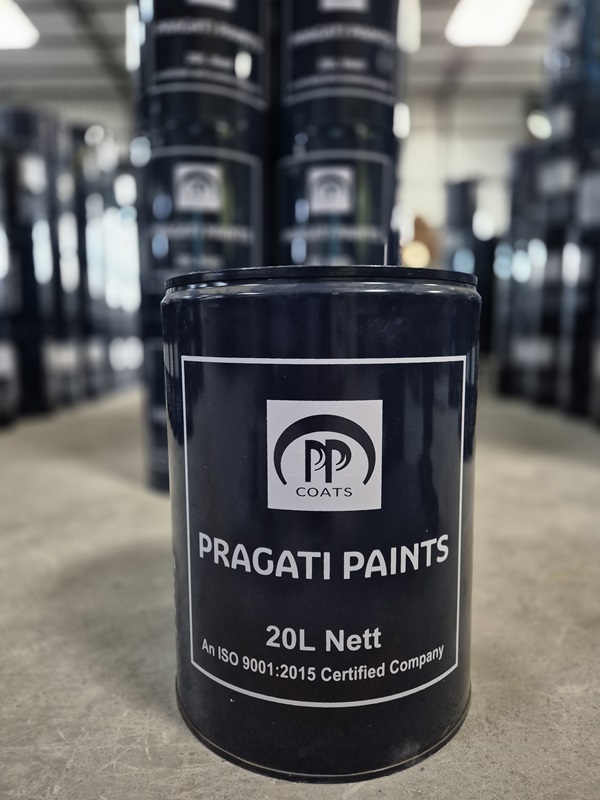 | Industrial Expoxy Paint Epoxy High Build Zinc Phosphate Primer Advanced Corrosion Protection for Industrial Steel Structures Industrial environments demand coatings that deliver long-lasting corrosion protection,... View product → |
Frequently asked questions
How do you decide whether an existing coating is sound enough to overcoat?
Inspect for adhesion loss, rust creep, blistering, cracking, chalking, contamination, and moisture. Retain coating only when it is firmly bonded, dry, clean, and compatible with the proposed epoxy high build zinc primer.
What surface preparation does epoxy high build zinc primer recovery require?
Wash away salts, oil, grease, and dirt; remove loose coating and corrosion; feather sound edges; abrade glossy surfaces; and clean the substrate before priming. Specify the preparation method and acceptance standard for each repair area.
When should you recover an existing coating instead of removing it completely?
Choose recovery when the retained coating remains well bonded and compatible, failures are localised, and preparation can create a stable surface. Remove more coating when widespread delamination, severe corrosion, contamination, or incompatibility prevents reliable adhesion.
How do epoxy high build zinc primer options differ?
Compare zinc content, recommended dry-film thickness, volume solids, curing conditions, recoat interval, substrate preparation requirements, topcoat compatibility, packaging, and technical-support documentation.
What makes an epoxy high build zinc primer recovery choice defensible?
Document the inspection, retained-coating condition, preparation method, environmental conditions, primer data sheet, compatibility evidence, application thickness, and inspection records. The specification must connect each product requirement to the observed failure risk.