
Outdoor steel needs more than a glossy finish: sunlight, chloride deposits, humidity and condensation can expose weaknesses in both the coating and the preparation beneath it. By comparing aliphatic and aromatic polyurethane, checking the complete coating system and matching the choice to Chennai’s conditions, you can decide whether the extra specification effort is justified.
Key takeaways
- Choose aliphatic polyurethane when colour and gloss retention matter outdoors.
- Use zinc-rich primer and compatible intermediate coats beneath the polyurethane topcoat.
- Control surface preparation, humidity and recoat timing in Chennai conditions.
- Compare epoxy, aromatic polyurethane and fluoropolymer systems before specifying the finish.
Why aliphatic polyurethane earns its place outdoors
Its strongest outdoor value is genuine weathering performance: aliphatic polyurethane slows ultraviolet-driven colour change compared with aromatic polyurethane. That matters on equipment, structures and pipelines where fading, yellowing or colour misidentification creates maintenance and safety problems. The p u aliphatic benefits worth paying for are visible appearance retention, not a premium label alone.
| Performance measure | Aliphatic polyurethane | Aromatic polyurethane |
|---|---|---|
| Colour retention | Usually resists rapid yellowing and retains shade better in sunlight | Lower cost, but yellowing and colour change become more visible under UV |
| Gloss retention | Can lose gloss over time; measure it separately | Gloss loss can accompany faster appearance deterioration |
| Chalking | Can develop a powdery surface despite retaining colour | Chalking and surface change are often more noticeable outdoors |
| Mechanical performance | Strong when correctly formulated and cured | Strong mechanical performance can make it a practical lower-cost choice |
Aliphatic chemistry does not guarantee service life. Isocyanate type, resin chemistry, pigment package, volume solids, dry-film thickness, curing conditions and surface preparation all change the result. Specify evidence for both colour and gloss retention, and check for chalking rather than treating one result as proof of all three.
Choose aliphatic when the asset’s colour identification, finish or customer-facing appearance matters under sunlight. If appearance is secondary, aromatic polyurethane may deliver adequate mechanical protection at lower cost; aliphatic earns its place when the extra weathering control justifies the complete coating specification.
What outdoor steel needs beneath the topcoat
P.U. Aliphatic normally protects outdoor steel only as a finishing layer, not as a complete corrosion-control system. For structural steel, tanks, pipelines, machinery and handrails, use this sequence:
- Remove oil, grease, soluble salts, rust, mill scale and loose old paint.
- Abrasive-blast the steel to the preparation grade named in the specification, such as Sa 2½ under ISO 8501-1.
- Remove dust, then verify cleanliness and surface profile with recognised tools, such as ISO 8503 comparators, replica tape or a digital profile gauge.
- Apply a compatible zinc phosphate or other anti-corrosive primer, followed by an epoxy intermediate where the selected system requires it.
- Apply the aliphatic polyurethane topcoat at its specified thickness and recoat interval.
A topcoat cannot rebuild a failed primer, neutralise residual corrosion or bond weak old paint to steel. Rust or soluble salts left beneath the film can drive blistering and under-film corrosion while the surface still looks attractive.
Specify the complete system under ISO 12944: corrosivity category, exposure conditions, nominal dry-film thickness, number of coats and repair procedure. The exact primer, intermediate and total thickness depend on exposure, steel condition and product data, not on the topcoat name alone.
That is why a search for p u aliphatic for outdoor steel should lead to a system specification, not a single-can purchase. Surface preparation and the corrosion barrier determine whether the finish has a sound substrate to protect.
How Chennai conditions change preparation and application
In Chennai, apply aliphatic PU only to a dry, salt-free surface during a controlled weather window. Coastal chloride contamination accelerates under-film corrosion; high relative humidity, monsoon wetting, intense solar exposure and condensation create adhesion and appearance failures. Is p u aliphatic worth choosing for exterior surfaces in chennai?
Yes, when these controls support the complete coating system.
1. Wash marine-influenced steel to remove soluble chlorides, then verify cleanliness. Record air temperature, steel temperature, relative humidity and dew point. Stop if steel falls within the specified dew-point spread; a 3°C minimum is common. Invisible condensation causes poor adhesion, pinholing, blistering and under-film corrosion.
2. Keep resin, hardener, substrate, spray equipment and compressed air dry. Use moisture separators and drain air lines. Do not coat damp steel or apply during rain, mist or condensation; shield fresh film from monsoon wetting and direct solar heating until the specified cure stage.
3. Mix a two-component product at the stated resin-to-hardener ratio and observe its induction time. The method statement must state pot life, recoat interval, wet- and dry-film targets, full-cure time, spray or brush suitability, permitted thinner and maximum addition. Extra thinner, partial-kit mixing or expired material reduces crosslink density, hardness, chemical resistance and weathering.
4. For isocyanate-containing spray application, provide ventilation, isolation or an enclosure, suitable respiratory protection, gloves, coveralls and controlled cure-area access. Solvent odour does not indicate safe isocyanate exposure.
Schedule application for a dry forecast, and inspect for haze, bubbling, gloss loss or pinholes before releasing the surface.
Where the coating fits—and where another system deserves comparison
Choose an aliphatic PU for exterior structural steel, tanks, pipelines, machinery and handrails when the surface is properly prepared, the complete primer-intermediate-topcoat system matches the exposure, and colour or gloss retention matters. It is not a universal corrosion solution: the topcoat cannot rescue residual rust, weak old paint or a failed primer.
Concrete needs its own assessment. Check for laitance, cracks, contaminants, surface profile and moisture before selecting a system; preparation and moisture limits differ from steel. Continuously immersed service, severe chemical immersion, high-temperature equipment and poorly prepared surfaces deserve comparison with another coating family or a system specifically rated for that service.
Before approving a P U aliphatic industrial coating, request:
- The product data sheet and written chemical-resistance schedule, including service limits for immersion, chemicals and temperature.
- Nominal and permitted dry-film thickness, volume solids, theoretical coverage, pot life, induction time, recoat interval and full-cure time.
- Compatible primers, intermediate coats and written repair instructions.
- ASTM G154 fluorescent-UV or ASTM G155 xenon-arc results stating the cycle, exposure duration and acceptance criteria.
- Separate colour-retention, gloss-retention and chalking results.
Treat salt-spray hours as supporting evidence, not a prediction of outdoor life. Salt spray does not reproduce ultraviolet exposure, wetting, drying, contamination and temperature cycles, and results depend on scribe geometry, panel preparation, film thickness and rating method.
How to judge a supplier before specifying the finish
A product brochure is a starting point, not evidence enough to approve an aliphatic PU system. Searching for a p u aliphatic manufacturer in chennai can simplify site visits, logistics and technical support, but location does not prove formulation quality or service life.
Ask the supplier for:
- Batch traceability from manufacture to delivery
- Consistent technical and safety data sheets
- The stated resin-to-hardener ratio
- Storage limits, including temperature and unopened-pack life
- Laboratory weathering records
- Field references in comparable coastal exposure
- Compatible primer recommendations
- Written warranty conditions
- Practical support for blast cleaning, dew-point control, inspection and repairs
Request colour-retention data separately from gloss-retention data: a coating can keep its shade while losing gloss or developing chalk. Require the supplier to identify the coating system’s ISO 12944 basis, corrosivity assumption, nominal dry-film thickness and inspection records, rather than relying on “UV resistant” language.
| Evidence source | Useful evidence | What it cannot prove |
|---|---|---|
| Local manufacturer | Site access, application support, traceability | Formulation quality without test records |
| Product brochure | Claimed properties and application limits | Coastal service life without comparable evidence |
| Field reference | Performance in a similar exposure | Results if preparation and inspection differed |
Pragati Paints & Allied Products is one Chennai-based supplier to evaluate against these same requirements, not exempt from them. Choose aliphatic PU when appearance retention and exterior weathering justify it; approve the complete system only after service conditions, preparation, application controls and documented performance align.
Related product
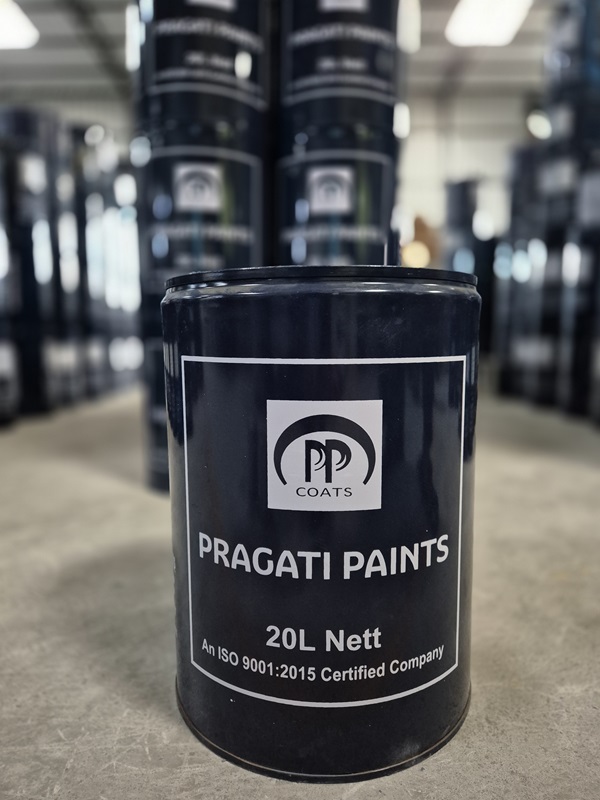 | Industrial PU Paint High Performance Coating for Long-Lasting Protection P.U. Aliphatic Paint (Polyurethane Aliphatic Paint) is a premium-quality, high-performance... View product → |
Frequently asked questions
Why is aliphatic polyurethane useful on exterior industrial surfaces?
Aliphatic polyurethane resists ultraviolet-driven colour change better than aromatic polyurethane, helping equipment, structures and pipelines retain appearance and colour identification outdoors.
What does outdoor steel need beneath an aliphatic polyurethane topcoat?
Outdoor steel needs a properly prepared surface plus a compatible primer and intermediate coat selected for corrosion exposure, adhesion and the specified service environment.
How do Chennai conditions affect aliphatic polyurethane application?
Chennai’s heat, coastal moisture and salt exposure make surface cleanliness, dew-point control, recoat timing and application-window planning critical.
When should you compare another coating system with aliphatic polyurethane?
Compare epoxy, aromatic polyurethane and fluoropolymer systems when immersion, chemical exposure, abrasion, extreme temperature or budget matters more than colour and gloss retention.
How should you assess an aliphatic polyurethane supplier in Chennai?
Ask for technical data sheets, application instructions, recoat windows, batch traceability, compatibility guidance and coating-system recommendations for your substrate and exposure.