
A PU primer is not one universal product: its resin chemistry, curing method, compatible substrates and approved topcoat determine whether it belongs on your equipment. By the end, you will be able to compare the coating system with your metal, wood or concrete substrate, identify the preparation it requires, and decide when a test panel or manufacturer’s specification is necessary.
Key takeaways
- Use PU primer when the coating system requires adhesion to your equipment’s substrate.
- Remove oil, rust, salts, dust and loose coating before priming.
- Mix two-component PU primer in the stated resin-to-hardener ratio.
- Test adhesion and appearance on a representative area before coating the asset.
What PU primer actually is and how it differs from other primers
For p u primer explained clearly, think of it as the bonding layer between a prepared surface and a polyurethane coating system. It is not one standardized coating class. A one-component formulation cures through atmospheric moisture; a two-component product combines polyurethane resin with a hardener and cures by chemical reaction.
Low humidity, cold conditions, heavy films or trapped solvent can slow the first type.
A primer promotes adhesion and establishes the specified coating system. A polyurethane topcoat is the finish layer, designed for colour, gloss, UV resistance, abrasion or chemical exposure. Common p u primer uses include improving topcoat adhesion on equipment, not automatically preventing corrosion. Bare steel may need zinc-rich or corrosion-inhibitive epoxy beneath the finish.
| Option | Chemistry | Adhesion and curing role | Typical system position |
|---|---|---|---|
| PU primer | One- or two-component polyurethane | Bonds compatible surfaces; moisture or chemical cure | Under an approved PU topcoat |
| PU topcoat | Polyurethane resin and curing package | Provides weather, abrasion and chemical resistance | Final coat |
| Epoxy primer | Epoxy resin and hardener | Strong barrier and substrate adhesion; chemical cure | Corrosion-control base |
| Synthetic primer | Alkyd or other synthetic resin | General-purpose adhesion; oxidative drying | Maintenance or lower-demand systems |
| Q.D. primer | Quick-drying synthetic resin | Fast handling and recoating | Light-duty equipment systems |
| Etch primer | Acid-reactive resin, often with phosphate | Creates adhesion on difficult metals | Thin preparatory layer |
A “universal” label changes none of this. Check the substrate, approved topcoat, preparation method and exposure limits before use, then test adhesion on the actual equipment.
Do you need PU primer for your equipment?
Ask “do i need p u primer” only after answering four questions: what is the substrate, what coating is already present, which topcoat will follow, and what service life and exposure does the equipment require? The main p u primer uses are adhesion and system compatibility; corrosion protection still depends on the specified primer chemistry.
| Substrate | Decision | Why |
|---|---|---|
| Carbon steel | Verify first | Bare steel exposed outdoors, to chemicals or immersion may need zinc-rich or corrosion-inhibitive epoxy before a PU layer. |
| Stainless steel | Verify first | Clean, abrasion and an approved adhesion promoter can be necessary. |
| Aluminium | Verify first | Use the manufacturer’s aluminium preparation and compatible primer; ordinary steel treatment can fail. |
| Galvanized steel | Verify first | Remove contaminants, abrade correctly and confirm compatibility with zinc surfaces. |
| Cast iron | Verify first | Porosity, rust and uneven profiles need control before coating. |
| Wood | Verify first | Select a system rated for wood movement and the intended PU topcoat. |
| Concrete | Usually no | Use a concrete-rated coating system unless the product data sheet approves PU primer. |
| Previously painted surfaces | Verify first | Test adhesion and solvent compatibility; remove loose or incompatible paint. |
For tanks, pumps, pipes, frames, machine housings, fabricated steel, agricultural equipment and plant structures exposed to weather, abrasion, oils or chemicals, PU primer suits the job when its data sheet approves the substrate, preparation, topcoat and exposure limits. That is what is p u primer for equipment in practice—not a blanket corrosion solution.
Choose no when the topcoat is explicitly rated for direct-to-metal or direct-to-substrate application. Choose verify-first when the existing coating is unknown, the asset needs long service life, or immersion, severe chemicals or high temperature applies. A small test patch is safer than coating the whole asset.
What condition must the equipment reach before priming?
Before priming, equipment must be clean, dry, sound and prepared to the surface profile stated in the coating specification. PU primer cannot rescue oil, salts, rust, mill scale, loose corrosion, old loose paint or weld spatter; trapped contamination leads to peeling, edge lifting, blistering and early rust creep.
That is the practical p u primer explained answer: preparation controls adhesion.
- Degrease with a cleaner compatible with the substrate, remove residues, then abrasive-blast or mechanically sand until firm material remains. Remove dust before coating.
- Treat flash rust immediately by returning to the specified preparation standard. Smooth sharp edges, weld seams and pits; remove spatter and round edges where the system requires continuous coverage.
- Check the blasted or sanded profile with the specified comparator or profile gauge. Do not guess whether the surface is rough enough.
- For existing paint, remove loose layers, abrade sound paint and run a compatibility and adhesion test patch before full application.
For anyone asking do i need p u primer, the substrate determines the preparation route:
| Substrate | Before priming | Extra check |
|---|---|---|
| Aluminium | Compatible cleaner, abrasion or conversion treatment | Confirm adhesion-promoting primer |
| Galvanized steel | Remove residues and lightly abrade without damaging zinc | Verify cleaner and primer compatibility |
| Stainless steel | Degrease and create a controlled abrasion profile | Test adhesion on the actual alloy |
| Previously painted | Remove loose paint and abrade sound coating | Confirm old-paint and topcoat compatibility |
A primer suited to one metal is not automatically suitable for another.
How should PU primer be mixed, applied and checked?
Obtain the current technical data sheet (TDS) and safety data sheet (SDS) before opening the pack. The TDS controls the p u primer uses for that product, while the SDS identifies solvent, isocyanate and skin hazards.
1. Confirm whether it is one-component moisture-cure PU or a two-component resin-and-hardener product. Verify the component ratio, mixing order, induction time, pot life, permitted thinner, maximum thinner addition, wet- and dry-film thickness, recoat interval and cure conditions. Never add extra hardener to accelerate curing or extra thinner to extend pot life.
2. Apply by brush for edges, welds and small repairs; use a short-nap solvent-resistant roller for accessible flat areas. These methods need no spray equipment but can leave brush marks, stippling or a less uniform finish.
Conventional spray needs a compatible gun, clean compressed air and the TDS-specified nozzle; it reaches complex shapes well and usually gives a smoother finish.
3. Use airless spray for large structures and rapid coverage, with a pump, hose, filter and tip rated for the coating. It improves access and production but can create overspray, dry spray, sagging and excessive film build. Measure wet film with a comb gauge and check dry film after curing; appearance is unreliable.
4. Control temperature, humidity and ventilation. Cold conditions, low humidity, heavy coats and trapped solvent slow moisture-cure products; high humidity can cause bubbling. Excess thickness causes sagging or solvent popping. Do not overcoat before the minimum recoat time or miss the maximum window without the specified abrasion.
Wear chemical-resistant gloves, coveralls and eye protection. For isocyanate-containing two-component products, especially during spraying, use the SDS-required respiratory protection, ventilation and exposure controls. The phrase p u primer explained does not replace these instructions.
How can you verify a PU primer system before coating the whole asset?
Verify the system before buying enough material for the asset. To answer “what is p u primer for equipment” and “do i need p u primer,” compare these four items in the current technical data sheet (TDS):
| Check | What to compare | Why it matters |
|---|---|---|
| Approved substrates | Carbon steel, aluminium, galvanized steel, stainless steel, concrete, wood, or existing paint | An unsuitable substrate can cause peeling |
| Surface preparation | Cleaner, abrasive grade, profile, blasting or sanding standard | Poor preparation causes blistering and rust creep |
| Compatible topcoats | PU, epoxy, acrylic, or another named finish | An incompatible topcoat can wrinkle or delaminate |
| Exposure limits | UV, temperature, chemicals, immersion, and abrasion | A primer system can fail outside its rated service conditions |
If the substrate or old coating is uncertain, apply the proposed system to a small area of the actual equipment. Inspect coverage, sagging, pinholes and surface defects; confirm cure before recoating, then check adhesion after the stated recoat interval.
Use cross-hatch adhesion testing under ASTM D3359 where appropriate, but do not treat it as proof of service-life performance.
Ask the manufacturer for:
- The current TDS and SDS
- A written system specification for the actual asset
- Batch identification and application limits
- Preparation, recoat and curing requirements
- Technical support for the substrate and exposure
Pragati Paints & Allied Products is one manufacturer you can consult for these documents and a system recommendation. Its product label alone does not prove that one PU primer fits every job.
Related product
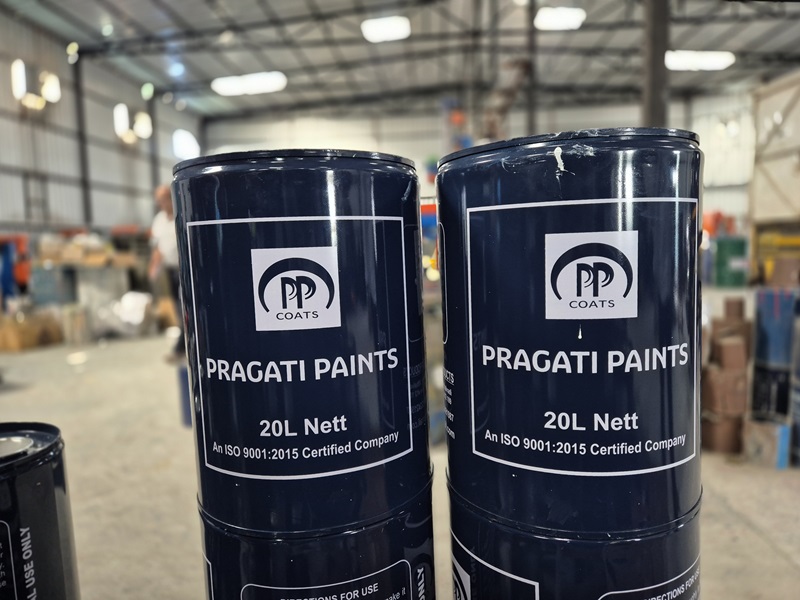 | Industrial PU Paint P.U. Primer (Polyurethane Primer) is a high-quality base coat specially formulated to enhance adhesion, improve surface uniformity, and increase the overall... |
Frequently asked questions
What is PU primer for equipment?
PU primer is a bonding layer between a prepared equipment surface and a polyurethane coating system. One-component products cure with atmospheric moisture; two-component products cure when resin and hardener react.
Do I need PU primer before polyurethane coating?
Use PU primer when the specified polyurethane system requires it, when the substrate needs improved adhesion, or when the existing surface is difficult to coat directly. Follow the coating system’s technical data sheet.
What condition must equipment reach before priming?
The surface must be sound, dry and free from oil, grease, salts, dust, rust, mill scale and loose paint. Prepare it to the cleanliness and profile specified for the primer.
How should PU primer be mixed and applied?
Check the product data sheet for the resin-to-hardener ratio, induction time, pot life, thinner limits, application method and wet-film thickness. Apply within the stated temperature and humidity range.
How do you verify a PU primer system before coating the whole asset?
Coat a representative test area, then check wet and dry film thickness, adhesion, coverage, defects and compatibility with the topcoat. Proceed only after the test area meets the specification.