
Pune’s monsoon does not make every maintenance day unsuitable, but it leaves steel wet, salt-contaminated and vulnerable to rapid flash rust. You will be able to schedule inspections, prove that steel is dry enough to coat, select a preparation grade and document a coating job that can survive the next wet season.
Key takeaways
- Inspect after runoff stops and schedule coating within a confirmed dry window.
- Measure steel temperature, dew point and surface dryness before priming.
- Check soluble salts and prepare steel consistently around welds and fasteners.
- Record preparation, weather readings, primer details and curing conditions.
When Pune monsoon steel can be inspected, washed and coated
Schedule inspection during a dry break after rainfall, when runoff has stopped and steel surfaces are visible. An epoxy zinc phosphate primer for monsoon steel in Pune cannot be timed from the calendar alone: it needs a dry surface and enough rain-free time for the coating to cure.
- Inspect steel after each significant rain event, looking for ponding, fresh rust, coating blisters, mud deposits and failed joints.
- Wash only when the forecast provides a drying window. Remove mud, bird droppings and deposited salts, then allow the steel to dry completely.
- Stop washing if rain will refill crevices or trap contaminated water beneath laps, brackets or base plates.
- Apply primer during a stable dry period, not during rainfall, mist or heavy humid conditions that bring the steel close to condensation.
- Keep the coated steel protected from rain for the exact dry and initial-cure period stated in the primer technical data sheet.
For epoxy zinc phosphate rainy season work, measure air temperature, relative humidity and steel temperature at the work location. Calculate dew point from those readings and apply only when steel is at least 3°C above dew point; a roof or tarpaulin does not prevent condensation.
Check again before coating after washing or wet abrasive blasting, because flash rust, retained water and damp abrasive residue can develop quickly. Low steel temperature extends curing, so use the product data sheet for minimum and maximum overcoating intervals.
How to prove the steel is dry enough for primer
Apply epoxy zinc phosphate primer only when the steel surface is at least 3°C above the measured dew point and will remain dry through initial cure. Air temperature alone cannot prove safe application.
Take readings beside the steel with a calibrated surface thermometer and a hygrometer or dew-point meter. Calculate dew point from air temperature and relative humidity at the work location; do not use a general Pune weather forecast.
| Condition | Reading or check | Decision |
|---|---|---|
| Rain | Rain falling, dripping from roofs, or wetting the steel | Stop application |
| Surface temperature | Steel less than 3°C above dew point | Wait; condensation can form beneath the film |
| Relative humidity | Above the primer’s technical data sheet limit | Stop unless the specified control method restores compliance |
| Steel condition | Standing water, retained wash water, damp abrasive residue, or visible flash rust | Dry and recheck; do not seal it under standard primer |
| Cure window | Rain or condensation expected before the product’s initial-cure requirement | Postpone or provide controlled enclosure conditions |
A roof or tarpaulin blocks direct rain but does not remove humid air. Use dehumidification or controlled ventilation when the enclosure cannot hold the required dew-point separation.
Record air temperature, steel temperature, relative humidity, dew point, time and location before coating and during initial cure. These readings show whether epoxy zinc phosphate rainy season work is defensible.
Epoxy paints steel weather protection depends on a continuous dry film; outdoor steel also needs a compatible UV-resistant topcoat because exposed epoxy can chalk and fade.
What preparation grade and salt checks should monsoon steel receive
A zinc phosphate primer monsoon maintenance plan starts with sound steel, not a quick wash. Remove oil and grease under SSPC-SP 1, then wash mud, bird droppings and soluble deposits with clean water and allow the surface to drain. Standing water, damp abrasive residue and loose contamination will undermine adhesion.
Prepare the steel in this order:
- Remove failed coating, loose mill scale, rust blisters and corrosion products until the remaining coating has a firm, feathered edge.
- Abrasive-blast broad or heavily corroded areas to ISO 8501-1 Sa 2½, or to the equivalent SSPC/NACE grade named in the project specification.
- Use needle guns, grinders or other power tools for small, localised repairs when blasting is impractical; accept the lower, less uniform surface profile and reduced service-life potential.
- Test soluble salts after washing or blasting where coastal air, industrial deposits or repeated wetting are possible. Use ISO 8502-6 extraction with ISO 8502-9 conductivity measurement.
- Reject the surface until the coating system or project specification’s salt limit is met. Do not invent a universal chloride or sulphate limit.
- Remove flash rust before priming, and check the primer technical data sheet after wet blasting or water washing. Standard epoxy zinc phosphate primer must not seal visible flash rust, retained water or damp residue unless specifically qualified for that condition.
Choose abrasive blasting for uniform, durable atmospheric protection. Choose power-tool cleaning only for defined local repairs, and record the method, preparation grade, salt result and remaining coating condition. A later coat cannot compensate for salts left beneath it.
How to coat welds, fasteners and exposed steel without creating weak spots
Stripe-coat weld crowns, bolt heads, nuts, sharp edges, corners, cut-outs, laps and horizontal ledges before applying the full coat. Grind weld spatter and sharp projections smooth, then work primer into crevices; these details lose film thickness first and collect monsoon water.
A zinc phosphate primer monsoon maintenance plan must control the whole kit, not just the brushwork. Use the manufacturer’s component ratio, mechanically mix each component, combine the full kit, observe the stated induction time and discard material at pot life. Do not add uncontrolled thinner or revive partly cured primer.
| Control | Check | Failure prevented |
|---|---|---|
| Mixing | Ratio, induction time and pot life from the product data sheet | Soft film, poor adhesion and incomplete cure |
| Film thickness | Wet-film comb during application; dry-film gauge after cure, against the specified DFT | Thin welds, edges or overbuilt runs |
| Recoating | Minimum and maximum intervals at the measured steel temperature | Solvent entrapment or weak intercoat adhesion |
If the maximum interval is exceeded, follow the data sheet: abrasion, solvent cleaning or another specified preparation may be necessary. Low rainy-season steel temperatures extend the minimum interval, so record temperature and application time.
Epoxy paints provide steel weather protection as a barrier, but direct sunlight can chalk and fade exposed epoxy. Apply a compatible UV-resistant polyurethane or specified topcoat before returning outdoor steel to service. Ensure the substrate remains at least 3°C above dew point during application and initial cure.
How to specify the primer system and document the maintenance decision
Choose the primer by service severity, not by the word “zinc” on the label. Zinc phosphate provides inhibitive and barrier protection; zinc-rich primer uses electrically connected metallic zinc for galvanic protection.
| Option | Protection basis | Select when | Main limitation |
|---|---|---|---|
| Epoxy zinc phosphate | Adhesion, barrier film and pigment inhibition | Atmospheric steel with a compatible UV-resistant topcoat | Not a substitute for zinc-rich protection on damaged edges, immersed steel or severe corrosion service |
| Zinc-rich epoxy | Metallic zinc and galvanic action | You need sacrificial protection and the specification permits zinc-rich systems | Requires strict surface preparation, mixing and electrical continuity controls |
For epoxy zinc phosphate primer for monsoon steel in Pune, specify the exact product, preparation grade, primer dry-film thickness, permitted humidity, and a substrate temperature at least 3°C above dew point during application and initial cure.
Select a polyurethane or other compatible UV-resistant topcoat for steel that remains outdoors; epoxy paints provide steel weather protection, but exposed epoxy can chalk and fade.
Put these records in the project file:
- Supplier name, product name, batch number, manufacture date, shelf life and technical data sheet revision
- Safety data sheet, certificate of conformity and primer-to-topcoat compatibility statement
- Air temperature, steel temperature, relative humidity, calculated dew point, rain status and readings’ times
- Surface-preparation method, salt-test result, flash-rust condition and photographs before coating
- Mixing ratio, induction time, pot life, application time, wet- and dry-film readings, recoat interval and inspector’s acceptance
- Deviations, rejected areas, repairs and final signed approval
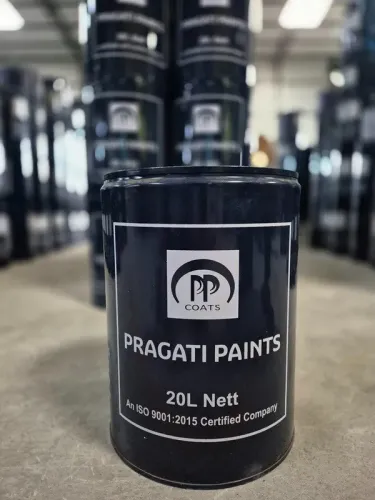
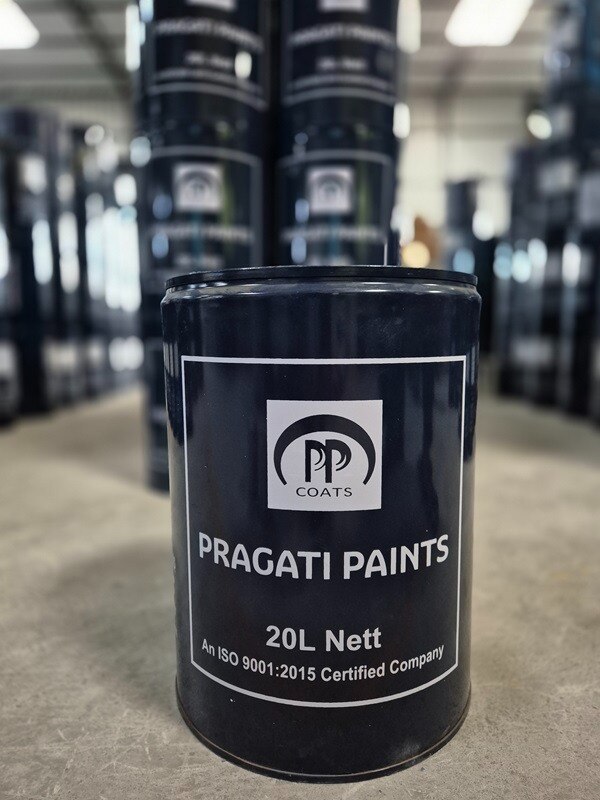
Pragati Paints & Allied Products can be included in the supplier comparison only after its quoted product data matches these recorded project requirements.
Related products
 | Expoxy Paint Premium Anti-Corrosive Protection for Industrial Metal Surfaces When industries need the highest level of corrosion resistance and strong adhesion,... View product → |
 | Industrial Expoxy Paint Epoxy High Build Zinc Phosphate Primer Advanced Corrosion Protection for Industrial Steel Structures Industrial environments demand coatings that deliver long-lasting corrosion protection,... View product → |
Frequently asked questions
When can Pune monsoon steel be inspected, washed and coated?
Inspect during a dry break after rainfall, once runoff has stopped and steel surfaces are visible. Wash contaminants, then coat only after confirming a dry surface and enough rain-free curing time.
How do you prove steel is dry enough for epoxy zinc phosphate primer?
Record steel temperature, air temperature and dew point, then confirm the steel temperature stays above the dew point by the coating manufacturer’s specified margin. Check for visible moisture before mixing or applying primer.
What preparation and salt checks should monsoon steel receive?
Remove rust, mill scale, old loose coating and contaminants using the specified blast-cleaning or power-tool preparation grade. Test soluble salts after preparation and clean again when results exceed the project limit.
How should welds, fasteners and exposed steel be coated?
Stripe-coat welds, sharp edges, bolt heads, crevices and difficult-to-reach areas before the full coat. Round sharp edges, remove weld spatter and verify coverage around overlapping steel.
What should a monsoon steel primer maintenance record include?
Document the inspection date, weather readings, surface preparation method, salt-test results, batch number, mix ratio, wet-film thickness, application time and curing conditions.