
Choosing by the words “clear” or “lacquer” alone can lead to the wrong resin, hardener, finish, or pack size. By comparing the substrate, exposure, performance data, application limits, and calculated material demand, you can specify a coating that fits the job instead of the label.
Key takeaways
- Identify whether you need a two-component epoxy, epoxy-modified coating, or epoxy-compatible topcoat.
- Match the lacquer to the substrate, exposure conditions, gloss level, and required durability.
- Compare solids, coverage, recoat window, pot life, cure time, and mixing ratio on the technical data sheet.
- Calculate epoxy clear lacquer size from target film thickness, area, coverage, and application losses.
Start by Defining the Epoxy Clear Lacquer System
An epoxy clear lacquer listing does not identify one precise product. It can mean a two-component thermosetting epoxy clear coat, an epoxy-modified coating, or a clear topcoat designed for application over an epoxy primer.
Before comparing price or appearance, request the technical data sheet. Confirm the resin chemistry, hardener type, number of components, cure mechanism, mix ratio by volume or mass, and intended substrate. A ratio of 2:1 by volume is not interchangeable with 2:1 by mass because resin and hardener densities differ.
A two-component system has a limited pot life after mixing and cures irreversibly; do not return leftover material to the original pack. Single-component Q.D. lacquer cures through solvent evaporation and remains a different product class. Polyurethane clear lacquer also has different chemistry, cure behaviour, flexibility, and outdoor-weathering performance.
Use this first epoxy clear lacquer selection screen:
- Substrate: steel, concrete, wood, plastic, or an existing coating
- Exposure: indoor or outdoor
- Chemical contact: named chemical, concentration, temperature, and splash or immersion
- Abrasion, impact, and vibration
- Continuous and intermittent temperature
- Required flexibility
- Appearance: clear, tinted, gloss, satin, or matte
- Expected service life
That is how to choose epoxy clear lacquer without buying by the label alone. “Heavy duty,” “crystal clear,” and “chemical resistant” are not procurement specifications until the supplier states test conditions and named exposures. This epoxy clear lacquer selection step prevents a hard, attractive film from failing through yellowing, cracking, or chemical attack.
Match the Coating to the Substrate and Prepare It Properly
1. Bare steel must be free of oil, salts, rust, and mill scale. Use abrasive blasting or mechanical abrasion to the cleanliness and profile stated in the product data sheet, then vacuum or wipe with a lint-free cloth.
Apply an epoxy primer when corrosion control or adhesion requires it; direct clear application over rust is the wrong choice.
2. Galvanized steel needs degreasing and removal of white rust, followed by the specified sweep blast or mechanical abrasion. Use a primer approved for zinc surfaces if the data sheet does not confirm direct adhesion.
3. Non-ferrous metals such as aluminium, copper, and stainless steel require degreasing and a compatible abrasion method. An epoxy adhesion primer is necessary when the lacquer cannot bond reliably to the metal.
4. Concrete must be sound, clean, and free of laitance, oil, curing compounds, salts, and loose material. Mechanically abrade or blast it, vacuum thoroughly, and check moisture using ASTM F2170 in-situ relative humidity or ASTM F1869 moisture-vapor emission testing; the product’s own moisture limit controls. Use a compatible epoxy base coat to seal porosity.
5. Wood needs sanding within the grit range specified in the data sheet, dust removal, and a moisture check. Seal porous end grain and bleeding extractives with a compatible base coat; trapped moisture can cause whitening, bubbles, or peeling.
6. Plastics need cleaning and a plastic-compatible adhesion primer unless the manufacturer approves direct application.
7. Previously painted surfaces require removal of loose paint and incompatible old coatings, sanding to the specified range, and cleaning. Test adhesion and appearance on the actual substrate, not only a smooth test panel, before epoxy clear lacquer selection.
Choose Finish and Performance for the Real Exposure
Gloss, satin, and matte describe sheen; clear and tinted describe colour. High-gloss clear films reflect every surface defect, including sanding marks, pinholes, dust, stains, and uneven substrate texture.
| Finish | Advantage | Selection caution |
|---|---|---|
| Gloss | Maximum shine and visual depth | Makes defects most visible |
| Satin | Lower reflection with easier maintenance | Confirm the specified gloss range |
| Matte | Hides minor texture and glare | Scuffs and polishing can create shiny patches |
| Clear | Preserves the substrate’s appearance | Yellowing changes the perceived colour |
| Tinted | Adds colour while retaining some texture | Check colour uniformity and hiding power |
Outdoor ultraviolet exposure can yellow, chalk, and reduce epoxy gloss. Choose a UV-stabilized epoxy or a compatible UV-resistant polyurethane or acrylic urethane topcoat, and verify exposure performance using ASTM D4587 rather than initial clarity. Specify continuous and intermittent temperature ranges because heat accelerates colour change and alters flexibility.
Match chemical resistance to the named chemical, concentration, temperature, exposure duration, splash or immersion service, and cleaning method. For demanding service, request a fully cured panel test.
- ASTM D523 gloss; ASTM D3363 pencil hardness; ASTM D4060 abrasion; ASTM D4541 pull-off adhesion
- Separate impact, vibration, and flexibility testing from hardness, using an identified impact or flexibility method
- Test substrate, film thickness, cure age, test method, and result
A hard film can still crack under impact or vibration. Do not accept “chemical resistant” or “heavy duty” without these conditions.
Read the Technical Data Sheet Before You Compare Products
A workable product starts with a usable technical data sheet, not a catalogue claim. Confirm the mix ratio and its permitted tolerance, and check whether it is by volume or mass: resin and hardener densities differ, so 2:1 by volume is not safely 2:1 by weight.
Record induction time, pot life at a stated temperature and batch size, thinner type and maximum addition, volume solids, recommended wet-film thickness (WFT), dry-film thickness (DFT), recoat window, full-cure time, and application temperature and humidity limits.
| Solventborne | Better wetting and flow on porous surfaces | VOC, flammability and solvent entrapment require control |
|---|---|---|
| Waterborne | Lower solvent emissions | More sensitive to substrate moisture, humidity and application conditions |
| 100%-solids | High film build with little or no solvent evaporation | Accurate mixing is critical; viscosity and short pot life can complicate application |
Warm material, larger mixed masses and higher ambient temperature shorten working time. Compare recoat window as carefully as pot life: recoating too early can trap solvent or disturb the film; waiting too long can require abrasion for adhesion.
- Check the TDS for thinner compatibility, maximum reduction, and full-cure conditions before mixing.
- Look for amine blush: a waxy or greasy residue that forms during cool or humid curing. Remove it with water and an abrasive pad; solvent wiping alone can spread it. Choose a non-blushing hardener where washing or sanding is difficult.
These checks are central to how to choose epoxy clear lacquer and to comparing epoxy clear lacquer options on site.
Calculate Epoxy Clear Lacquer Size From Film Build and Pot Life
Measure the actual coated area before deciding how to choose epoxy clear lacquer pack size. Then calculate the mixed volume in this order:
- Multiply area in square metres by target dry-film thickness in micrometres and number of coats.
- Divide by 1,000 to convert square-metre micrometres into litres at 100% solids.
- Divide by the volume-solids fraction.
- Divide by estimated transfer efficiency, then add the agreed wastage allowance.
- Select unopened resin-and-hardener kits whose combined volume covers that result.
The theoretical coverage formula is: square metres per litre = 10 × volume-solids fraction ÷ dry-film thickness in micrometres. A 60% solids coating applied at 50 micrometres therefore covers 12 m²/L before application losses.
Pack coverage is not a fixed promise. Porous surfaces absorb material; overspray and roller loading reduce transfer; overspreading leaves insufficient film; sagging, solvent entrapment, and extra coats increase consumption.
| Pack choice | Best use | Main risk |
|---|---|---|
| Small kit | Repairs and test panels | Higher unit cost and more joins |
| Large unopened kit | Industrial work with predictable volume | Leftovers, ratio errors, and wasted mixed material when pot life is short |
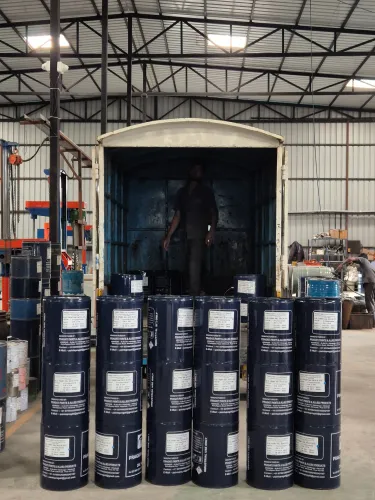
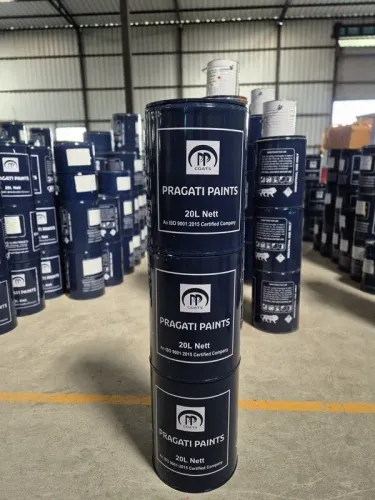
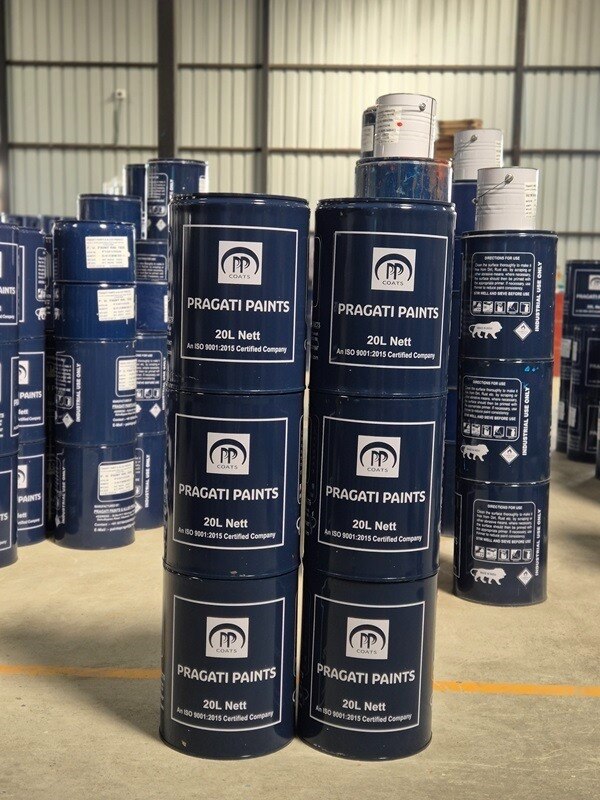
Choose a kit you can consume within shelf life and working time. Pragati Paints & Allied Products can help verify the TDS, compatible primer, hardener pack, thinner, and pack quantity against your calculated volume.
Related product
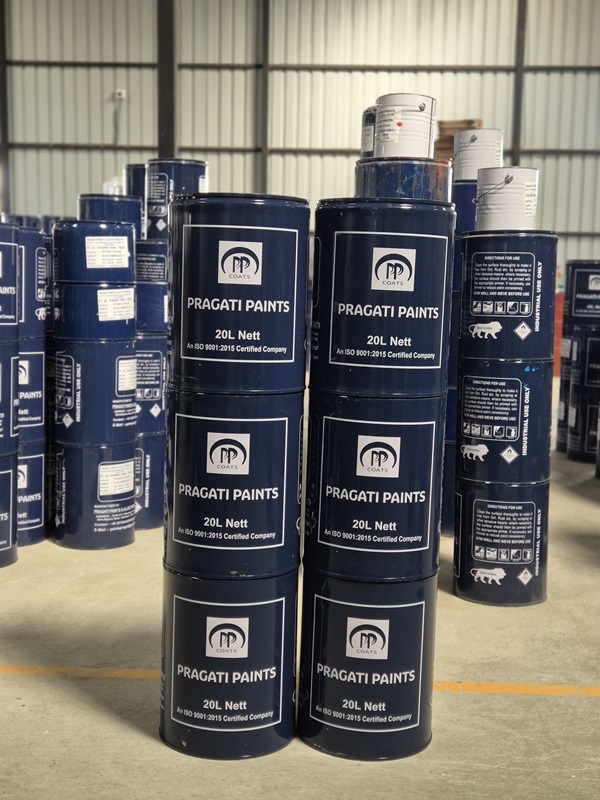 | Expoxy Paint Premium Transparent Protective Coating for Industrial & Decorative Applications Epoxy Clear Lacquer is one of the most trusted transparent coatings... View product → |
Frequently asked questions
How do I choose an epoxy clear lacquer system?
First identify whether the product is a two-component thermosetting epoxy, an epoxy-modified coating, or a clear topcoat for an epoxy primer.
How should I prepare the substrate before applying epoxy clear lacquer?
Remove oil, dust, rust, salts, and loose coating, then create the surface profile and dryness required by the technical data sheet.
Which epoxy clear lacquer finish and performance should I choose?
Choose gloss, chemical resistance, abrasion resistance, heat resistance, and UV performance according to the coating’s actual exposure.
What should I check in an epoxy clear lacquer technical data sheet?
Check mixing ratio, volume solids, recommended dry-film thickness, coverage, pot life, recoat interval, cure time, application method, and temperature limits.
How do I calculate epoxy clear lacquer size?
Calculate wet or dry film coverage for the total area, then add material for surface texture, application losses, and the stated pot-life limit.