
The right coating depends on what the equipment faces: monsoon condensation, coastal salt, sunlight, immersion, soil, chemicals, abrasion or heat. By the end, you will be able to classify each asset, reject misleading “coal tar black” specifications and compare the preparation, application controls and maintenance burden of a complete coating system.
Key takeaways
- Choose epoxy for exposed steel needing adhesion, abrasion and chemical resistance.
- Treat coal tar black as incomplete without resin, thickness and exposure details.
- Remove rust, salts, oil and moisture before coating steel or concrete.
- Specify primer, coat count, dry-film thickness and curing conditions.
Start with the exposure, not the colour
Choose a cross-linked epoxy system for exposed machinery, pipework and structural steel where adhesion, abrasion resistance and chemical contact matter. The epoxy paints or coal tar black for factory equipment in Mumbai decision changes for sunlight, standing water, soil contact and immersion; the city’s humidity and salt contamination are not a coating specification.
| Option | Best fit | Main limitation |
|---|---|---|
| Epoxy paint | Indoor machinery, tanks, pipework, steel frames and concrete plinths exposed to oils, moderate chemicals or abrasion | Prolonged ultraviolet exposure can chalk it; add an aliphatic polyurethane topcoat where appearance matters |
| Conventional coal-tar or bituminous black | Buried steel, non-critical damp surfaces and limited-service areas where low initial cost outweighs durability | Softer film can soften with heat or solvents and fail under forklift impact, abrasive solids or frequent access |
| Epoxy coal tar | Buried or continuously immersed steel, sewage-related service and severe moisture exposure | Confirm the exact two-component product, immersion rating, curing conditions and coal-tar handling controls |
For epoxy paints factory equipment, compare the whole-life job rather than the drum price: blast cleaning, stripe coats, coat count, recoat window, downtime, inspection, holiday repairs and the expected maintenance interval. A cheaper black coating becomes expensive when repeated access damages it.
Do not buy “coal tar black” by colour alone. It can mean bituminous paint, coal-tar pitch, coal-tar enamel or epoxy coal tar, with different binders and curing mechanisms. Review the product SDS before abrasive removal or heating because coal-tar materials can contain polycyclic aromatic hydrocarbons and create additional worker and waste controls.
What “coal tar black” actually specifies—and what it leaves out
“Coal tar black” does not identify a chemistry; it identifies a colour and a loose product family. Confirm whether the comparison is conventional coal-tar or bituminous paint versus epoxy coal tar, because the binder, solvent content and curing mechanism control performance.
| Option | What it means | When it applies |
|---|---|---|
| Conventional bituminous or coal-tar paint | Solvent-evaporative or thermoplastic film; lower cost, but softens more readily with heat and solvents | Less demanding steel, buried surfaces and limited-access maintenance |
| Epoxy coal tar | Two-component, cross-linked thermoset film with stronger adhesion, hardness and abrasion resistance | Immersed, damp, buried or chemically exposed equipment after proper preparation |
| Plain epoxy | Cross-linked resin without coal-tar chemistry; good mechanical protection, but UV exposure can cause chalking | Indoor equipment or steel receiving a UV-resistant topcoat |
A product labelled “black” can still be unsuitable for standing water, monsoon condensation, coastal salt, forklift impact or cleaning chemicals. For a coal tar black industrial coating in Mumbai, request the exact product type, technical data sheet and safety data sheet; do not buy on colour alone.
Epoxy coal tar demands accurate two-pack mixing, moisture control, surface preparation and the specified induction or recoat interval. Conventional bitumen is more forgiving, but its softer film can flow, dent or dissolve sooner. Include blast cleaning, stripe coats, film-thickness inspection, downtime and repairs in the epoxy coal tar black comparison.
Coal-tar-derived materials also need an exposure and disposal review because they can contain polycyclic aromatic hydrocarbons. Check controls before abrasive blasting, heating or removing old coating, and verify Indian workplace and hazardous-waste requirements.
Prepare steel and concrete so the coating has a chance to work
A sound coating cannot rescue oil, salts, laitance or trapped moisture. The choice between epoxy paints or coal tar black for factory equipment in Mumbai starts with proving that steel or concrete is clean, dry and mechanically prepared for the specified system.
1. Remove grease, oil and soluble contamination from steel by alkaline cleaning or an approved solvent process, then abrasive-blast carbon steel to the product’s specified cleanliness. Sa 2½ under ISO 8501-1 is common for immersion and severe corrosion service; measure the surface profile with a replica tape or profile gauge.
2. Check welds, edges, bolts and crevices. Remove weld spatter, round sharp edges, fill gaps and eliminate abrasive dust. Apply the specified stripe coat to edges and welds before full coats; flat-plate thickness alone will not protect these failure points.
3. Test steel for dust under ISO 8502-3, soluble salts under ISO 8502-6 and ISO 8502-9, and surface temperature against dew point under ISO 8502-4. Do not coat while condensation is possible.
4. Prepare concrete by removing laitance, curing compounds, oil and weak material through grinding or abrasive methods. Repair cracks and voids, confirm the concrete has cured, and measure moisture and alkalinity against the coating data sheet before priming.
5. Record cleanliness, profile, salt readings, moisture, temperature, batch numbers and inspection results. For epoxy paints factory equipment, this record links early defects to preparation instead of blaming the finish after failure.
Coal-tar products add SDS, exposure and waste controls during blasting or removal because coal-tar-derived materials can contain polycyclic aromatic hydrocarbons. Ensure the prepared surface passes inspection before mixing or applying any coating.
Specify the system: primer, coats, film thickness and curing controls
Specify the complete coating build, not merely “black epoxy”: primer, intermediate and topcoat, number of coats, target dry-film thickness (DFT), and the conditions that permit application and service.
Before buying, obtain the product data sheet (PDS) and safety data sheet (SDS), then confirm:
- Resin and binder type, including whether “coal tar black” means bituminous, coal-tar pitch, or two-component epoxy coal tar.
- Recommended primer for steel, concrete or galvanised surfaces, plus compatibility between coats.
- Volume solids, target DFT per coat, total DFT, wet-film thickness and the permitted tolerance.
- Mixing ratio by weight or volume, induction time, pot life, thinner limits and maximum batch size.
- Surface, air and material temperature limits; maximum relative humidity; and the required dew-point clearance.
- Minimum and maximum recoat window, handling cure, full cure and time before immersion, chemicals or washdown.
- PU topcoat requirements over epoxy, including sanding or abrading outside the recoat window.
- Inspection method: calibrated wet-film and dry-film gauges, holiday testing voltage, and repair procedure.
Pragati Paints & Allied Products should provide these documents for the exact formulation, not a generic catalogue sheet.
| System | Confirm before purchase | Main control |
|---|---|---|
| Epoxy paint | Primer, DFT, recoat interval and chemical rating | Mixing and cure |
| Epoxy coal tar | Immersion rating, coal-tar content, induction time and waste controls | Moisture and recoat window |
| Polyurethane | Epoxy compatibility, UV rating and minimum cure | Dew point and film thickness |
Related products
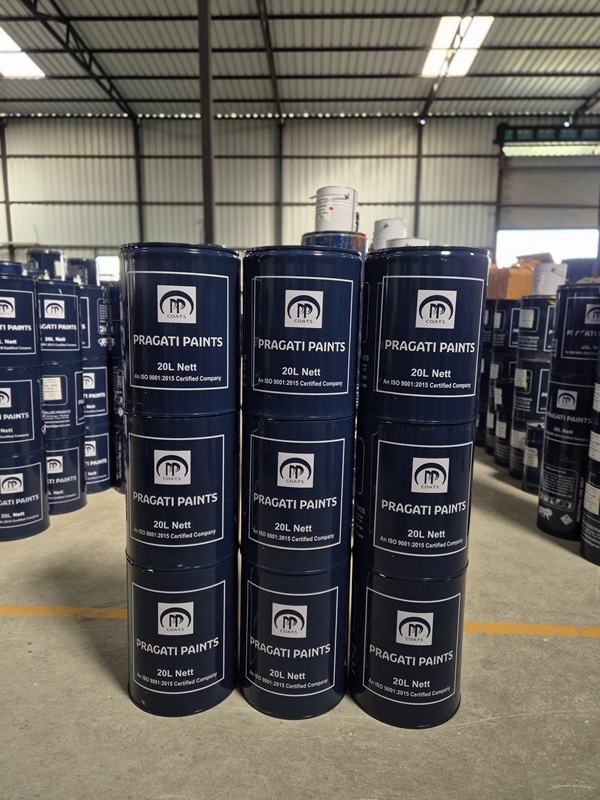 | Expoxy Paint Heavy-Duty Protection for Steel & Concrete in Immersed Conditions When steel or concrete structures are continuously exposed to water, chemicals, or... View product → |
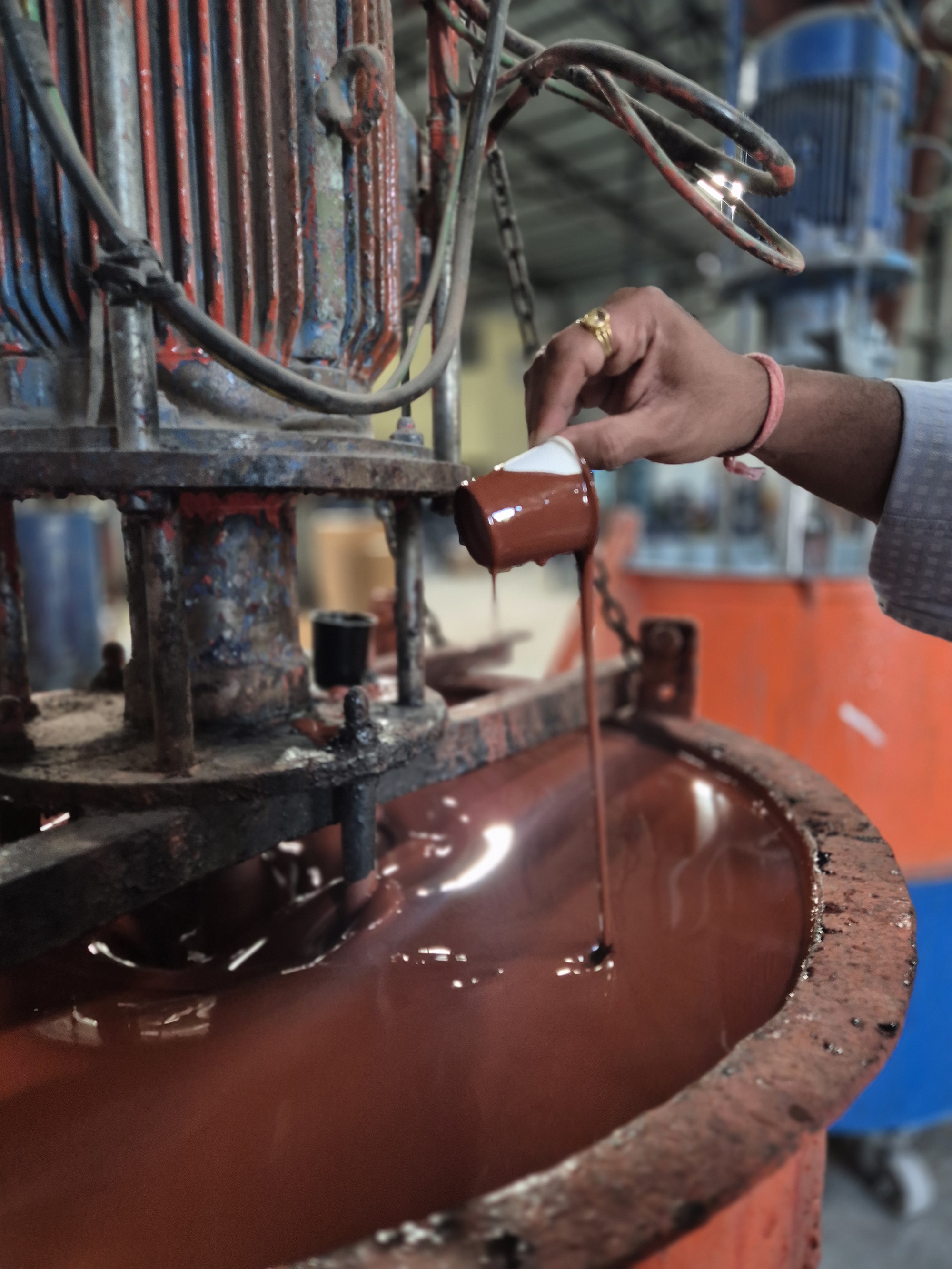 | Expoxy Paint Epoxy Paints –The Ultimate High-Performance Coating for Industrial & Commercial Protection Epoxy paints have become the top choice for industries,... View product → |
Reject the wrong coating before it creates a maintenance problem
Reject epoxy when the film cannot survive continuous immersion, severe solvent or acid exposure, abrasive solids, or a recoat window that the shutdown cannot provide. Reject conventional coal-tar black when forklift impact, heat, cleaning chemicals, or frequent access will soften and damage its film.
A coal tar black industrial coating in Mumbai also requires an SDS review for polycyclic aromatic hydrocarbons and disposal controls under India’s Hazardous and Other Wastes (Management and Transboundary Movement) Rules, 2016.
| Option | Reject it when | Cost or safety consequence |
|---|---|---|
| Epoxy paint | The substrate stays wet, immersion or chemical service exceeds the data sheet, or UV exposure lacks a suitable topcoat | Early blistering, chalking, or shutdown for repair |
| Conventional coal-tar or bituminous black | Equipment faces impact, abrasion, heat, solvents, potable water, food, pharmaceuticals, or contamination-sensitive process streams | Softened film, contamination risk, repeated recoating, and controlled removal waste |
| Epoxy coal tar | The exact two-component formulation, immersion approval, cure conditions, or exposure limits are undocumented | You cannot verify performance, worker controls, or end-of-life disposal |
Compare whole-life cost before selecting the cheaper tin. Include:
- Blast cleaning, stripe coats, coat count, dry-film inspection, holiday repair, and curing time.
- Downtime, access equipment, ventilation, and the recoat interval promised for the actual exposure.
- Repair frequency after forklift contact, abrasive cleaning, or maintenance access—not just purchase price.
- SDS controls for mixing, spraying, blasting, heating, burning, and removing old coal-tar material.
For epoxy paints or coal tar black for factory equipment in Mumbai, reject any quotation that identifies only colour. Require the exact binder, solvent, curing mechanism, dry-film thickness, service exposure, and approval for the fluid or product contacted.
Frequently asked questions
When should you choose epoxy paint for Mumbai factory equipment?
Choose a cross-linked epoxy system for exposed machinery, pipework and structural steel where adhesion, abrasion resistance and chemical contact matter.
Does “coal tar black” identify a complete industrial coating?
No. The term describes colour and a coating family, but you still need the resin type, intended exposure, primer, coat count, film thickness and curing requirements.
How should steel and concrete be prepared before coating?
Remove rust, mill scale, salts, oil, dust and loose material, then confirm the surface is clean and dry before applying the specified system.
What coating details should a factory specification include?
Specify the primer, number of coats, target dry-film thickness, recoat interval, substrate temperature, humidity limits and curing time.
Related products
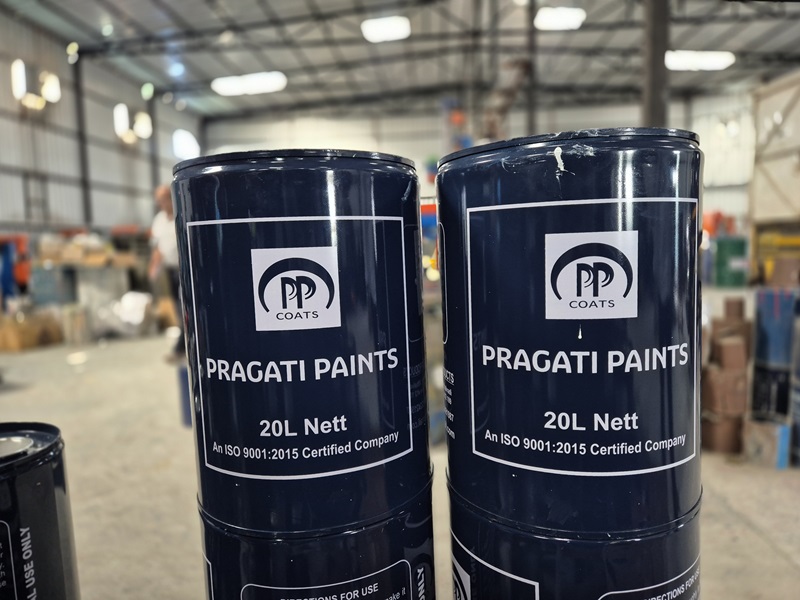 | Expoxy Paint Epoxy Primer – The Most Reliable Base Coat for Industrial Protection & Strong Adhesion When it comes to industrial painting, durability starts from... View product → |
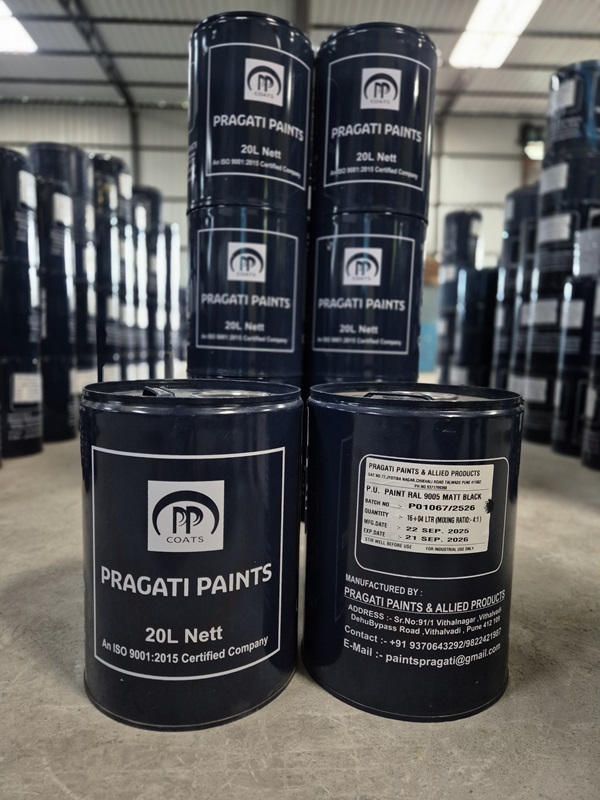 | Industrial PU Paint Premium Polyurethane Coating for Heavy-Duty Industrial Protection Industrial PU Paint RAL 9005 is a high-performance 2K polyurethane coating... View product → |