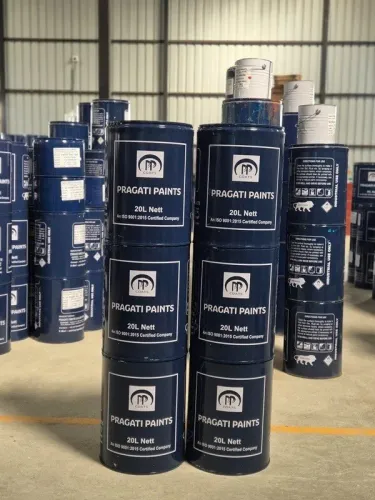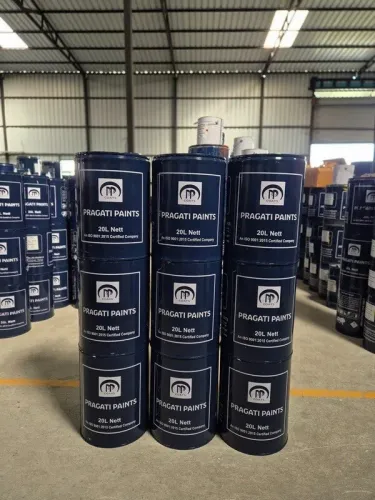

Salt-laden air, condensation and difficult steel details can defeat a coating system long before the nominal film thickness is reached. You will be able to identify suitable epoxy HB MIO primer applications, place the primer correctly in a coating system, and specify the preparation and humidity controls needed for Mumbai steelwork.
Key takeaways
- Use HB MIO primer as a barrier coat for prepared coastal steel.
- Remove rust, mill scale, salts, oil and moisture before priming.
- Apply only within the product’s temperature, humidity and recoat limits.
- Review the full coating system, not the primer name alone.
What MIO Does on Coastal Steel and Where It Is Used
MIO means micaceous iron oxide: platelet-shaped particles that overlap inside the cured epoxy film. They force water, oxygen and salt ions to travel a longer, tortuous path before reaching the steel, improving barrier performance and reinforcing the film. This is the core reason to consider epoxy paints HB MIO primer for coastal steelwork in Mumbai.
Typical epoxy HB MIO primer applications include:
- Port structures
- Marine equipment
- Storage tanks
- Pipe racks
- Bridges
- Structural steel
- Machinery supports
- Plant exteriors
The exposure location still determines the system. Sheltered urban steel may face humid, polluted air without direct salt spray, while waterfront steel exposed to breaking waves or wind-borne spray receives a far harsher chloride load.
Confirm the classification against ISO 12944-2; C5-M identifies very high marine corrosivity, but do not assign it merely because a site is in Mumbai.
MIO epoxy is a barrier and build coat, not a sacrificial coating. Unlike metallic zinc, it does not provide galvanic protection when steel is exposed. It also cannot overcome oil, chloride deposits, dust, loose rust or other contamination left on the substrate.
Specify epoxy HB MIO primer applications within a complete, compatible coating system, with surface preparation, dry-film thickness and topcoat requirements defined for the measured exposure.
How HB MIO Compares with Zinc, Phosphate and Ordinary Epoxy Primers
Choose the primer function before choosing the product: galvanic protection, inhibitive protection, adhesion, or a reinforced barrier/build coat. The comparison below separates those jobs.
| Option | Main protection | Key limitation |
|---|---|---|
| HB MIO epoxy primer | Lamellar MIO creates a longer path for water, oxygen and salts; adds barrier strength and build | Usually an intermediate or barrier coat, not automatic first coat or complete system |
| Epoxy zinc-rich primer | Metallic zinc can provide galvanic, sacrificial protection when electrically connected to steel | Requires specified zinc content, preparation, repair and compatible overcoats |
| Zinc phosphate primer | Phosphate pigment supplies inhibitive corrosion protection at the steel interface | Does not provide sacrificial zinc action |
| Inorganic zinc silicate | Zinc offers galvanic protection in a moisture-cured silicate film | Needs controlled moisture, curing and overcoat compatibility; epoxy cannot be applied casually |
| Ordinary epoxy primer | Adhesion and continuous barrier protection | Lacks MIO’s lamellar reinforcement and zinc’s sacrificial action |
For epoxy paints for coastal steel, use a specified zinc-rich or offshore coating system when the design requires galvanic zinc protection. Follow a named marine specification or a documented system tested for the actual exposure, rather than substituting HB MIO by label.
An HB MIO primer for humid conditions can serve effectively after a compatible primer, beneath the specified HB MIO coat. Finish outdoor steel with a UV-resistant polyurethane or polysiloxane topcoat; exposed epoxy usually chalks and loses appearance even when its barrier remains partly functional.
What Surface Preparation Mumbai Coastal Steel Requires
Start with steel that is chemically clean, not merely bright: marine salts can remain on visibly clean steel and trigger blistering beneath an epoxy MIO film.
1. Remove oil and grease with a suitable cleaner, then rinse or wipe as the cleaning procedure specifies. Eliminate chloride deposits, soluble salts, dust, loose rust, corrosion products, mill scale and failed coating. Do not coat steel that looks clean while marine contamination remains.
2. For new carbon steel, use abrasive blast cleaning to a grade such as ISO 8501-1 Sa 2½. Sa 2½ describes visual cleanliness; it does not complete the specification. State the surface profile required by the selected coating system and verify it with the specified profile method.
3. After blasting, test soluble salts using ISO 8502-6 extraction and ISO 8502-9 conductivity measurement. Put the acceptance limit in the project specification or the manufacturer’s system data; do not assume one universal salt limit for epoxy paints HB MIO primer for coastal steelwork in Mumbai.
4. Round sharp edges, or treat them exactly as the coating specification requires. Apply a compatible stripe coat before the full coat to welds, corners, bolts, edges and difficult-to-spray details. Area-average thickness does not repair thin coverage on edges.
5. On maintenance steel, test the adhesion and compatibility of tightly bonded old coating before selecting HB MIO. Remove unsound coating and corrosion rather than sealing defects beneath the new primer.
How to Apply HB MIO Primer During Mumbai’s Humid Weather
Keep the steel at least 3°C above the calculated dew point during application, unless the project standard or product technical data sheet specifies a different margin. Mumbai humidity can push steel below that threshold after the morning inspection, so repeat readings throughout application and curing.
1. Measure air temperature, steel temperature, relative humidity and calculated dew point before work. Record them again when conditions change, and stop if rain, sea spray, visible wetting or falling steel temperature threatens condensation.
2. Check the technical data sheet for relative-humidity limits, application temperature, wet-film thickness, dry-film thickness, maximum single-coat thickness, recoat interval and thinner allowance. “High build” does not permit unlimited thickness: an excessive pass can trap solvent, delay curing, wrinkle or mud-crack.
3. Use airless spray for large steel areas. Use brush or roller for stripe coats, repairs and small sections, and obtain the specified tip size, pressure, spray distance and thinning limit from the data sheet; excess thinning or atomisation can reduce the intended film build.
4. Agitate settled MIO until the pigment is uniformly suspended, but do not whip air into the epoxy. Poor dispersion creates inconsistent colour, texture and barrier performance.
5. Before recoating, confirm that the film has cured, remains within its recoat window, is clean and dry, and has no condensation or amine blush. If the window is exceeded, abrade or otherwise prepare the aged film exactly as specified.
These controls make HB MIO primer for humid conditions more reliable, including when applying epoxy MIO primer in Mumbai.
How to Specify and Review an HB MIO System for a Mumbai Project
Specify the complete coating system, not a standalone primer. For epoxy paints for coastal steel, ISO 12944-2 exposure classification, such as C5-M where justified, sets the planning context; the chosen durability range is for the full system, not a warranty for the primer.
1. Write the design basis: exposure category, intended durability range, steel detailing, preparation grade, surface-profile range, soluble-salt limit, stripe-coat requirement, coating sequence and target dry-film thickness for every coat. State whether the sequence is zinc-rich primer, epoxy HB MIO intermediate and UV-resistant polyurethane or polysiloxane topcoat.
2. Confirm compatibility between primer, HB MIO intermediate, repair materials and topcoat. A zinc-rich primer and MIO epoxy are not interchangeable. Check the current system data sheet rather than selecting coats by brand name alone.
3. Review each product’s batch number, shelf life, mixing ratio, induction time, application method, recoat window and permitted thinner. Confirm the specified airless-spray settings, brush or roller limits and maximum single-coat thickness before work starts.
4. Record air and steel temperature, relative humidity, dew point, blast-cleaning condition, ISO 8502-6 extraction and ISO 8502-9 conductivity results, wet-film checks, dry-film readings and every repair location. An average thickness cannot hide thin edges or missed welds.
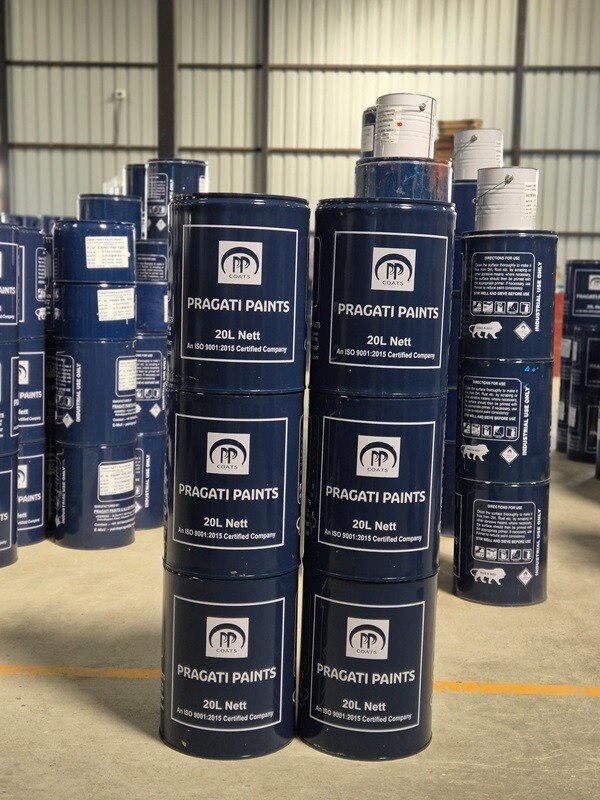
When comparing epoxy mio primer in mumbai suppliers, ask Pragati Paints & Allied Products for the system data sheet and written compatibility guidance. Judge the result by the complete system and inspection record, not “high build” or “MIO” on the label.
Related product
 | Expoxy Paint Superior Barrier Protection with High Build Performance When industrial steel structures are exposed to harsh environments, selecting the right... View product → |
Frequently asked questions
What does MIO do on coastal steel?
Micaceous iron oxide forms overlapping platelets in the cured epoxy film. They lengthen the path for water, oxygen and salt ions, improving barrier protection. Use the primer on prepared steel in structures such as marine equipment, port assets, tanks, platforms and exposed industrial steelwork.
How does HB MIO primer compare with zinc, phosphate and ordinary epoxy primers?
Zinc-rich primers provide sacrificial protection when the zinc content and electrical contact meet the specification. Phosphate primers support corrosion control in less severe service or as part of a compatible system. Ordinary epoxy primers provide a resin barrier, while HB MIO epoxy adds platelet reinforcement. Compare corrosion mechanism, dry-film thickness, compatibility, repair method and the complete topcoat system before choosing.
What surface preparation does Mumbai coastal steel require?
Remove oil and grease before abrasive blasting, then eliminate rust, mill scale, loose old coating, dust and visible salt contamination. Specify the required blast-cleaning grade, surface profile, cleanliness checks and maximum time between preparation and priming. Inspect welds, edges, weld spatter and sharp corners because these areas commonly receive inadequate film thickness.
How should you apply HB MIO primer during Mumbai’s humid weather?
Check steel temperature, air temperature, relative humidity and dew point before and during application. Keep steel above the dew point by the product’s specified margin, and stop when condensation forms or the coating window is exceeded. Follow the technical data sheet for mixing, induction time, thinner limits, wet-film thickness, dry-film thickness and recoat interval.
How do you specify and review an HB MIO coating system for a Mumbai project?
Define the exposure, steel preparation grade, primer dry-film thickness, number of coats, compatible intermediate and topcoat, colour, repair procedure and inspection records. Request the product technical data sheet, safety data sheet, batch details, application limits and test requirements. Review measured surface conditions, wet- and dry-film readings, curing and recoat records before acceptance.