
The choice depends on more than corrosion resistance: epoxy describes the binder, while zinc phosphate describes an anticorrosive pigment, so one primer can contain both. By checking the substrate, exposure, preparation standard, downtime, curing conditions and finish coat, you can select a workable maintenance system instead of comparing product names in isolation.
Key takeaways
- Epoxy describes the binder; zinc phosphate describes the anticorrosive pigment.
- Choose by exposure, substrate condition, temperature and return-to-service time.
- Compare epoxy zinc phosphate with alkyd and quick-drying systems before specifying.
- Measure surface preparation, film thickness, curing and acceptance criteria in the work package.
Start with the Binder–Pigment Difference
Epoxy and zinc phosphate are not competing categories. Epoxy names the binder, or resin that forms the film; zinc phosphate names an anticorrosive pigment dispersed through that binder. A primer can therefore be an epoxy zinc phosphate primer.
The zinc phosphate primer versus epoxy primer question compares unlike features unless you identify both the binder and pigment.
| Option | What it means | Practical consequence |
|---|---|---|
| Epoxy primer | Two component resin system that cures into a dense film | Strong barrier, adhesion, water, chemical and abrasion resistance after correct mixing and curing |
| Zinc phosphate primer | Primer containing a non-metallic corrosion inhibiting pigment | Corrosion control depends on the binder, film thickness, preparation and exposure |
| Epoxy zinc phosphate primer | Epoxy binder combined with zinc phosphate pigment | Combines pigment inhibition with epoxy barrier performance, but requires mixing, induction, pot life and recoat control |
| Zinc rich primer | High loading of metallic zinc with electrical continuity in the dry film | Provides galvanic protection; it is not interchangeable with zinc phosphate |
For a maintenance job, compare the complete system: surface preparation, stripe coat, primer, intermediate coat, topcoat, recoat window and expected exposure. A cheaper single pack can cost more if it needs another coat, returns to maintenance sooner or fails after humidity traps salts beneath the film.
Choose zinc phosphate when general atmospheric steelwork, simpler handling and repairability dominate. Choose epoxy zinc phosphate when water, chemicals, abrasion or prolonged service justify tighter application control. Check the specified topcoat before ordering.
Match the Primer to Exposure, Temperature and Return-to-Service Time
Choose epoxy when steel faces immersion, frequent washing, solvents, chemicals, abrasion or severe coastal humidity, and the job allows controlled mixing and curing. Zinc phosphate alkyd makes more sense for sound steel in ordinary atmospheric service, small repair areas and short shutdowns.
Primer choice for maintenance painting must include every coat and the return-to-service constraint:
| Option | Choose it when | Main limitation |
|---|---|---|
| Epoxy zinc phosphate | You need stronger adhesion, water resistance and barrier protection; the steel will receive a compatible intermediate and topcoat | Two-pack mixing, induction, pot life and recoat control; low temperature or high humidity can delay cure |
| Alkyd zinc phosphate | The area is small, service is atmospheric, and single-pack application matters | Weaker resistance to immersion, solvents, aggressive chemicals and sustained wet exposure |
| Quick-drying zinc phosphate | The work needs rapid handling or recoating and the product’s specified conditions are available | A shorter drying time does not replace full cure or prove suitability for severe exposure |
| Zinc-rich system | The specification demands galvanic protection for prepared steel | Higher application control, dry-film requirements and topcoat compatibility checks |
Do not select epoxy merely because the environment is harsh. A two-pack film applied over oil, soluble salts, rust or condensation can blister early, while a correctly prepared surface with a compatible system may outperform a premium primer applied badly.
Check the product’s minimum steel and air temperature, maximum humidity, dew-point separation and recoat window. If ultraviolet exposure is continuous, specify polyurethane or another weather-resistant topcoat; epoxy alone can chalk and lose gloss.
Compare Epoxy Zinc Phosphate with Alkyd and QD Systems
Choose epoxy zinc phosphate when wet service, chemical exposure, abrasion or a long maintenance interval justifies tighter application control. Choose alkyd or QD zinc phosphate when the area is small, access is limited and rapid return to service matters more than maximum barrier resistance.
| Option | Practical advantage | Main risk or limitation |
|---|---|---|
| Epoxy zinc phosphate | Strong adhesion and barrier protection; better resistance to water, solvents and abrasion after cure | Requires correct mixing, induction, pot-life control, recoat timing and compatible topcoat |
| Alkyd-base zinc phosphate | Single-pack handling; no mixed-material pot life; practical for general atmospheric steelwork | Lower resistance to immersion, aggressive chemicals and sustained wet exposure; epoxy topcoats can create compatibility problems |
| QD zinc phosphate | Faster handling and recoating, useful where shutdown time is short | Confirm the actual drying and recoat times at Mumbai’s humidity; trapped solvent or condensation can cause wrinkling, poor adhesion or blistering |
For an epoxy primer comparison in Mumbai, price the complete system: preparation, stripe coat, primer, intermediate, topcoat, access, rework and expected repaint interval. A cheaper alkyd or QD product becomes expensive if it needs another coat or fails during a humid overnight cure.
An epoxy paints primer contractor comparison should also record steel temperature, relative humidity, dew point, surface profile, dust and soluble salts. Sa 2½ describes visual blast cleanliness, not salt contamination or profile depth. Select zinc phosphate for ordinary atmospheric steel; select a zinc-rich system when the specification demands galvanic protection.
Verify Steel and Existing Coatings Before You Prime
An existing coating must be sound, clean and compatible before you decide between epoxy primer and zinc phosphate primer. Priming over flaking paint, underfilm rust or a weak old film transfers the failure into the new system.
1. Map the surface. Mark bare steel, rust grades, blisters, peeling edges, welds and previous repairs. Remove loose coating and corrosion, then prepare the exposed steel to the specified ISO 8501-1 grade. Feather sound coating edges instead of leaving a sharp step.
2. Check contamination. Remove oil and grease with a compatible cleaner, then test for soluble salts on coastal steel. Use the Bresle method in ISO 8502-6 and assess the extract’s conductivity under ISO 8502-9; use the project specification’s chloride limit, not a universal Mumbai value. Chlorides left beneath epoxy can cause early blistering.
3. Prove the old film can carry the system. Test adhesion with the specified cross-cut or pull-off method, and check for chalking, softening or lifting after cleaning. A failed adhesion test means removal, not a stronger primer.
4. Confirm recoat compatibility. Wash and abrade a glossy cured epoxy before recoating; remove amine blush or other contamination. Check the product data sheet for overcoating limits, solvent restrictions and required tie coats. Applying directly over blush can cause intercoat adhesion failure.
Before application, measure steel temperature, air temperature, relative humidity and dew point. Do not coat when condensation can form during cure; epoxy is especially vulnerable while curing. A zinc phosphate primer still needs a compatible intermediate and topcoat, not an assumption that pigment alone solves a failed substrate.
Turn the Choice into a Specified, Measurable Work Package
Write one system specification, not a product name. For epoxy primer or zinc phosphate primer for maintenance contractors in Mumbai, record the complete coating build-up: preparation grade, stripe coat, primer, intermediate coat, topcoat, target dry-film thickness (DFT), recoat interval, service exposure and return-to-service date.
Primer choice is only measurable when the site record captures the conditions that can cause failure. Measure steel temperature, relative humidity, dew point, surface profile, dust and soluble salts; ISO 8501-1 Sa 2½ alone does not cover the last four items.
| System item | Record before work | Control during work |
|---|---|---|
| Surface preparation | Standard, profile range, salt and dust limits | Hold point before priming |
| Primer | Product, batch, mix ratio, induction time and pot life | Wet-film checks and batch traceability |
| Application | Steel-temperature limit, humidity limit, dew-point margin and DFT | Log each shift and coat |
| Recoat and finish | Minimum and maximum recoat windows, compatible coats | Release only after inspection |
Compare suppliers against the same support package:
- Current technical data sheet and safety data sheet, with batch-specific documentation.
- Written advice for existing coatings, stripe coating, high-build application and repairs.
- A site trial or technical visit that records steel temperature, humidity, dew point and DFT.
- Clear instructions for mixing, induction, pot life, thinning and equipment cleaning.
- A named contact who will assess defects rather than merely replace material.
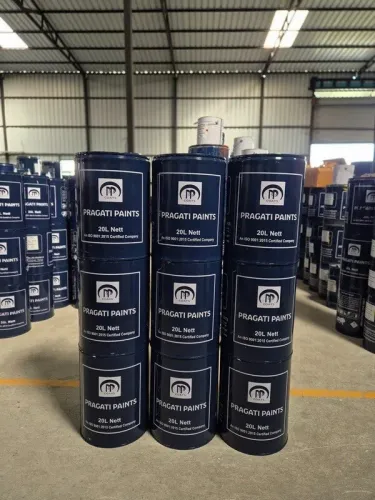
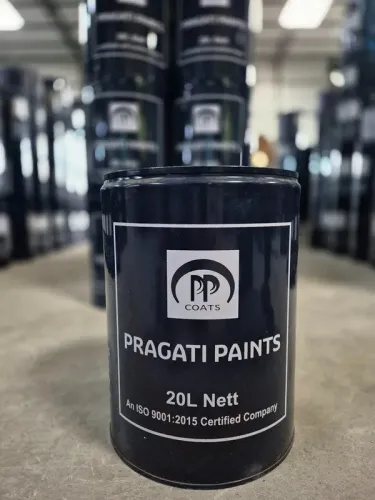
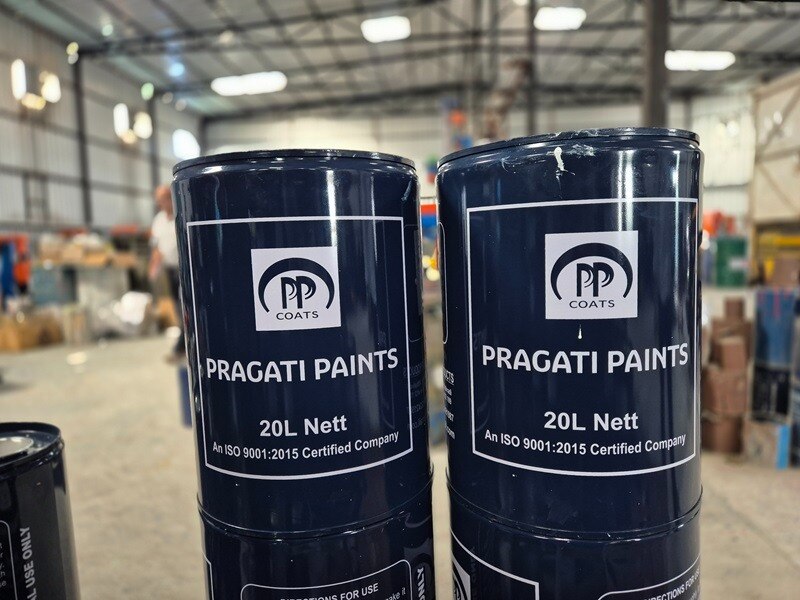
Pragati Paints & Allied Products belongs on the comparison sheet only after it supplies these documents and site controls alongside its proposed primer system. Select the supplier that reduces rework, extra coats and missed recoat windows, not simply the lowest drum price.
Related products
 | Expoxy Paint Premium Anti-Corrosive Protection for Industrial Metal Surfaces When industries need the highest level of corrosion resistance and strong adhesion,... View product → |
 | Industrial Expoxy Paint Epoxy High Build Zinc Phosphate Primer Advanced Corrosion Protection for Industrial Steel Structures Industrial environments demand coatings that deliver long-lasting corrosion protection,... View product → |
Frequently asked questions
Is epoxy primer different from zinc phosphate primer?
Yes. Epoxy identifies the resin binder, while zinc phosphate identifies an anticorrosive pigment. An epoxy primer can contain zinc phosphate.
How should contractors choose a primer for maintenance painting?
Match the primer to exposure, operating temperature, required return-to-service time, steel condition and compatibility with the existing coating.
How does epoxy zinc phosphate compare with alkyd and QD primers?
Compare corrosion protection, drying and curing time, overcoating window, application conditions, compatibility and the demands of the service environment.
What must contractors verify before priming steel?
Check surface cleanliness, profile, moisture, soluble contamination, rust, existing coating adhesion and compatibility before application.
Related products
 | Expoxy Paint Epoxy Primer – The Most Reliable Base Coat for Industrial Protection & Strong Adhesion When it comes to industrial painting, durability starts from... View product → |
 | Industrial QD Paint Alkyd Base Zinc Phosphate Primer Reliable Anti-Corrosive Protection for Metal Surfaces Alkyd Base Zinc Phosphate Primer is one of the most trusted primers in the industrial and... View product → |
 | Q.D. Paints & Primer Q.D. Zinc Phosphate Primer – High-Performance Protection for Metal Surfaces When it comes to industrial painting, achieving strong corrosion... View product → |