
Choosing a chlorinated rubber coating by the words “marine grade” or “water resistant” can produce the wrong system for seawater, fuel exposure, immersion, or an aged steel surface. By matching the formulation to exposure, preparation, primer, film thickness, and application conditions, you can identify a coating that is practical to apply and defensible in a project specification.
Key takeaways
- Choose immersion-rated coating for submerged steel, not a general-purpose maintenance grade.
- Control surface cleanliness, dryness, film thickness, ventilation, and recoat windows.
- Design primer, existing coating, and finish as a tested compatible system.
- Specify exposure, substrate, surface preparation, dry-film thickness, and acceptance tests.
Which chlorinated rubber paint types are actually available?
A chlorinated rubber coating is a family of solvent-borne, single-pack, physically drying products—not one universal paint. Its film forms mainly as solvent evaporates, unlike the chemical cure of epoxy or two-pack polyurethane. That gives rapid handling and simpler repairs, but poor ventilation or excessive thickness can trap solvent, prolong softness, cause wrinkling, and weaken adhesion.
| Type | Typical purpose | Why it is not interchangeable |
|---|---|---|
| Low-build conventional | Atmospheric steel and maintenance work | Limited film thickness and barrier protection |
| High-build or thixotropic | Fewer coats and reduced sag on steel | Needs its specified wet- and dry-film thickness |
| Modified chlorinated rubber | Improved adhesion or resistance | Modification varies by manufacturer |
| Primer | Prepared steel or masonry base | Requires a compatible finish coat |
| Finish coat | Colour, weathering, and final protection | Cannot replace a suitable primer |
| Masonry | Concrete, render, or blockwork | Concrete moisture and alkalinity affect adhesion |
| Pool or immersion | Named freshwater or immersion service | “Water resistant” does not prove continuous immersion |
| Antifouling | Biocidal control of marine fouling | Not a corrosion-barrier substitute |
Ask for the technical data sheet’s stated substrate, dry-film thickness, service exposure, water type, and permitted overcoating list. A chlorinated rubber paint for option-based selection fits steel, masonry, pools, or fouling control only when those details match.
Antifouling products contain biocidal pigments and require local registration checks. Confirm compliance with the International Convention on the Control of Harmful Anti-fouling Systems, which controls harmful substances including organotin biocides and cybutryne.
Which exposure decides the right marine or infrastructure coating?
Atmospheric marine steel, bridge members, port structures, warehouses, and pipelines above the waterline can suit a single-pack chlorinated rubber primer-and-finish system when its data sheet names the ISO 12944-2 corrosivity category and service conditions. That is the starting point for chlorinated rubber paint selection, not the words “marine grade.”
| Exposure | Suitable decision | Required evidence |
|---|---|---|
| Atmospheric steel or salt-laden air | Consider a chlorinated rubber coating | Corrosivity category, UV, salt-spray and recoat data |
| Splash zone or waterline cycling | Use only a formulation approved for repeated wetting and drying | Written splash-zone rating; salt and oxygen cycling resistance |
| Freshwater tank or intermittent immersion | Use only a rated immersion formulation | Freshwater identification and maximum immersion duration |
| Buried, submerged or cathodically protected steel | Select a system specifically permitting that service | Written buried, submerged or cathodic-service approval |
| Continuous seawater or ballast-tank immersion | Do not assume suitability | Explicit continuous-seawater or ballast-tank rating |
Salt deposits and oxygen movement accelerate corrosion during wet-dry cycling. “Water resistant” does not prove permanent seawater performance. Check resistance to abrasion, heat, oil, diesel, hydraulic fluid, aromatic hydrocarbons, ketones, esters, and strong cleaning solvents; these exposures can soften or strip the film.
Choose a two-pack epoxy or polyurethane when immersion, fuel, heat, or severe abrasion exceeds the written envelope. Potable-water tanks also need product-specific approval, such as NSF/ANSI/CAN 61 where required.
What preparation and application controls prevent early failure?
Early failure is prevented by releasing the surface before coating, then controlling film build and drying conditions. Do not write “clean steel” or “dry concrete” as the entire specification; define what the applicator must see, measure, and record.
| Control | Steel requirement | Concrete requirement |
|---|---|---|
| Preparation standard | State the ISO 8501-1 cleanliness grade and ISO 8503 surface profile. Do not copy an epoxy profile without checking the chlorinated rubber coating TDS. | Remove laitance, curing residue, oil, and loose particles; expose sound concrete. |
| Contamination removal | Remove rust, mill scale, oil, salts, loose paint, and weld spatter. Use ISO 8502 methods for dust and soluble-salt checks. | Remove visible contamination and confirm the surface is dry enough for the product. |
| Release before priming | Record the maximum blast-to-prime time in the specification. Flash rust or salt contamination requires correction before coating. | Check moisture with the product’s permitted method and limit before application. |
| Application data | Obtain TDS values for wet-film thickness, dry-film thickness, coat count, recoat interval, thinner, spray tip, and maximum coats per day. | Use the same product-specific limits; do not assume a masonry film can match a steel film. |
| Weather and drying | Stop if steel is wet, salt-contaminated, or within 3°C of the dew point. Record steel temperature, air temperature, relative humidity, and dew point with a calibrated meter. | Stop when moisture exceeds the TDS limit or ventilation cannot remove solvent. |
| Failure warning | Excessive thickness, cold conditions, high humidity, poor ventilation, or a closed surface can trap solvent, causing wrinkling, bubbling, sagging, prolonged softness, or adhesion loss. | The same defects occur when moisture or solvent remains trapped. |
Use brush or roller for stripe coats, repairs, and small areas. Use spray on controlled large areas only when overspray, ventilation, and film build are managed.
How should the primer, existing coating, and finish be designed as one system?
A chlorinated rubber topcoat works only when its primer, existing film, and exposure-rated finish form one compatible stack. Choose the primer against the steel condition and ISO 12944-2 corrosivity category, then use ISO 12944-5 system selection where the project follows that standard.
| Option | What it means | When it applies |
|---|---|---|
| Chlorinated-rubber primer | Single-pack base designed for a compatible chlorinated rubber coating | Routine atmospheric maintenance and compatible aged coatings |
| Zinc phosphate primer | Corrosion-inhibiting primer for prepared steel | Use only when the manufacturer permits chlorinated rubber over it |
| Epoxy primer | Barrier layer with a specified compatible finish | Projects requiring a documented epoxy-based system |
| Zinc-rich epoxy | Galvanic protection from metallic zinc | Severe corrosion exposure when strict surface preparation and overcoating controls are acceptable |
Request a written compatibility table covering aged chlorinated rubber, alkyd, epoxy, polyurethane, coal-tar, and unknown coatings. It must state whether each film can be retained, abraded, sealed, or removed, plus the permitted recoat interval.
Retain an old film only when it is sound, degreased, and abraded. Remove chalked, loose, blistered, contaminated, or poorly bonded paint to a sound edge. A solvent-rich new chlorinated rubber coating can soften, wrinkle, or lift an incompatible film, so test-patch a small area and check adhesion before production work.
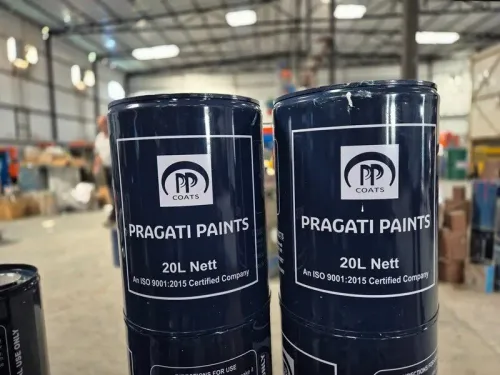
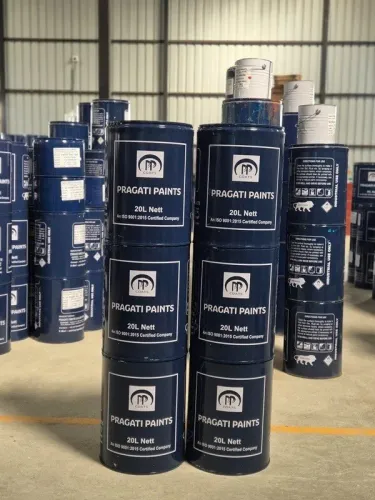
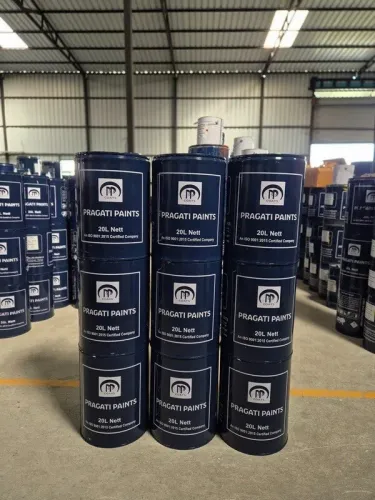
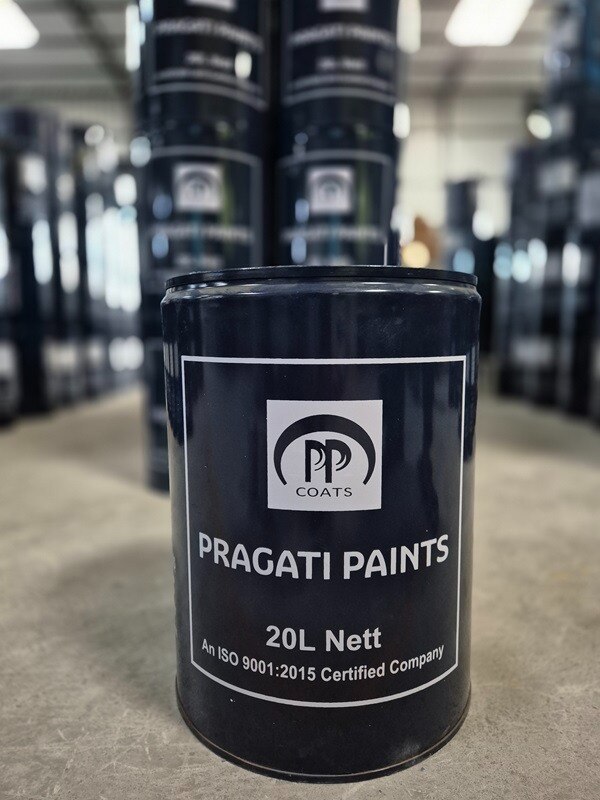
Specify ASTM D7091 for dry-film thickness, ASTM D3359 or ASTM D4541 for adhesion, and ASTM D5162 for holidays. Pragati Paints & Allied Products belongs on the comparison list when its TDS and compatibility schedule match the substrate and exposure.
Related product
 | Q.D. Paints & Primer High-Performance Protective Coating for Industrial & Marine Applications. View product → |
What should you put in the purchase specification before choosing a product?
Specify the job before comparing brands. State the substrate, existing-coating condition, ISO 8501-1 preparation grade, ISO 8503 profile, ISO 8502 soluble-salt and dust limits, ISO 12944-2 corrosivity category, atmospheric or immersion service, water type, temperature range, UV and abrasion exposure, and contact with oil or solvents.
Your purchase checklist should include:
- Colour; target wet- and dry-film thickness; recoat window; approved thinner; application method; inspection tests; repair procedure; shelf life; batch number; and technical-support contact.
- A product data sheet, safety data sheet, application guide, compatibility schedule, and certificate for claimed potable-water contact, such as NSF/ANSI/CAN 61 where required.
- A written statement confirming continuous-immersion suitability for the named water, not merely “water resistant” or “marine grade.”
- Ventilation, ignition control, respirator requirements, storage temperature, fire precautions, and compliance with local VOC rules, including 40 CFR 59 Subpart D where it applies.
| Option | Advantage | Trade-off |
|---|---|---|
| Single-pack chlorinated rubber | No induction time or pot life; fast maintenance repair | Solvent exposure, VOC and fire controls, lower heat and aggressive-solvent resistance |
| Two-pack epoxy or polyurethane | Stronger immersion, heat, solvent, and abrasion resistance | Mixing, induction or pot-life control, stricter application and repair procedures |
Choose a chlorinated rubber paint option when the TDS names your exposure, compatible primer and finish, and repair method. That is the core of chlorinated rubber paint selection. Choose another system when fuel, heat, severe abrasion, continuous immersion, or regulation exceeds that written envelope.
Frequently asked questions
Which chlorinated rubber paint types are available?
Available products differ by substrate, colour, film-build capability, chemical resistance, and exposure rating. Compare the technical data sheet rather than treating all single-pack chlorinated rubber paints as interchangeable.
Which exposure decides the right marine or infrastructure coating?
Identify whether the surface faces atmospheric salt spray, freshwater, intermittent wetting, continuous immersion, abrasion, chemicals, or heat. Select a product whose data sheet names that exposure and substrate.
What preparation and application controls prevent early failure?
Remove rust, salts, oil, loose coating, and moisture; follow the specified surface profile; apply within the stated temperature, humidity, thinning, wet-film, dry-film, and recoat limits.
How should the primer, existing coating, and finish be designed as one system?
Confirm intercoat compatibility, test adhesion on existing paint, repair damaged areas with the specified primer, and use the recommended number of coats and total dry-film thickness.
What belongs in a chlorinated rubber paint purchase specification?
State the substrate, exposure, preparation standard, primer and finish, colour, coats, dry-film thickness, application method, thinner, recoat interval, packaging, batch traceability, and inspection tests.