
Choosing between an inorganic zinc silicate primer and an epoxy paint depends on more than zinc content or the word “primer” on the label. By comparing binder chemistry, exposure, temperature, surface preparation, and topcoat requirements, you can specify a coating system that fits the steel, environment, and maintenance plan.
Key takeaways
- Choose inorganic zinc silicate for compatible atmospheric steel systems and controlled application.
- Use epoxy zinc-rich primer when overcoating flexibility and site tolerance matter.
- Remove mill scale, rust, oil, and salts before applying either primer.
- Confirm immersion, temperature, chemical exposure, dry-film thickness, and recoat limits.
How inorganic zinc silicate and epoxy zinc-rich primers protect steel
A search for epoxy paints inorganic zinc silicate primer combines two technologies. An epoxy zinc silicate primer is an epoxy zinc-rich coating; an inorganic zinc silicate primer uses a silicate binder. Both contain metallic zinc dust, but the binder controls curing, porosity, electrical contact, overcoating, repair, and tolerance of site conditions.
Cathodic protection works only when zinc particles contact one another and the steel, allowing zinc to corrode sacrificially. Excess binder, low zinc loading, oil, salts, dust, or an insulating intermediate coat interrupts that circuit.
Do not compare zinc percentage in wet paint with zinc percentage by weight in the dry film: water and solvent leave during curing, and procurement documents must state the test method and calculation basis.
| Primer | Main protection | Practical distinction |
|---|---|---|
| Inorganic zinc silicate | Zinc sacrificial action plus porous mineral film | Needs controlled moisture and compatible overcoating; difficult repairs; higher heat tolerance |
| Epoxy zinc-rich | Zinc sacrificial action plus organic barrier | Broader field tolerance and easier repair; epoxy cure and temperature limits apply |
| Epoxy zinc phosphate | Barrier and inhibitive pigment | No equivalent zinc-dust sacrificial action |
| High-build zinc phosphate | Thick barrier protection | Useful where film build matters, but not galvanic protection |
| General epoxy primer | Organic barrier | No zinc-based sacrificial action; strong adhesion and topcoat compatibility |
Inorganic zinc silicate can fail through excessive thickness, poor cure, or unsuitable topcoat. Repair exposed steel with the specified zinc-rich repair material, not generic epoxy filler, or the local galvanic protection disappears. Wet-film zinc content also says little about final performance unless dry-film contact, thickness, preparation, and porosity are verified.
Match the primer to immersion, weather, heat, and chemical exposure
Atmospheric marine steel usually suits inorganic zinc silicate beneath a compatible intermediate and finish coat; offshore splash zones and immersion usually need a barrier-focused epoxy system designed for continuous wet exposure. Inorganic zinc silicate is not a universal immersion primer.
| Exposure | Better starting point | Critical check |
|---|---|---|
| Atmospheric marine steel | Inorganic zinc silicate or epoxy zinc-rich primer | Confirm compatible overcoat, salt removal, and complete system |
| Offshore splash zone | High-build epoxy system | Specify wet-service immersion and splash-zone resistance |
| Continuous immersion | Immersion-grade epoxy system | Check water, seawater, solvent, and chemical resistance |
| Buried steel | A system rated for the stated soil service | Verify moisture, soil chemistry, cathodic-protection, and repair requirements |
| High humidity or intermittent wetting | Epoxy barrier system | Control condensation; do not immerse uncured coating |
| Abrasion | High-build epoxy or reinforced epoxy system | Confirm impact, abrasion, and dry-film thickness limits |
| Chemical exposure | Chemical-resistant epoxy or specialised system | Match the exact chemical, concentration, temperature, and exposure time |
| Elevated temperature | Inorganic zinc silicate or a rated high-temperature system | Obtain continuous and peak limits from the technical data sheet |
This inorganic zinc silicate primer comparison matters because the silicate binder is commonly selected for atmospheric steelwork and higher-temperature service, while epoxy paints usually provide stronger barrier protection and broader organic topcoat compatibility. Exposed epoxy can chalk and lose gloss in direct sunlight, so use a suitable ultraviolet-resistant polyurethane or polysiloxane finish.
Do not infer temperature performance from “epoxy” or “zinc.” Epoxy binders can soften or lose strength at elevated temperature, and every product has different continuous and peak limits. Choose the complete compatible system, not the primer name alone.
Surface preparation decides whether the zinc-rich film performs
A zinc-rich film performs only when steel is clean, dry, and profiled for the specified product. Abrasive blast cleaning to a near-white grade such as Sa 2½ under ISO 8501-1 is more reliable than power-tool cleaning for high-durability systems.
1. Remove oil and grease before blasting, then verify the blast standard visually. Measure the surface profile against the product’s stated micrometre range; do not substitute a familiar profile. Measure soluble salts separately with a recognised field method and record the result.
2. Apply only while steel remains dry and condensation-free. Keep flash rust within the coating manufacturer’s stated grade. Visible orange rust, condensation, or wet steel is not an acceptable shortcut.
3. Issue a written compatibility decision for carbon steel, welds, edges, galvanized steel, previously painted steel, and concrete. The product name alone does not prove adhesion. Smooth welds, remove spatter, and round sharp edges before coating.
4. Apply stripe coats to welds, edges, bolts, and difficult geometries where the specification requires them. Use controlled spray application, then check wet-film or dry-film thickness. Do not add extra passes as a safety margin.
Excessive inorganic zinc silicate thickness can cause mud cracking, powdering, cohesive weakness, or delayed cure. Epoxy paints are not automatically interchangeable: confirm the substrate, surface profile, repair method, and complete compatible system in writing before choosing an epoxy inorganic zinc silicate primer.
Control moisture, cure, thickness, and the recoating window
Choose by the curing environment before choosing the topcoat. An inorganic zinc silicate primer needs moisture for hydrolysis and cure, so very low relative humidity can delay hardening; rain, condensation, or immersion before cure can cause whitening, powdering, poor adhesion, or coating failure.
Epoxy follows a different inorganic zinc silicate primer comparison: its cure depends on temperature, resin-hardener induction time, and mixed-material pot life. Pot life shortens as material temperature rises. An epoxy zinc silicate primer or epoxy zinc-rich system applied outside its minimum curing temperature can remain soft even when the surface feels dry.
| Finish | Compatibility and timing | Main control |
|---|---|---|
| Polyurethane | Common finish over a fully cured, prepared zinc silicate system | Confirm recoat window and mist coat |
| Epoxy | Broad compatibility, but direct high-solids application can trap solvent | Use the specified tie coat or mist coat |
| Alkyd | Often incompatible with alkaline or zinc-rich surfaces | Obtain written system approval |
| Acrylic | Compatibility and adhesion depend on the specific formulation | Follow the product data sheet |
| Polysiloxane | Use only within the tested system sequence | Verify intermediate-coat cure |
| Tie coat | Bridges porous zinc silicate before an organic finish | Apply only the specified product and thickness |
Do not apply high-solids epoxy directly over porous, dusty, rough, excessively thick, or undercured zinc silicate. Bubbling, pinholing, solvent entrapment, and adhesion loss can follow. Remove loose zinc salts, verify cure, and control film thickness.
- Minimum and maximum overcoat intervals
- Mist-coat method and thinner limit
- Minimum application and curing temperature
- Pot life at the material temperature
- Cure-verification method and acceptance result
Specify the complete coating system, not just the primer
Choose by exposure first, not by the word “zinc.” A search for epoxy paints inorganic zinc silicate primer for comparison should end with a complete system specification, because a primer alone does not define immersion, heat, or chemical resistance.
| Option | Main protection | Best starting point |
|---|---|---|
| Epoxy inorganic zinc silicate primer | Zinc sacrificial action; higher heat tolerance | Atmospheric steel and elevated-temperature service; not automatic immersion suitability |
| Epoxy zinc-rich primer | Zinc sacrificial action with epoxy barrier | Marine, humid, intermittent wetting, and repair-friendly steelwork |
| Epoxy zinc phosphate primer | Barrier and adhesion; no equivalent zinc sacrificial action | General atmospheric corrosion and compatible epoxy systems |
| High-build zinc phosphate primer | Thicker barrier film and edge coverage | Abrasion and moderate atmospheric exposure |
| General epoxy primer | Barrier and adhesion; no zinc protection | Prepared steel, concrete, and non-zinc systems |
Specify these items in the purchase:
- Substrate, exposure, continuous and peak service temperature, surface preparation, nominal and maximum dry-film thickness, and zinc basis: dry-film percentage, zinc-dust grade, or another stated test basis.
- Stripe coats for edges and welds, compatible intermediate coat, finish coat, and minimum and maximum overcoat intervals. Inorganic zinc silicate may need a compatible mist or tie coat; epoxy systems often accept epoxy or polyurethane layers.
- Repair material and method. Do not replace exposed zinc-rich protection with generic epoxy.
- Inspection tests, including wet- or dry-film thickness and adhesion where specified; check cure before overcoating.
A high-solids epoxy over porous or undercured silicate can bubble, pinhole, or lose adhesion. Pragati Paints & Allied Products can help source and match systems in Sambhaji Nagar, Maharashtra, but the primer name never proves compatibility.
Related products
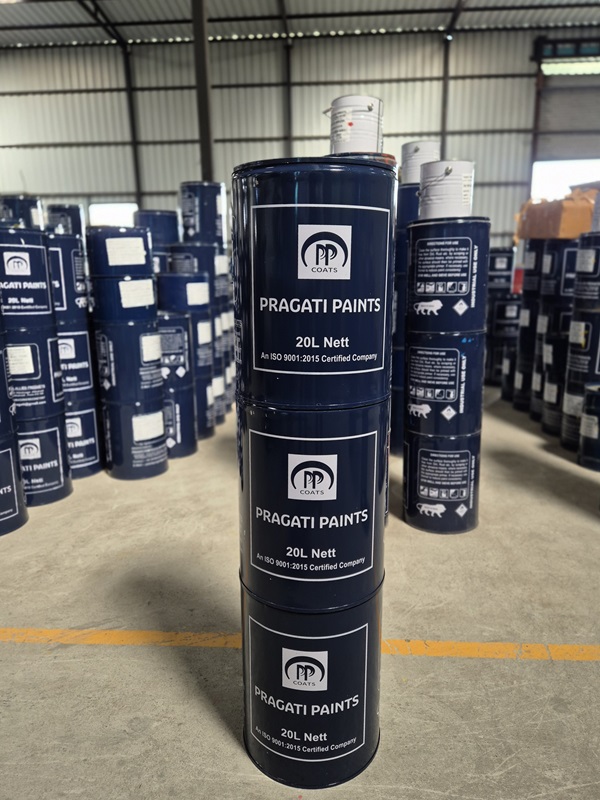 | Expoxy Paint Epoxy Inorganic Zinc Silicate Primer Heavy-Duty Anti-Corrosive Protection for Extreme Industrial Conditions When it comes to the highest level of corrosion protection, especially in... View product → |
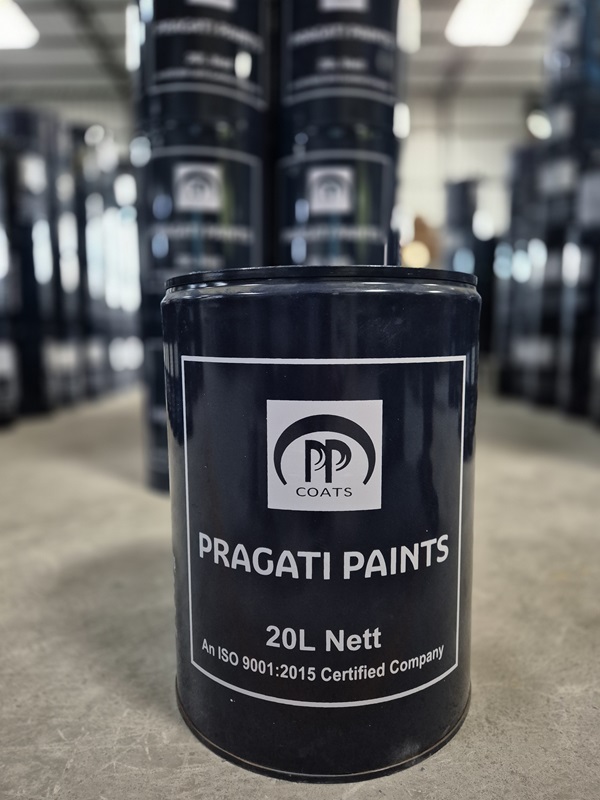 | Expoxy Paint High-Performance Protection for Steel Structures When it comes to long-term corrosion protection of metal surfaces, Epoxy Zinc Rich Primer is one of... View product → |
Frequently asked questions
How do inorganic zinc silicate and epoxy zinc-rich primers protect steel?
Both use metallic zinc dust for galvanic protection, but their binders differ. Inorganic zinc silicate uses a silicate binder and relies on specific curing conditions, while epoxy zinc-rich primer uses an epoxy binder with different porosity, overcoating, repair, and site-tolerance characteristics.
How should you choose between epoxy and inorganic zinc silicate primer?
Match the primer to the exposure: immersion, weather, heat, and chemicals. Then check the manufacturer’s complete system data for compatibility, service limits, and the required topcoat.
Why does surface preparation matter for zinc-rich primers?
Zinc-rich films need clean, profiled steel. Remove oil, salts, mill scale, rust, and loose material, then verify the specified cleanliness and surface profile before painting.
What must you control during application and curing?
Control steel temperature, air temperature, relative humidity, condensation risk, wet- and dry-film thickness, curing time, and the manufacturer’s recoating window.
Why specify the complete coating system instead of only the primer?
Primer performance depends on the surface preparation, intermediate coat, topcoat, film thickness, exposure, and application conditions. A compatible system specification prevents adhesion and premature failure caused by mismatched layers.
Related products
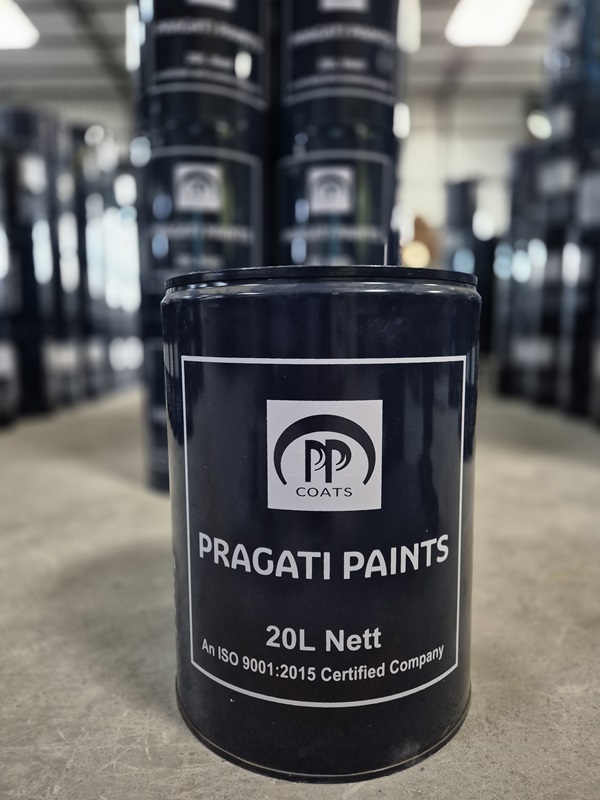 | Industrial Expoxy Paint Epoxy High Build Zinc Phosphate Primer Advanced Corrosion Protection for Industrial Steel Structures Industrial environments demand coatings that deliver long-lasting corrosion protection,... View product → |
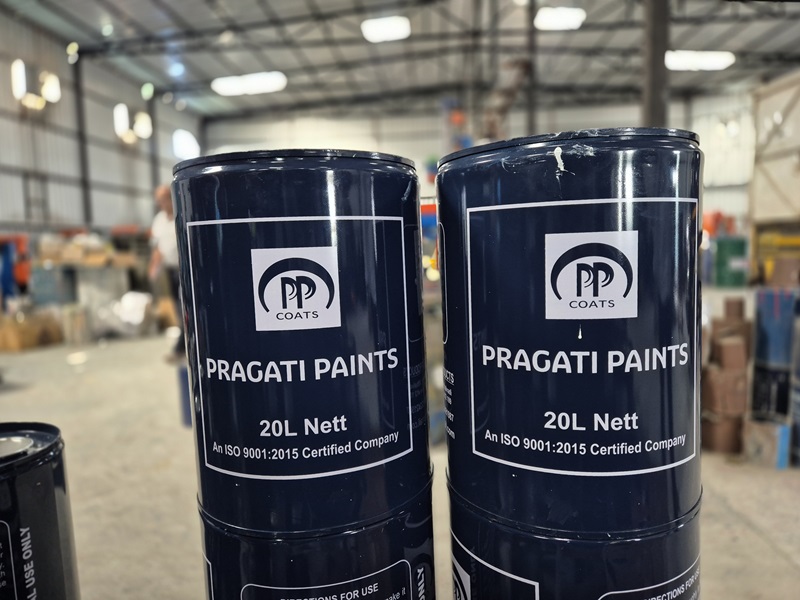 | Expoxy Paint Epoxy Primer – The Most Reliable Base Coat for Industrial Protection & Strong Adhesion When it comes to industrial painting, durability starts from... View product → |
 | Expoxy Paint Premium Anti-Corrosive Protection for Industrial Metal Surfaces When industries need the highest level of corrosion resistance and strong adhesion,... View product → |