
A low-cost coating can become expensive when rust returns early, fabrication slows, or a repair fails over an incompatible primer. You will be able to define the synthetic system, match it to the steel’s exposure, specify preparation and film thickness, and compare its real maintenance cost with epoxy, polyurethane, chlorinated rubber and zinc-rich systems.
Key takeaways
- Use alkyd systems for moderate exposure, not continuously wet or severe chemical service.
- Remove rust, mill scale, oil and salts before applying the first coat.
- Control wet-film thickness, humidity, surface temperature and recoat intervals.
- Compare repainting labour and downtime, not just the initial paint price.
What “synthetic paint” means for fabricated steel
“Synthetic paint” is a broad commercial label, not a reliable performance class. This section focuses on solvent-borne alkyd or modified-alkyd enamel, usually supplied as a one-pack primer or topcoat that needs no on-site catalyst mixing.
Synthetic acrylic, vinyl, epoxy and polyurethane coatings are also sold as synthetic paints. Specify the resin chemistry, primer, exposure, colour or finish requirement and target dry-film thickness before comparing products.
Synthetic paints for steel structures are worth considering for ordinary atmospheric steelwork, sheltered indoor frames and projects that value simple application and easy touch-up. The practical synthetic paint benefits for fabricators include:
- No catalyst mixing or pot-life management
- Straightforward brush, roller or spray equipment
- Practical field repair with familiar solvent-borne application methods
- Lower application complexity than many two-pack systems
A one-pack alkyd system does not match a correctly specified two-pack epoxy or polyurethane system for chemical exposure, abrasion, immersion or long-term weathering. Do not use ordinary alkyd enamel as the default for continuous wetting, buried steel, strong chemical exposure or severe abrasion.
The word synthetic does not prove suitability, durability or low cost. A low purchase price can become a higher cost per square metre when low volume solids, poor practical coverage, extra coats, slower curing or frequent recoating increase labour and downtime. Judge the complete coating system, not the label on the tin.
Which coating system fits each steel exposure
Sheltered indoor steel and accessible urban steel with moderate atmospheric exposure are the strongest cases for synthetic paints for steel structures. Coastal Chennai, high-humidity areas and industrial-pollution zones demand more preparation and more frequent maintenance because salt, condensation and contaminants attack weak films.
| Option | Corrosion exposure | Chemical exposure | UV/weathering and gloss retention | Abrasion and immersion | Repairability and application complexity | Expected maintenance interval |
|---|---|---|---|---|---|---|
| Alkyd synthetic paint | Moderate atmospheric protection | Poor against strong chemicals | Fair UV resistance; gloss fades sooner | Poor for heavy abrasion or immersion | Easiest repair; one-pack application | Shorter |
| Epoxy | Strong barrier protection | Strong chemical resistance | Chalks in sunlight; poor exposed gloss without a topcoat | Strong abrasion and water resistance; select for immersion service | Two-pack mixing and pot-life control | Longer |
| Polyurethane | Strong as a compatible finish | Good, subject to formulation | Excellent UV and weathering; best gloss retention | Good abrasion resistance; immersion needs a specified system | Two-pack application and stricter safety control | Longer |
| Chlorinated rubber | Good atmospheric and damp-area protection | Moderate chemical resistance | Fair weathering; limited gloss retention | Good water resistance; verify immersion approval | Simple, but solvent compatibility matters | Moderate |
| Zinc-rich | Sacrificial protection at prepared steel | Needs compatible sealer and topcoat | Zinc surface is not a decorative weather finish | Not a complete abrasion or immersion system alone | Preparation and compatibility are critical | Long when specified correctly |
Use epoxy intermediates or high-build systems in chemical plants, wastewater zones and abrasive service. Use polyurethane over a compatible primer where exposed colour and gloss matter; use zinc-rich systems where sacrificial protection is specified. Buried or immersed steel needs a system designed for that service, not ordinary alkyd enamel. Heat-exposed steel requires a temperature-rated coating.
Use ISO 12944-5 for system selection and its corrosivity and durability concepts, but make the project specification name the actual environment, access and maintenance expectation.
Specify steel preparation before the first coat
Surface preparation often controls service life more than the word synthetic on the tin. Leave mill scale, rust, oil, soluble salts, welding slag, weld spatter, sharp burrs or abrasive dust, and the first coat can blister or lose adhesion.
1. Clean weld seams and remove spatter. Round sharp edges, smooth cut-outs, and inspect crevices, bolt heads and corners before coating; these areas receive thin coverage and corrode first.
2. Specify ISO 8501-1 Sa 2½ abrasive blast cleaning when the project requires near-white metal. Use St 3 power-tool cleaning only when the specification permits thorough hand or power-tool preparation.
3. State the surface-profile range, dust-acceptance result and soluble-salt test method or limit in the project documents. Do not leave cleanliness to a visual check. Abrasive blasting is preferable for larger new fabrications and higher durability expectations because it produces more uniform cleaning and profile than power tools.
4. Treat zinc carefully. Do not apply a conventional alkyd indiscriminately over zinc-rich primer or fresh galvanizing; zinc soaps can cause wrinkling, poor adhesion and early peeling. Use a manufacturer-approved tie coat or a specifically approved compatible system.
5. Before repairing an aged or unknown coating, test a small area for adhesion and lifting. Stop if the new film wrinkles, softens or pulls away.
That discipline matters whether you are assessing synthetic paints for steel structures or buying synthetic industrial paint in Chennai: the complete preparation and coating system, not the label, determines performance.
Control film build, weather and recoat timing
1. Confirm the primer and topcoat dry-film thickness from the selected product data sheet and project coating specification. Do not assign one thickness to every synthetic paint. Record the corrosivity category, number of coats and permitted recoat window.
2. After preparation, remove abrasive dust before painting. Apply stripe coats to edges, welds, corners, bolt heads and cut-outs, where spray coverage becomes thin. Stripe coats improve protection at difficult details but do not replace overall coverage or the specified film thickness.
3. Check wet-film thickness during application. At final inspection, use a calibrated dry-film-thickness gauge and record readings by area and coat. Investigate thin spots, runs and excessive build before releasing the structure.
4. Before and during painting, measure steel temperature, ambient temperature, relative humidity and the spread between steel temperature and dew point. Enforce these checks in humid coastal conditions, including work involving synthetic industrial paint in Chennai.
5. Take the exact minimum and maximum recoat times, minimum application temperature, maximum humidity, ventilation requirement and thinner type from the product technical data sheet. Touch-dry is not ready-for-service: cool, damp or poorly ventilated conditions slow oxidation curing, while early stacking or transport can mark a soft film.
6. Choose brush or roller for small areas and touch-up; use spray for controlled production coverage. For solvent-borne synthetic paints, provide ventilation, eliminate ignition sources, and follow the safety data sheet for respirators, gloves, eye protection, storage and flammable-liquid controls.
Calculate whether the lower price survives maintenance
The lower drum price survives only when the coating’s cost per protected square metre remains low. Compare volume solids, theoretical and practical spreading rate, specified dry-film thickness, coat count, thinner consumption, labour, curing time, access equipment, downtime and expected maintenance interval.
| Option | Chemical and corrosion exposure | Weather, abrasion and maintenance |
|---|---|---|
| Alkyd synthetic | Ordinary atmospheric steel; weak choice for splash or immersion | Moderate UV; limited abrasion; easy repair; frequent access supports shorter intervals |
| Epoxy | Strong corrosion, chemical and abrasion resistance | Poor UV finish unless topcoated; harder repair; longer intervals |
| Polyurethane | Exposed steel over compatible primer | Strong UV, gloss and weather retention; moderate application complexity; longer intervals |
| Chlorinated rubber | Damp service and selected chemical exposure | Good water resistance; limited heat and solvent resistance; moderate maintenance |
| Zinc-rich | Specified sacrificial protection for prepared steel | Strong corrosion control; needs compatible coats and careful repair; system-dependent interval |
Calculate both options using the same area and target dry-film thickness. A cheap one-pack system loses its advantage when severe coastal exposure, chemical splash, continuous wetting, immersion, buried steel, heavy abrasion or inaccessible steel demands repeated preparation, recoating or production stoppage.
It remains commercially sensible for sheltered frames, ordinary atmospheric steel, small repairs, frequent-access projects and fabricators valuing synthetic paint benefits for fabricators: simple application without pot-life management.
Confirm repair-topcoat compatibility with the existing primer and aged film. If chemistry is unknown, test a small area for adhesion, lifting and wrinkling.
Traditional solvent-borne alkyds are not automatically low-VOC. Compare VOC, flash point, ventilation and local emissions rules. For synthetic industrial paint in Chennai, assess coastal salt, inland pollutants, drainage and access. Pragati Paints & Allied Products can help compare the complete primer, topcoat, thinner and application specification rather than the word synthetic alone.
Related products
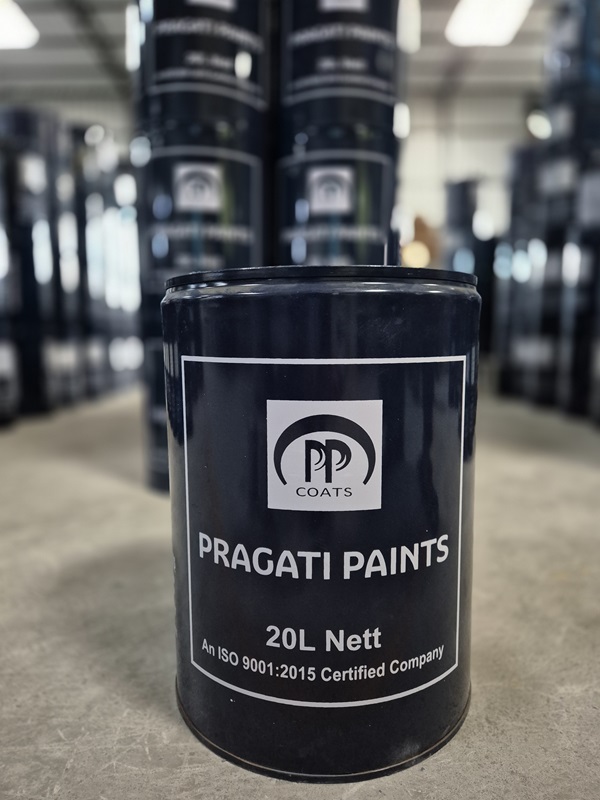 | Synthetic Paints & Primer Durable, Affordable & Versatile Coating Solution for All Surfaces Synthetic paints are among the most widely used industrial and household coatings... View product → |
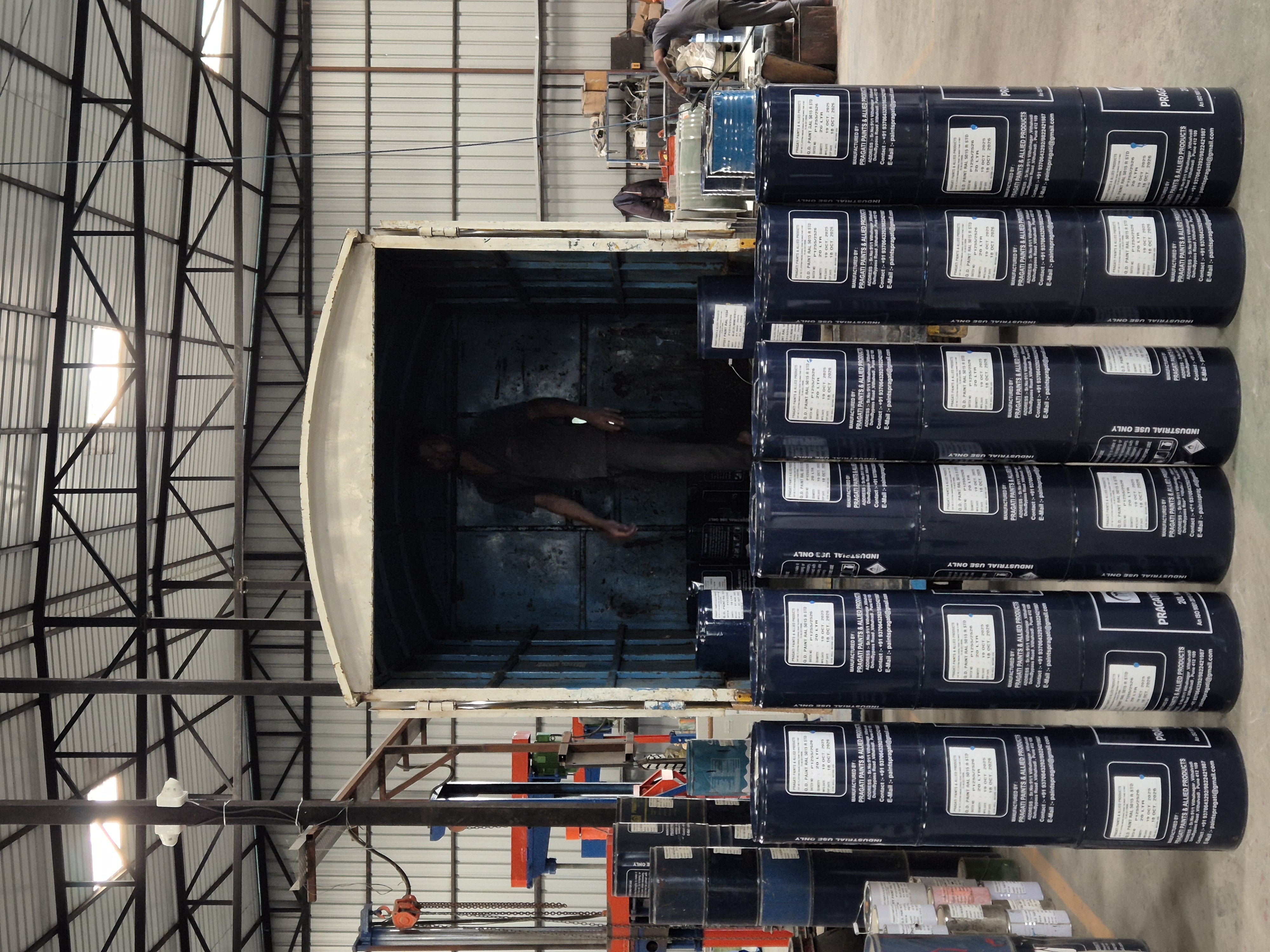 | Industrial QD Paint Synthetic Primer – The Perfect Base Coat for Smooth, Durable & Long-Lasting Painting Results When it comes to painting metal, wood, or general... View product → |
Frequently asked questions
What does synthetic paint mean for fabricated steel?
For steel fabrication, synthetic paint usually means a solvent-borne alkyd or modified-alkyd one-pack primer or enamel that needs no on-site catalyst mixing.
Which coating system fits each steel exposure?
Use an alkyd system for indoor or moderate outdoor exposure. Select a higher-performance system for continuous moisture, marine conditions, chemical attack or elevated temperatures.
How should steel be prepared before synthetic paint is applied?
Remove oil, grease, loose rust, mill scale, dust and soluble salts, then create the specified surface profile before priming. Record the preparation method and inspection result.
How do you decide whether synthetic paint is cost-effective?
Compare the purchase price with surface preparation, application labour, access equipment, downtime and the frequency and cost of future repainting.