The wrong first coat can leave you with peeling, flash rust, solvent damage or a system that fails as soon as it meets water and chemicals. By comparing the two coating types against the substrate, preparation standard and service environment, you can choose a workable system instead of relying on the product name alone.
Key takeaways
- Use etch primer for adhesion, not as the complete corrosion-protection system.
- Choose the coating by substrate: galvanised steel, aluminium, stainless steel, or rusted steel.
- Follow cleaning, profile, recoat, temperature, and thickness limits on the technical data sheet.
- Test the full coating system after curing, not just the primer layer.
What the two coatings actually do under service conditions
Etch primer promotes adhesion; epoxy supplies corrosion protection. In an etch primer comparison, acid-containing chemistry lightly conditions a clean metal surface and leaves a thin film for the next coat. That is etch primer adhesion, not a substitute for a specified anti-corrosive system.
| Service factor | Etch primer | Epoxy paint |
|---|---|---|
| Film thickness | Thin; does not fill pits or bridge sharp defects | Thicker, less permeable barrier |
| Flexibility | Thin film tolerates minor movement but offers little defect coverage | Harder cured film; movement limits come from the product data sheet |
| Drying and recoating | Usually rapid, with a short approved recoat window | Slower cure; minimum and maximum recoat times control bonding |
| Chemicals and immersion | Limited as a sole film; unsuitable for continuous wet service | Stronger choice for chemicals, water and immersion when rated |
| Temperature | Use only within the stated service range | Use the stated cured-film temperature limit |
| Ultraviolet exposure | Not a durable exposed finish | Can chalk and lose gloss; use a UV-resistant topcoat |
A conventional etch primer is usually a tie coat. Apply a compatible primer and topcoat over it; do not expect it to fill pitting, bridge weld edges or replace a corrosion-rated coating. Choose it when adhesion to a clean, smooth substrate is the main problem.
Choose epoxy when barrier thickness, chemical exposure, continuous wet service or corrosion control dominates.
Compare dry-film thickness, approved topcoats, substrate preparation, exposure rating, immersion rating, recoat window and maximum service temperature. The label “etch primer” is not a performance standard, so never assume two products provide the same protection.
Choose by substrate: galvanised steel, aluminium, stainless steel or rusted steel
Choose etch primer for metal only when the substrate is clean, difficult to wet and covered by a compatible protective system; choose epoxy when corrosion, water or film thickness dominates.
| Substrate | Direct decision | Preparation and failure risk |
|---|---|---|
| Smooth galvanised sheet | Use an etch primer listed for zinc or galvanised steel. | Degrease, remove zinc salts, then use controlled abrasion, sweep blasting or approved pretreatment. Aggressive blasting damages the zinc layer. |
| Aluminium | Use etch primer for initial adhesion, not as a substitute for qualified deoxidising and conversion coating where reliability matters. | Remove aluminium oxide and fingerprints; follow the specified aerospace or high-reliability process. |
| Stainless steel | Use only a product whose technical data sheet names stainless steel. | Abrade to remove contamination without embedding iron; remove weld contamination before coating. |
| Bare mild steel | Choose a thin adhesion coat only after removing mill scale and rust; choose corrosion-rated epoxy when protection is required. | Oil, fingerprints and weld residue prevent contact with the metal. |
| Previously painted metal | Overcoat only after checking existing-coating adhesion and solvent sensitivity. | Remove loose paint, silicone and polishing compounds; a sound old film can still wrinkle or lift. |
| Heavily corroded or pitted steel | Do not rely on etch primer to fill defects. | Remove corrosion to the specified cleanliness and profile, then use a high-build or corrosion-control system. |
Record the substrate, preparation grade and profile before application. Zinc salts, aluminium oxide, oil and silicone can defeat adhesion even when the surface looks clean.
Prepare the surface and apply the coating within its process limits
1. Degrease with the cleaner named in the technical data sheet. Remove mill scale and rust by abrasive blasting or mechanical abrasion; solvent wiping alone cannot remove adherent oxide or corrosion scale. For carbon steel, ISO 8501-1 Sa 2½ means very thorough blast cleaning, not light sanding. Specify the surface profile separately.
2. Remove abrasive dust with clean, dry air or approved vacuum equipment. Check soluble salts when the exposure warrants it, especially immersion or marine service. Before coating, measure steel temperature, air humidity and dew point under ISO 8502-4; condensation can form on steel that feels dry.
3. Mix components at the stated ratio, observe the induction time, and use only the approved thinner. Apply with the specified spray or brush equipment, measuring wet-film thickness and confirming dry-film thickness after cure.
4. Keep the material, steel and air within the technical data sheet’s temperature limits. Record pot life and the minimum and maximum recoat interval. Heat shortens epoxy pot life; applying material after it expires can cause poor flow, incomplete cure and reduced chemical resistance, undermining etch primer adhesion and epoxy protection.
- Prevent runs: use the specified wet-film thickness and avoid overloading edges.
- Prevent dry spray: maintain the stated spray distance, pressure and overlap.
- Prevent insufficient thickness: measure wet film during application and dry film after cure.
- Stop for condensation, dust, expired pot life or a missed recoat window; correct the cause before continuing.
Check chemistry, topcoat compatibility and safe handling before purchase
The label “etch primer” is not a performance standard. In this etch primer comparison, demand a technical data sheet (TDS) stating whether it is one- or two-component, chromated or chromate-free, and approved for aluminium, galvanised steel, zinc die-castings, bare steel or another named substrate.
| Option | Main risk or benefit | Check before purchase |
|---|---|---|
| Etch primer | Thin adhesion coat; limited barrier protection | Substrate, film thickness, recoat window and approved topcoats |
| Epoxy primer | Thicker, less permeable barrier | Chemical, immersion, temperature and corrosion ratings |
| Direct-to-metal epoxy | May bond without an etch layer | Confirm compatibility in the manufacturer’s system schedule |
For a phosphoric-acid-containing product, use the TDS and safety data sheet (SDS) to confirm the named substrate, acid compatibility, mixing instructions, ventilation requirements and personal protective equipment. Do not infer a universal formulation, pH or dosage.
Outside its overcoat window, an acid primer can remain soft or chemically active, causing lifting, wrinkling, intercoat delamination or poor solvent resistance.
Verify every epoxy, polyurethane or other topcoat combination in the manufacturer’s system schedule; direct-to-metal epoxy is not automatically compatible beneath or above an etch primer.
- Control ignition sources and provide forced ventilation when using solvent-containing coatings.
- Wear the SDS-specified gloves, eye and face protection, protective clothing and respiratory protection; prevent solvent or acid splash and never use compressed air to blow contamination from skin.
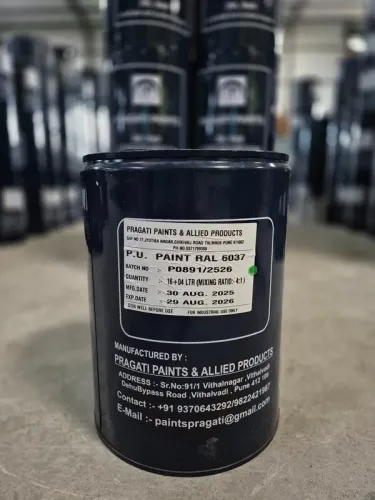
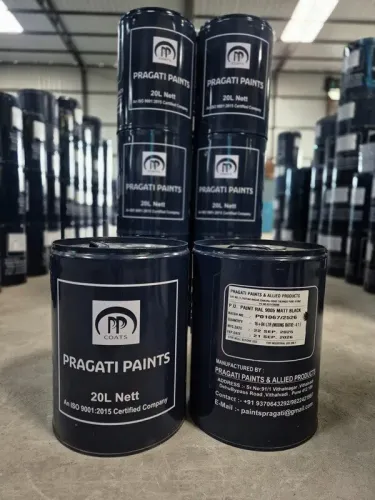
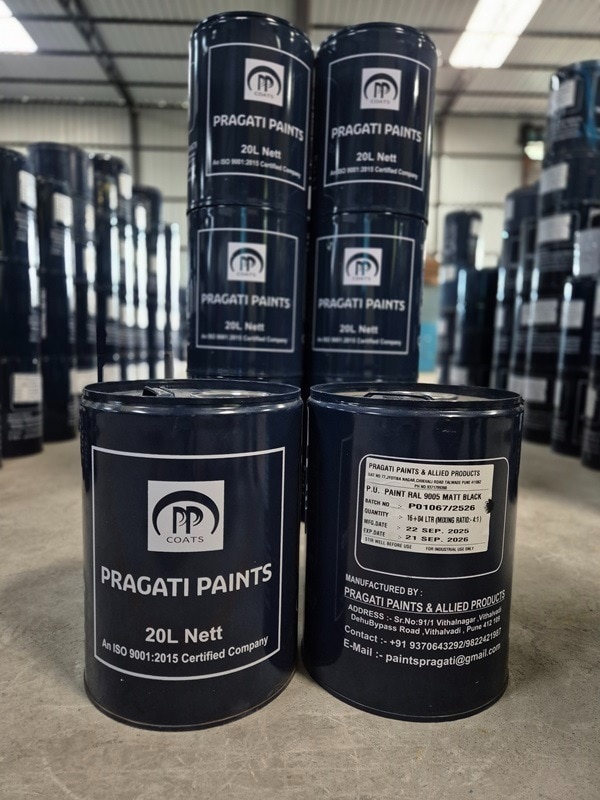
- Give Pragati Paints & Allied Products the substrate, exposure, preparation method and required film thickness when comparing a complete system.
Related products
 | Expoxy Paint Etch Primer – The Ultimate Solution for Superior Adhesion on Metal Surfaces When coating smooth, non-porous, or galvanized metal surfaces, achieving... View product → |
 | Expoxy Paint Epoxy Primer – The Most Reliable Base Coat for Industrial Protection & Strong Adhesion When it comes to industrial painting, durability starts from... View product → |
Verify adhesion, then judge the complete system rather than one test result
After the specified cure, confirm etch primer adhesion with a cross-cut tape test under ISO 2409 or ASTM D3359. Record dry-film thickness, cure time, scribe geometry and spacing, substrate, tape, and test method; flaking squares, lifting along cuts, or widespread tape removal indicate an adhesion problem.
A rating does not predict immersion life or corrosion resistance.
For disputes or qualification work, use pull-off testing under ASTM D4541. Report the force and failure location: adhesive failure at the metal–primer or coating interface, cohesive failure within the coating, or failure in the substrate. A high value is not persuasive if the adhesive or dolly fails first.
A useful etch primer comparison uses the complete system, not one result.
| Option | What it means | When it applies |
|---|---|---|
| Etch primer | Thin, qualified tie coat | Difficult but clean metal needing adhesion |
| Epoxy | Thicker barrier with stronger chemical and water resistance | Chemicals, wet service or corrosion dominate |
| Tested system | Primer, topcoat and repair method validated together | Severe exposure or long maintenance intervals |
Require evidence for dry-film thickness, salt-spray or cyclic-corrosion data, immersion rating, maximum service temperature, UV-resistant topcoat requirements, repair method, and expected maintenance interval. Choose etch primer only when its technical data sheet names your substrate and approved topcoat. Choose epoxy when barrier protection governs; specify the complete tested system for severe service.
Frequently asked questions
What is the difference between etch primer and epoxy paint?
Etch primer lightly conditions clean metal and promotes adhesion. Epoxy paint forms a thicker protective film for corrosion resistance and durability.
Which coating is suitable for galvanised steel, aluminium, stainless steel, or rusted steel?
Choose by substrate and service conditions. Etch primer suits clean, difficult non-ferrous or galvanised surfaces when specified; epoxy requires compatible preparation and primer. Rusted steel needs rust removal and a specified anti-corrosive system.
How should you prepare metal before applying etch primer or epoxy paint?
Remove oil, salts, dirt, loose rust, and weak existing coatings. Create the specified surface profile, allow the surface to dry, and apply within the product’s temperature, humidity, pot-life, and recoat limits.
How do you verify that the coating system will adhere?
Check the cured system with the specified adhesion method, such as a cross-cut or pull-off test where appropriate. Judge adhesion alongside film thickness, cure, defects, and topcoat compatibility.