
For Chennai dealers, rust preventive oil earns shelf space when customers repeatedly store, move, or handle unfinished metal in humid, salt-laden conditions. The decision depends on customer demand, film and cleaning requirements, product evidence, storage risks, and the cost of keeping several pack sizes in stock; by the end, you can qualify the right buyers and set a practical stocking test.
Key takeaways
- Target machine shops, fabricators, spare-parts sellers, and maintenance contractors.
- Match thin films, water-displacing oils, and heavier coatings to storage duration.
- Recommend paint for exposed, long-term protection; use oil for removable protection.
- Test repeat orders, removal effort, shelf life, and margin before buying stock.
Which Chennai customers create repeat demand for rust preventive oil?
Repeat demand comes from workflows, not from Chennai’s humidity alone.
Machine shops need protection for turned or ground parts between operations; fabrication units store cut, welded, or unfinished steel; spare-parts distributors hold ferrous components; automotive workshops preserve removed parts and assemblies; exporters prepare components for sea or road transport; warehouses receive unpainted metal; and manufacturers hold work-in-progress.
Coastal humidity, salt-laden air, monsoon condensation, and open-sided storage increase flash-rust risk.
- What is the substrate: carbon steel, cast iron, or another metal?
- Is it on a dry indoor rack, outdoors, or in poorly sealed packaging?
- How long will it remain stored?
- How frequently will people handle it?
- Will it use VCI film or paper, desiccant, bags, crates, or no packaging?
- What is the next operation: machining, painting, welding, assembly, or shipment?
| Storage setting | Repeat-demand pattern | Dealer implication |
|---|---|---|
| Indoor dry rack | Short holding period and limited handling | Lower reapplication frequency; trial small packs |
| Outdoor or poorly sealed storage | Rain, condensation, salt deposition, and frequent handling | Inspect and reapply more often; stock only after a field trial |
The rust preventive oil benefits that matter commercially include reduced flash rust after machining, water displacement during handling, reversible protection, easier release from storage, and less disruption than painting every part immediately. A dirty, wet, salt-contaminated, or fingerprint-marked surface can keep corroding beneath the film.
Protection ends when the film is removed, diluted, contaminated, breached, or displaced by condensation. That makes rust preventive oil for dealers in Chennai worth stocking when several customers reorder around the same workflow, not merely because Chennai is humid; document that workflow before committing inventory.
Which type of rust preventive oil fits each storage and handling job?
One generic SKU will not serve every storage job. A thin solvent-deposited rust preventive oil suits machined parts needing a light, water-displacing film; a heavier oily or greasy film suits longer indoor storage; a removable compound suits parts that will be cleaned before assembly or painting.
| Option | Film and behaviour | Best fit |
|---|---|---|
| Thin solvent-deposited oil | Dries to a thin water-displacing film; easy to wipe or clean | Short-term protection for machined parts and frequent handling |
| Heavy oil or grease | Thicker, slower-drying film; stronger storage barrier | Longer indoor storage of steel or cast iron |
| Water-displacing or dewatering fluid | Pushes surface water away; protection depends on residual film | Wet incoming parts or post-wash handling |
| Soluble corrosion inhibitor | Works through a water-based solution, not a durable oil film | Closed process fluids or rinse systems |
| Waxy or resinous coating | Dries to a persistent film; harder removal | Extended storage or transport where cleaning is planned |
| Removable compound | Protective film designed for later cleaning | Components awaiting assembly or painting |
Request a technical data sheet stating substrate, application method, coverage or consumption, film description, temperature limits, storage period, reapplication interval, and cleaning method. Ask for comparative results for humidity, relevant salt contamination, fingerprint corrosion, and water displacement.
Treat ASTM B117 hours as laboratory comparison data, not months promised in a Chennai warehouse. Specimen preparation, scribe geometry, salt solution, orientation, and inspection criteria change the result.
Require compatibility data for carbon steel, cast iron, copper alloys, aluminium, zinc-coated parts, elastomers, existing coatings, and precision assemblies. VCI film, VCI paper, desiccant, and sealed bags can extend protection, but never wrap wet or salt-contaminated parts.
When should a dealer recommend paint instead of oil?
Choose paint when the steel needs a cured barrier, not a removable holding film. Recommend rust preventive oil for parts awaiting machining, assembly, shipment, or short-to-medium storage when the customer accepts a later cleaning step.
Its rust preventive oil benefits include water displacement, temporary post-machining protection, easier release from storage, and reduced flash rust during shipment—not permanent corrosion protection.
1. Recommend zinc phosphate primer when steel will receive a compatible paint system and needs a preparatory anti-corrosive layer. Choose epoxy zinc-rich primer for a high-performance system on properly prepared steel.
2. Recommend polyurethane paint when durable weather and chemical resistance with a topcoat matters. Use chlorinated rubber paint only when the specified service and substrate permit that system. For long-term outdoor exposure, specify a complete primer-plus-topcoat system.
3. Do not select oil for surfaces that must be painted immediately, high-heat service parts, welding or bonding areas where contamination can affect adhesion or weld quality, or assemblies requiring a residue-free inspection surface. Protection ends when the film is removed, diluted, contaminated, breached, or displaced by condensation.
4. Obtain a supplier-specific answer before overcoating, welding, machining, assembly, or inspection. The product TDS must identify whether solvent cleaning, alkaline cleaning, wiping, or another method is suitable. Do not promise a solvent, dwell time, or removal temperature without that documentation.
What application and removal workflow will customers actually follow?
Start with a clean, dry surface: rust preventive oil will not stop corrosion beneath salts, fingerprints, machining coolant, acids, loose rust, or mill scale. Its rust preventive oil benefits—water displacement, temporary protection after machining, easier handling, and reduced flash rust during shipment—depend on the film remaining uncontaminated.
1. Remove loose rust, mill scale, salts, fingerprints, coolant, acids, and other residues. Clean the metal and dry it fully; trapped water or condensation can keep corroding the part under the oil.
2. Apply the intended film by dip, spray, brush, or wipe exactly as the TDS states. Let excess material drain, then shield the part from dust, rain, wash water, and condensation.
3. Record the batch number, substrate, application method, coverage or consumption, date, storage location, and inspection result. Those records turn reapplication intervals into evidence rather than guesswork.
4. Decide removal by the next operation: use the supplier’s approved cleaning method before painting, welding, machining, assembly, or dimensional inspection. Require written compatibility information for adhesion, weld porosity, cutting fluid, sealants, bearings, electrical contacts, and measurement.
5. Run a field trial on representative parts using the intended film, actual packaging, humid or salt-influenced storage, handling, condensation, and the customer’s normal degreasing, coating, welding, or assembly step.
Before stocking, check the current SDS, flash point, transport classification, ventilation, personal protection, spill response, disposal, shelf life, storage temperature, closure requirements, and first-in-first-out rotation. Oil-based does not automatically mean non-flammable or low-VOC.
How should Chennai dealers test profitability before committing stock?
Commit stock only when a customer trial proves repeatable demand; otherwise sell rust preventive oil for dealers in Chennai as a controlled special-order item.
| Decision | Evidence required | Action |
|---|---|---|
| Stock | Repeat orders, documented protection, easy removal, acceptable use cost | Keep two core grades |
| Trial | One credible customer and representative parts | Buy the minimum viable quantity |
| Decline | No downstream cleaning route, uncertain demand, or poor margin | Do not tie up cash |
Start with one documented thin-film grade for fast-moving machined parts. Add a heavier or longer-storage grade only after trials justify it. Small cans or aerosols suit maintenance counters and job shops; pails or drums suit fabricators and component manufacturers. Too many pack sizes create slow-moving stock, opened containers, contamination, and solvent loss.
Compare delivered cost per protected square metre or component, not price per litre. Include these cost drivers:
- Ready-to-use status, consumption, film removal, cleaner or solvent, labour, oily-waste disposal, rejected or reworked parts, packaging, leakage, freight, minimum order quantity, shelf life, and credit exposure.
Request batch traceability, manufacture date, TDS, SDS, closure instructions, and supplier evidence for the customer’s substrate and storage period. A metal protection oil wholesale line deserves stock only when those documents support the claim.
Run the field trial through cleaning, painting, welding, assembly, and inspection using actual packaging and humid storage. Pragati Paints & Allied Products can help qualify the use case alongside primers, thinners, and complete coating systems instead of treating oil as a universal replacement. Approve repeat stock only when performance and removal survive the customer’s workflow.
Related product
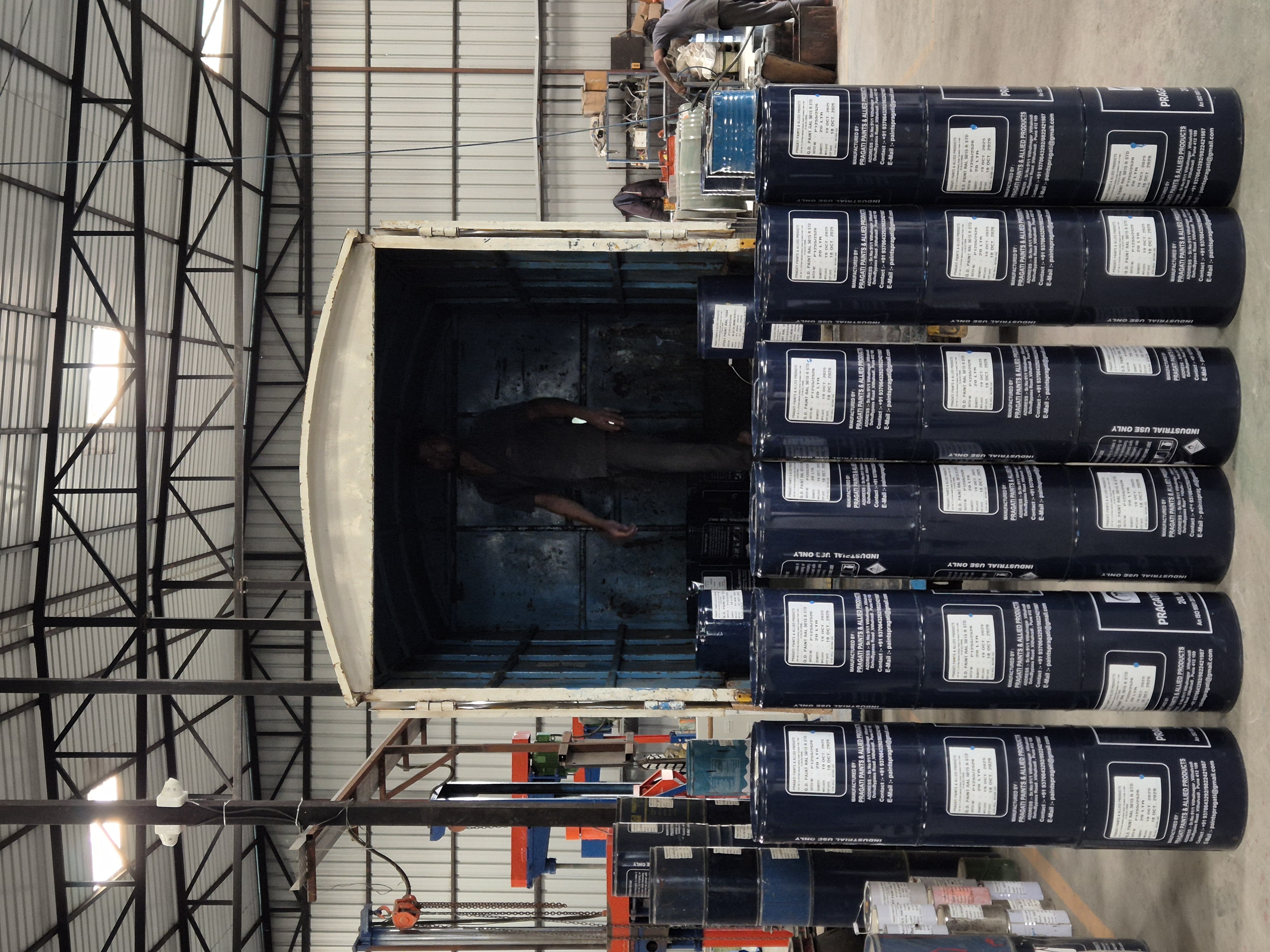 | Rust Preventive Oil & Thinner Effective Protection Against Corrosion Rust Preventive Oil is a specialty corrosion-inhibiting fluid designed to protect ferrous and non-ferrous... View product → |
Frequently asked questions
Which Chennai customers create repeat demand for rust preventive oil?
Machine shops, metal fabricators, spare-parts distributors, maintenance contractors, and businesses storing steel components create repeat demand when oil is part of a regular handling workflow.
Which type of rust preventive oil fits each storage and handling job?
Use a thin, easy-to-remove film for short handling cycles, a water-displacing oil after washing, and a heavier protective film for longer indoor storage. Match the product to storage duration and removal method.
When should a dealer recommend paint instead of oil?
Recommend paint when the metal needs durable exposed protection and the coating will remain in service. Recommend oil when parts need temporary, removable protection during storage or transport.
What application and removal workflow will customers actually follow?
Customers need clean, dry metal, controlled application, labelled containers, and a defined wipe, solvent, or alkaline-cleaning step before assembly, painting, or use.
How should Chennai dealers test profitability before committing stock?
Start with limited stock, record customer use cases and repeat-order timing, calculate product and delivery costs, and include application, removal, leakage, and slow-moving inventory in the margin test.