
The right primer depends on how steel will corrode, how cleanly you can prepare it, and what coating will cover it later. By comparing galvanic protection, barrier protection, application controls, exposure conditions, and repair demands, you can select an epoxy zinc rich primer system instead of relying on a headline zinc percentage.
Key takeaways
- Demand zinc dust percentage, test method, dry-film thickness and recoat interval.
- Remove mill scale, rust, oil and soluble salts before applying primer.
- Choose epoxy zinc-rich primer for steel based on exposure and topcoat compatibility.
- Price repairs, edge coverage, downtime and application effort—not only the drum.
How zinc-rich, zinc phosphate, zinc silicate, epoxy and MIO primers protect steel
An epoxy zinc rich primer combines zinc dust with an organic epoxy binder. Electrically connected zinc sacrifices itself at a scratch or cut edge, while the cured epoxy film blocks water and oxygen.
Mill scale, rust, salts, oil, or a nonconductive layer can break that electrical path and remove the galvanic advantage; high zinc content cannot compensate for poor preparation.
| Option | Protection mechanism | Practical strengths and limits |
|---|---|---|
| Zinc-rich epoxy | Sacrificial zinc plus epoxy barrier | Strong atmospheric protection at scratches and edges; good adhesion and repairability; medium-to-high film build; application cost is higher because blasting, mixing and DFT control matter. |
| Zinc phosphate | Inhibitive pigment plus barrier | Lower reliance on sacrificial action; more forgiving for general atmospheric service, but less effective at exposed cut edges; moderate build and cost. |
| Inorganic zinc silicate | Highly zinc-loaded sacrificial film | Excellent atmospheric durability and edge protection; moisture-sensitive, less forgiving to apply, and stricter overcoating controls; repair can be demanding. |
| Conventional epoxy | Adhesion and barrier | Strong adhesion, flexible film build and straightforward repairs; it does not provide zinc’s galvanic protection. |
| MIO epoxy | Platelet-filled barrier | Long, overlapping MIO flakes slow moisture movement; durable barrier with good build, but scratches expose steel and repairs require sound preparation. |
For an epoxy zinc rich primer comparison, match the mechanism to the damage: sacrificial zinc suits scratches and cut edges, while epoxy or MIO suits intact barrier exposure.
The best epoxy zinc rich primer options are not chosen by the highest zinc number alone; compare preparation tolerance, durability, film thickness, repair method and application cost for the actual atmospheric service.
What the product data sheet must prove before you call a primer zinc-rich
A data sheet proves an epoxy zinc rich primer by its cured-film figures, not by a large zinc percentage in the liquid formulation. Check zinc dust by dry-film weight, zinc volume concentration, recommended dry-film thickness (DFT), volume solids, mixing ratio and the manufacturer’s certificate.
| Measure | What to verify | Why it matters |
|---|---|---|
| Zinc dust | SSPC Paint 20 class: 65%, 77% or 85% minimum by dry-film weight | Shows dry-film loading; confirm which class the project requires |
| Zinc volume concentration | Stated value for the cured coating | Indicates whether particles can form an electrically connected network |
| DFT | Minimum, target and maximum values | Controls protection, cracking risk and topcoat adhesion |
| Volume solids | Published percentage and coverage basis | Converts wet application into actual film build |
These SSPC Paint 20 classes describe zinc dust in the dry film, not zinc in the can. Sufficient loading and correct film formation let connected zinc particles sacrifice themselves at exposed steel; a zinc-containing primer with isolated particles cannot deliver the same galvanic protection.
Require a DFT inspection method using a calibrated gauge, including edges, welds, bolts and recesses. Too little film can leave steel unprotected. Too much can cause mud cracking, solvent entrapment, poor intercoat adhesion and difficult topcoating.
For an epoxy zinc rich primer for steel, accept the product only after the certificate, classification and DFT limits match the project specification.
How preparation and application determine whether the primer works
A clean, correctly profiled steel surface determines whether an epoxy zinc rich primer for steel bonds and maintains galvanic contact. Specify abrasive blast cleaning to the product and project requirement; Sa 2½ under ISO 8501-1 or SSPC-SP 10/NACE No. 2 is commonly required.
1. Measure the surface profile with replica tape or a profile gauge against the product range. An insufficient profile reduces adhesion, while an excessive profile leaves peaks undercovered at the specified DFT and increases consumption.
2. Remove blast dust and test for soluble salts before coating. Inspect for remaining mill scale, rust, oil and flash rust; any nonconductive layer can isolate zinc from steel and remove the sacrificial protection.
3. Confirm the two-component mixing ratio, induction time, pot life, permitted thinner and spray equipment for the selected epoxy zinc rich primer options. Do not extend pot life by adding unapproved thinner.
4. Stripe-coat welds, sharp edges, bolts and recesses before full-area spraying. Spray coverage pulls back from sharp geometry, so increasing the flat-area DFT does not reliably correct thin edges.
5. Keep steel above the dew point by the specified margin, and record humidity, steel temperature and curing conditions. Condensation can cause adhesion loss, blistering and early corrosion.
6. Verify DFT across flat areas and difficult geometry with a calibrated gauge. The technical data sheet controls recoat windows, maximum overcoat interval, mist-coat or tie-coat requirements, and preparation of weathered surfaces; zinc salts must be removed before recoating.
Match epoxy zinc rich primer options to the exposure and topcoat
Indoor steel usually needs a simpler atmospheric system than marine or offshore steel; match the primer to chloride, humidity, maintenance access and temperature rather than zinc percentage alone. This epoxy zinc rich primer comparison gives a practical starting point:
| Option | Service fit | Topcoat and caution |
|---|---|---|
| Indoor | Epoxy zinc-rich primer for steel where condensation and corrosion exposure are controlled | Compatible epoxy or direct finish; confirm temperature limits |
| Urban atmospheric | Zinc-rich primer, epoxy intermediate, then UV-resistant polyurethane or polysiloxane | Use where colour and gloss retention matter |
| Marine or offshore | Zinc-rich system with rigorous blast cleaning, stripe coats and edge coverage | Treat welds, bolts, sharp edges and recesses as high-risk areas |
| Chemical service | Only a manufacturer-approved system for the named chemical, concentration and temperature | Atmospheric corrosion claims do not prove chemical resistance |
| Continuous immersion | Do not select epoxy zinc-rich primer from atmospheric ratings alone | Use the specified immersion-rated barrier system |
| High-temperature service | Select by the cured system’s continuous and peak temperature limits | Verify whether the topcoat, not just the primer, controls the rating |
Zinc-rich films are commonly overcoated with compatible epoxy before a UV-resistant polyurethane or polysiloxane finish. Epoxy binders can chalk outdoors, and zinc-rich films are not automatically suitable as the exposed finish.
Epoxy zinc-rich primers are often easier to overcoat than inorganic zinc silicates, but every recoat interval is product-specific. Applying an incompatible topcoat, exceeding the stated window without abrasion, or leaving weathered zinc salts in place can cause lifting, blistering or intercoat failure.
Check the technical data sheet for mist-coat or tie-coat requirements and weathered-surface cleaning before work starts.
Compare the whole job: repairability, edges, downtime and purchase decisions
Purchase price is only one line in an epoxy zinc rich primer comparison. Add blasting labour, stripe coating on welds and edges, spray passes, DFT inspection, induction time, pot-life waste, recoat delays, access equipment, abrasive disposal and the cost of future repairs.
Zinc phosphate is more forgiving when preparation is marginal, but it does not provide the same sacrificial response at scratches and cut edges. Epoxy zinc-rich systems give stronger atmospheric protection while zinc remains electrically connected to steel; they demand disciplined preparation and edge treatment.
Repair locally by preparing damaged areas to sound steel, removing salts and loose coating, then applying a compatible zinc-rich repair product or the specified original system. Never apply epoxy over aged or contaminated coating without checking compatibility.
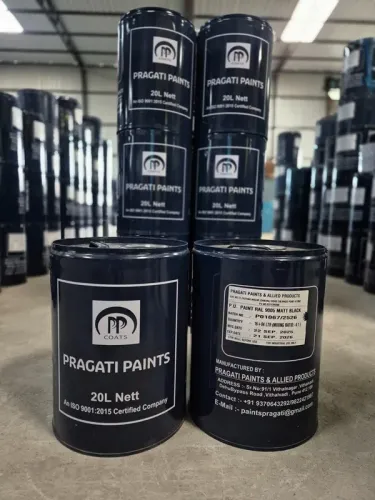
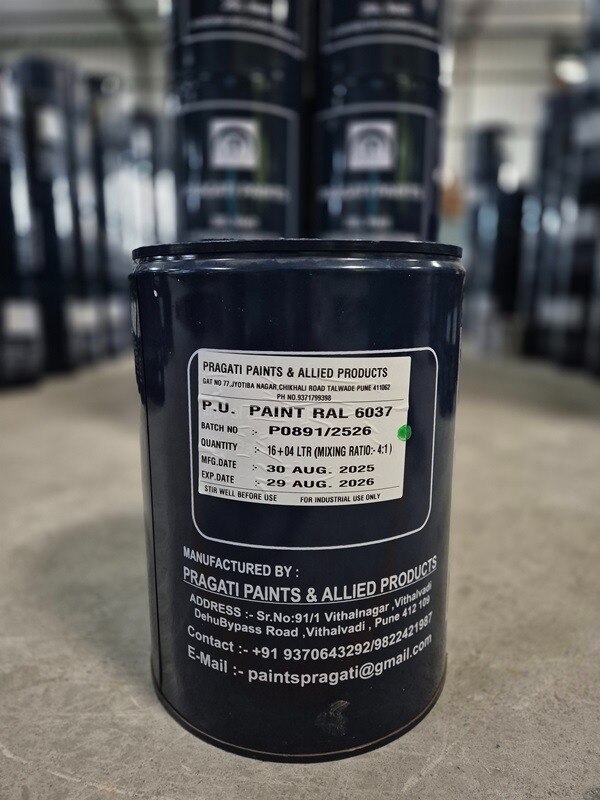
Before choosing among epoxy zinc rich primer options, ask Pragati Paints & Allied Products for the technical data sheet, batch documentation and system-matching guidance; the project specification remains controlling.
Buyer’s comparison sheet:
| Field | Zinc phosphate | Epoxy zinc-rich |
|---|---|---|
| SSPC Paint 20 class | Usually not classified as zinc-rich | Confirm Class 65, 77 or 85 by dry-film weight |
| DFT and profile | Record product range | Record minimum, target, maximum and profile range |
| Pot life and recoat | Check limits | Check induction, pot life and recoat window |
| Topcoat and immersion | Confirm approvals and rating | Confirm approvals; do not assume immersion suitability |
| Temperature limits | Record steel and service limits | Record application and service limits |
| Repair method and certificates | Specify compatible repair and batch certificate | Specify zinc-rich repair method and manufacturer certificate |
Related products
 | Expoxy Paint High-Performance Protection for Steel Structures When it comes to long-term corrosion protection of metal surfaces, Epoxy Zinc Rich Primer is one of... View product → |
 | Industrial Expoxy Paint Epoxy High Build Zinc Phosphate Primer Advanced Corrosion Protection for Industrial Steel Structures Industrial environments demand coatings that deliver long-lasting corrosion protection,... View product → |
Frequently asked questions
How does epoxy zinc-rich primer protect steel?
Zinc dust provides sacrificial electrical protection at scratches, while the epoxy binder forms a barrier against water and oxygen.
What must a product data sheet prove before calling a primer zinc-rich?
Check the zinc dust percentage, zinc type, dry-film thickness, application method, test basis, curing conditions and recoat interval.
How does steel preparation affect epoxy zinc-rich primer performance?
Remove oil, rust, mill scale and soluble salts, then achieve the specified blast-cleaning profile before applying the primer.
Which epoxy zinc-rich primer should you choose for a specific exposure?
Match the primer to immersion, atmospheric or marine exposure, then confirm compatibility with the planned intermediate and topcoat.
What should you compare beyond the purchase price?
Compare edge coverage, repair method, drying and recoat downtime, surface preparation, application labour and touch-up requirements.
Related products
 | Expoxy Paint Premium Anti-Corrosive Protection for Industrial Metal Surfaces When industries need the highest level of corrosion resistance and strong adhesion,... View product → |
 | Expoxy Paint Epoxy Inorganic Zinc Silicate Primer Heavy-Duty Anti-Corrosive Protection for Extreme Industrial Conditions When it comes to the highest level of corrosion protection, especially in... View product → |
 | Expoxy Paint Epoxy Primer – The Most Reliable Base Coat for Industrial Protection & Strong Adhesion When it comes to industrial painting, durability starts from... View product → |
 | Expoxy Paint Superior Barrier Protection with High Build Performance When industrial steel structures are exposed to harsh environments, selecting the right... View product → |