
Machinery steel fails first at welds, sharp edges, enclosed joints and areas exposed to humidity, chloride contamination and wash-down water. By the end, you will be able to distinguish zinc-phosphate and zinc-rich primers, specify a practical coating system, and compare its production cost and service limitations before approving a purchase.
Key takeaways
- Control dry-film thickness instead of applying the primer as thickly as possible.
- Use zinc phosphate primer after removing oil, rust, mill scale and welding residues.
- Check surface preparation, recoat interval and DFT records before approving a supplier.
- Reject this system when heat, immersion or chemical exposure exceeds its design limits.
What does “high build” mean for a machinery primer?
High build means a primer can produce a specified dry-film thickness (DFT) greater than a conventional primer, not that it can be sprayed as thickly as possible. The epoxy high build zinc primer benefits are most useful when one controlled coat delivers the required corrosion-control film on frames, housings, panels, fabricated assemblies and weld zones.
A higher-build epoxy zinc phosphate primer can reduce spray passes, flash-off intervals, masking operations and opportunities for dust or other contamination. That saving exists only when the film remains within the product’s limits. It supports efficient epoxy paints for machinery protection, but it does not remove the need for surface preparation or a compatible topcoat.
Ask the supplier for these figures before setting the process:
- Recommended minimum and maximum DFT, wet-film target, volume solids, thinner limit, application method and recoat window.
- The product data sheet’s coat schedule: one stripe coat plus one full primer coat is common; use two controlled primer coats when the specified DFT cannot be reached without sagging.
- Excess thickness warnings: sagging, solvent entrapment, wrinkling, mud-cracking, delayed cure and poor intercoat adhesion can follow.
- Verify DFT with a calibrated dry-film gauge on flat surfaces, corners, weld zones and other difficult geometries.
Set the number of coats from the data sheet, not from a generic “high-build” label. Record readings and correct thin or defective areas before overcoating.
Why choose zinc phosphate for complex machinery fabrications?
Complex housings, frames and fabricated assemblies do not always provide the continuous steel contact that metallic zinc-rich primers need. Zinc phosphate acts as an inhibitive pigment inside an epoxy binder, producing a continuous film that tolerates mixed or discontinuous geometries and accepts overcoats smoothly.
That is why high build zinc phosphate primer advantages matter where uniform coverage and easy overcoating outweigh galvanic action.
| Option | Protection and continuity | Practical fit and limits |
|---|---|---|
| Zinc-phosphate epoxy | Inhibitive pigment; no sacrificial electrical path | Good for enclosed parts, weld zones and smooth overcoating; repair exposed steel locally |
| Epoxy zinc-rich | Metallic zinc requires particle-to-particle and steel contact | Stronger galvanic action after damage; harder to maintain through corners and discontinuities |
| Inorganic zinc silicate | Metallic zinc with electrical continuity | Excellent heat and solvent resistance; moisture-sensitive curing and less forgiving overcoating |
| Alkyd zinc phosphate | Inhibitive pigment in alkyd binder | Simpler repair and cure; lower barrier durability than epoxy in humid or wash-down service |
| Direct-to-metal epoxy | Barrier adhesion without zinc pigment | Useful on prepared steel; no zinc inhibition or sacrificial protection |
| Powder coating | Fused, continuous thermoplastic or thermoset film | Durable and smooth; difficult to repair in the field and unsuitable for heat-sensitive assemblies |
The epoxy high build zinc primer benefits include practical application and repair, but zinc phosphate does not reproduce zinc-rich galvanic protection after steel damage. UV-exposed epoxy needs a compatible topcoat because it can chalk; neither primer suits continuous immersion, severe heat, abrasive wear or prolonged sunlight without a service-matched finish.
How should you prepare and coat machinery steel?
1. Degrease carbon steel to remove oil and grease, then wash or otherwise treat it to remove soluble salts. Salt left beneath epoxy can drive blistering and underfilm corrosion.
2. Abrasive-blast severe-atmospheric-exposure surfaces to Sa 2½ under ISO 8501-1. Remove mill scale, loose rust, tightly adherent rust where the selected preparation grade demands it, weld spatter and sharp edges. Record the specified abrasive profile in micrometres.
3. Round sharp edges, smooth cut edges and repair porosity, undercut, pits and other fabrication defects before painting. Treat welds, bolt heads, corners, lifting lugs and spray-shadow areas with a stripe coat before or between full coats; extra nominal DFT alone will not protect these locations reliably.
4. Apply the high-build zinc-phosphate epoxy primer at the manufacturer’s specified coat count and total system DFT. The data sheet must define the minimum and maximum DFT, wet-film target, volume solids and application method. Epoxy paints for machinery protection work best as a controlled system, not as an overloaded single coat.
5. Add an epoxy intermediate coat for barrier thickness, then use an aliphatic polyurethane topcoat outdoors for UV, colour and gloss retention. This is the practical basis for epoxy paints high build zinc primer for benefits in Chennai, where humidity, chloride contamination and intermittent condensation challenge exposed steel.
6. At every hold point, confirm dry steel, the specified dew-point margin, humidity limits, no condensation, no flash rust and no amine blush. Chennai’s salt-laden air demands clean, protected surfaces.
7. Follow the data sheet’s minimum and maximum recoat times at relevant temperatures. If the maximum interval is exceeded, abrade or otherwise reactivate and clean the surface before recoating.
When is this system the wrong choice for a machine?
Continuous immersion, permanent condensation, severe chemical exposure, high operating temperatures and direct abrasive wear all require a different coating specification. Do not approve an epoxy primer and topcoat merely because the product is described as high build.
1. Reject the system for these service conditions unless the supplier provides tested compatibility, temperature and immersion limits. Exposed epoxy also chalks and loses gloss under ultraviolet radiation, so outdoor machinery needs a compatible UV-resistant finish, such as an aliphatic polyurethane, rather than bare epoxy.
2. Treat design defects separately from coating selection. A high-build zinc-phosphate film cannot replace drainage, sealed joints, corrosion allowance, cathodic protection or a repairable construction detail. Trapped water will attack sound coating around crevices and unsealed seams.
3. Control production timing. Applying the next coat before the minimum recoat time can trap solvent or damage the underlying film. Exceeding the maximum interval can cause adhesion failure; abrade and clean the surface before recoating, following the product data sheet at the actual temperature.
4. Reject “zinc primer” as an incomplete specification. Require the exact chemistry, substrate, service environment, DFT range, repair method and compatibility statement. Zinc-phosphate epoxy is not interchangeable with metallic zinc-rich primer.
Claims built around epoxy paints high build zinc primer for benefits in chennai or high build zinc phosphate primer advantages do not answer those questions. Exclude the purchase until the system does.
How should machinery makers compare suppliers and approve the coating?
Compare the complete coating system, not the primer price per litre. For buyers researching industrial epoxy primer in chennai, calculate coverage at specified DFT, volume solids, coats, thinner, labour, masking, blast-cleaning, recoat hold time, repair material and expected maintenance interval.
| System | Cost or approval question | Evidence to compare |
|---|---|---|
| High-build zinc-phosphate epoxy | Can it reach the specified DFT without sagging or solvent entrapment? | PDS, volume solids, wet-film target and application method |
| Epoxy zinc-rich primer | Is galvanic protection worth its application and electrical-continuity demands? | Chemistry, substrate limits and repair method |
| Powder coating | Does factory curing fit the machine’s size, substrate and repair needs? | Cure temperature, DFT range and touch-up procedure |
Require the product data sheet, safety data sheet, batch number, mixing ratio, specified induction time, pot life, application limits and recoat table. For epoxy paints high build zinc primer for benefits in chennai, approve the supplier only after checking these documents against the production schedule and exposure.
Set hold points for surface preparation, blast profile, humidity, steel temperature and dew-point margin, then wet-film thickness, dry-film thickness and visible defects. Calibrate a magnetic or electronic gauge to the substrate and coating system; read representative panels, edges and corners.
Write the repair method into the purchase order: clean, feather surrounding film, remove salts and dust, stripe-coat exposed steel, then rebuild the approved system within its recoat window.
Pragati Paints & Allied Products belongs in the comparison when its technical team can match the zinc-phosphate epoxy, intermediate and topcoat to the machine’s substrate, exposure and schedule.
Related products
 | Industrial Expoxy Paint Epoxy High Build Zinc Phosphate Primer Advanced Corrosion Protection for Industrial Steel Structures Industrial environments demand coatings that deliver long-lasting corrosion protection,... View product → |
 | Expoxy Paint Premium Anti-Corrosive Protection for Industrial Metal Surfaces When industries need the highest level of corrosion resistance and strong adhesion,... View product → |
Frequently asked questions
What does “high build” mean for a machinery primer?
High build means the primer is designed to achieve a specified dry-film thickness above a conventional primer in a controlled coat. It does not mean applying unlimited thickness, which can cause sagging, solvent entrapment or poor curing.
Why choose zinc phosphate for complex machinery fabrications?
Zinc phosphate provides inhibitive corrosion protection in an epoxy primer and suits frames, housings, panels, weld zones and other fabricated steel areas when the surface is properly prepared.
How should you prepare and coat machinery steel?
Remove oil, grease, rust, mill scale, salts and welding residues, then use the specified abrasive-cleaning or power-tool preparation standard. Mix the primer accurately, apply the specified wet-film thickness, verify dry-film thickness after curing and respect the recoat window.
When is a high build zinc phosphate epoxy system the wrong choice?
Choose another system when the machine faces continuous immersion, severe chemical exposure, sustained high temperatures or a service condition outside the primer and topcoat data sheet.
How should machinery makers compare suppliers and approve the coating?
Compare technical data sheets, surface-preparation requirements, mix ratios, pot life, recoat intervals, coverage, DFT limits and test certificates. Approve a trial panel or production-area sample against written inspection criteria.
Related product
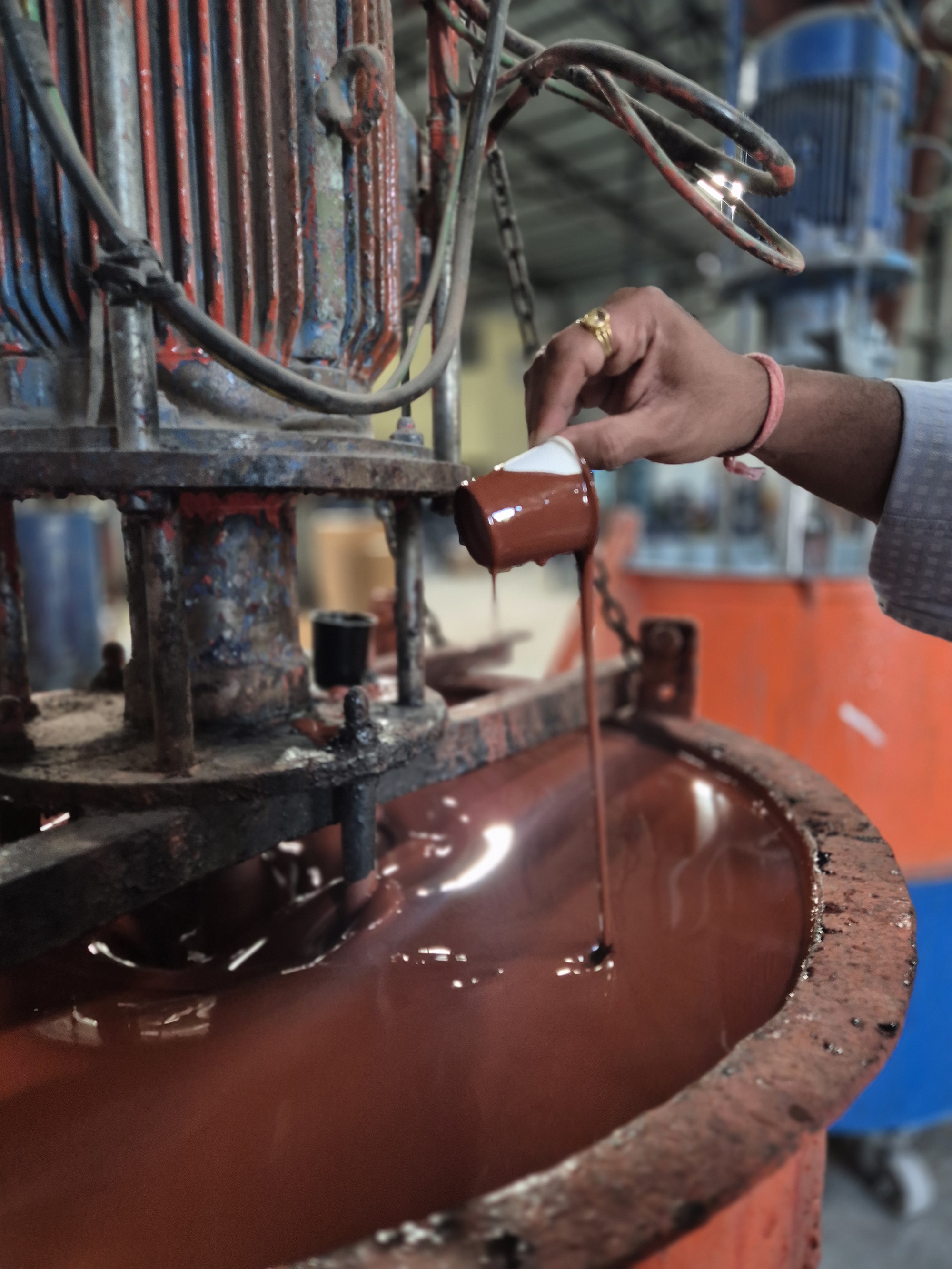 | Expoxy Paint Epoxy Paints –The Ultimate High-Performance Coating for Industrial & Commercial Protection Epoxy paints have become the top choice for industries,... View product → |