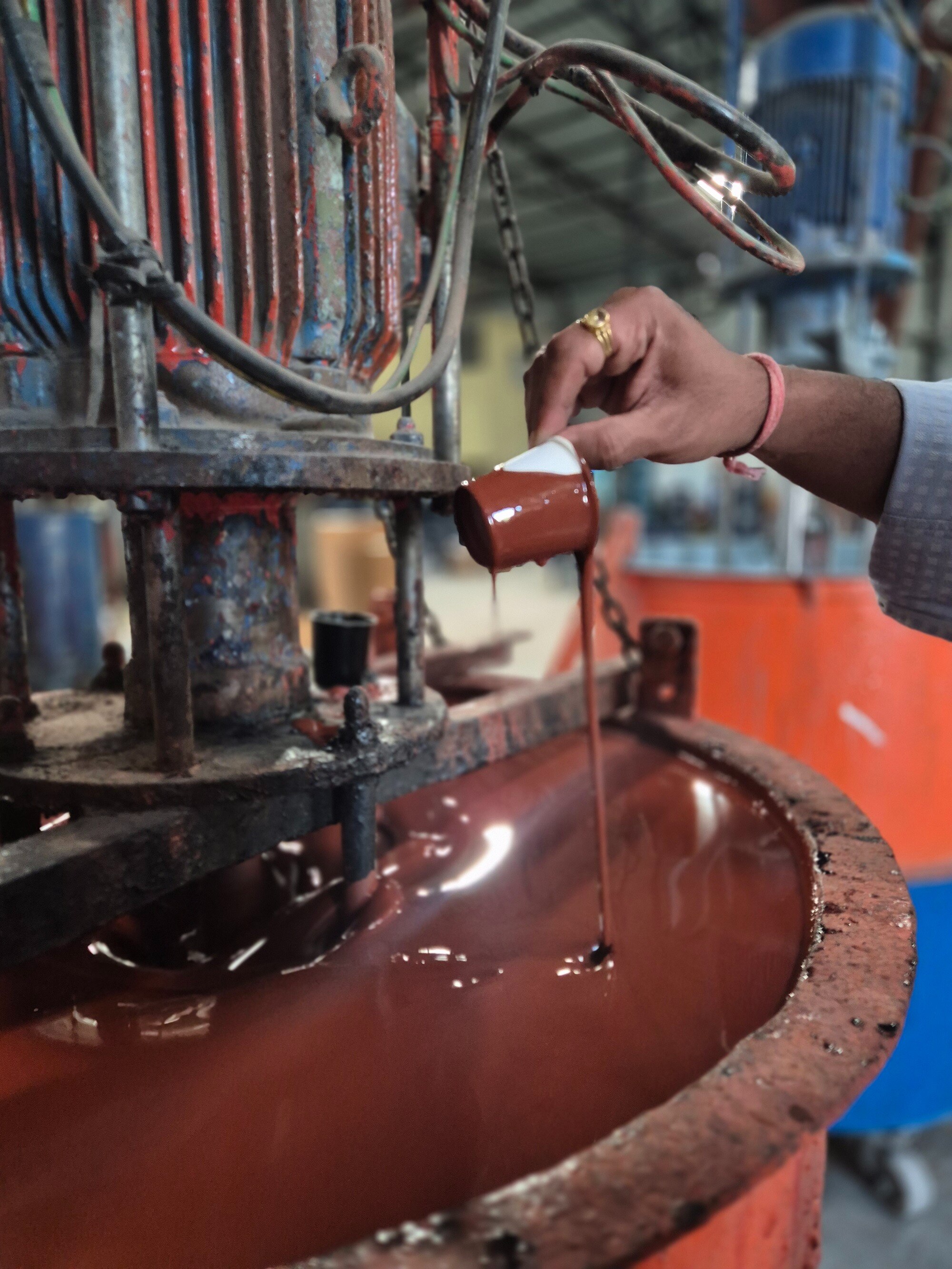
“P.U. Aeromatic” is usually a spelling variant of “P.U. Aromatic,” but the name alone does not identify a coating’s chemistry, service life or compatibility. By checking the technical data sheet, preparing the substrate correctly and comparing the full coating system, you can decide whether aromatic polyurethane fits a Chennai plant, or whether epoxy, aliphatic polyurethane or another system is safer.
Key takeaways
- Verify whether “Aeromatic” is a product name or aromatic polyurethane formulation.
- Check surface moisture, dew point and recoat intervals before application.
- Compare the complete primer, intermediate and topcoat system—not only the PU label.
- Request the current TDS, SDS, batch details and site-support terms from suppliers.
What P.U. Aeromatic means and where aromatic polyurethane fits
P.U. Aeromatic usually means aromatic polyurethane, but “aeromatic” is not a recognised generic coating class. If you are searching for p u aeromatic in chennai, ask whether the term is a product name, a spelling variant, or a formulation using aromatic isocyanates. Verify the answer in the current TDS and SDS.
Aromatic polyurethane paint uses include machinery housings, fabricated equipment, structural steel, storage tanks, above-ground pipelines, concrete floors and plant structures where colour retention is secondary. These applications still depend on the resin, isocyanate type, pigments, curing mechanism, service temperature and chemical exposure.
For exposed architectural steel, façade elements, bright colours and other colour-critical surfaces, choose aliphatic polyurethane or another UV-stable finish. Aromatic PU is more vulnerable to sunlight-driven yellowing and chalking.
Do not approve a generic aromatic PU recommendation for immersion service, high-temperature equipment, aggressive chemical tanks, buried pipelines, continuously wet concrete or areas requiring fireproofing. Each needs a project-specific coating system.
Before purchase, verify:
- The product identity and chemistry stated in the TDS, not only the label.
- The resin-to-hardener ratio, curing mechanism, service-temperature range and chemical-resistance limits.
- The recommended primer, intermediate coat, substrate and exposure category.
- Colour and gloss-retention claims, plus any stated UV, immersion or abrasion test conditions.
- The SDS controls for mixing, ventilation, gloves, clothing and respiratory protection.
Two products labelled polyurethane can perform very differently, so the label alone is not a specification.
How Chennai conditions change preparation and application
Chennai’s humidity and marine air make surface control part of the coating specification, not a housekeeping step. For p u aeromatic paint for industrial applications in chennai, use this acceptance benchmark before releasing steel or plant surfaces for coating.
1. Remove oil and grease with an appropriate degreaser, then abrasive-blast steel to Sa 2½ under ISO 8501-1 when the specification calls for a high-performance system. Use mechanical preparation only when the TDS and repair specification permit it.
2. Measure the blast profile and accept it only within the coating manufacturer’s stated range. Do not approve a surface because it merely looks rough. Check for dust, flash rust, visible contamination and soluble salts; specify soluble-salt testing to ISO 8502-9 for coastal or marine-air exposure.
Protect freshly blasted steel from salt-laden air and coat it before contamination or rust returns.
3. Before preparation and application, record ambient temperature, steel temperature, relative humidity and dew point. Keep steel at least 3°C above dew point; stop work when condensation is possible, ventilation is poor or the surface becomes damp.
4. For concrete, record the TDS moisture limit and its required test method, then reject coating when the measured result exceeds that limit. Provide ventilation without blowing dust onto wet film. During Chennai’s monsoon, postpone coating rather than trapping moisture beneath the film.
The application sequence and numbers to obtain before work starts
Before work starts, obtain the current TDS and SDS, batch number, manufacture date, shelf life, and a project coating schedule. A p u aeromatic coating supplier must state the approved surface standard, primer, film thickness, environmental limits and repair method.
1. Inspect welds, edges, pits, sharp corners, old-coating adhesion and repair areas. Record defects before cleaning; coating over weak edges or loose paint creates early lifting.
2. Degrease oil and grease, then abrasive-blast to the specified ISO 8501-1 grade, such as Sa 2½, or use mechanical preparation only when the TDS permits it. Measure the surface profile, remove dust and salts, and record steel temperature, air temperature, relative humidity and dew point.
3. Apply the specified primer. Use epoxy for many prepared-steel corrosion systems, zinc-rich primer where sacrificial protection is specified, and an approved intermediate coat where added barrier thickness or separation is required.
4. Mix resin and hardener at the exact TDS ratio by volume or weight. Observe the stated induction time, use no more thinner than permitted, and discard material after its stated pot life.
5. Apply only by the approved airless-spray, conventional-spray, brush or roller method. Obtain solids by volume, recommended DFT, matching WFT, theoretical coverage, touch-dry time, recoat interval, full-cure time, application temperature, humidity limit and substrate-moisture limit.
6. Check WFT during application and DFT after curing with calibrated gauges under a defined sampling plan. Excess film can cause sagging, solvent entrapment, wrinkling, cracking or delayed cure.
For isocyanate systems, the SDS-based method statement must specify ventilation, chemical-resistant gloves and clothing, and suitable respiratory protection.
Choose the complete coating system, not the polyurethane label
Choose the complete coating system against the maintenance decision, not the polyurethane label. Aromatic polyurethane can suit industrial steel, machinery, tanks and floors where colour retention is secondary. Aliphatic polyurethane is stronger for sunlight-exposed, colour-critical surfaces because it retains colour and gloss better.
| Option | Strengths | Trade-offs and best fit |
|---|---|---|
| Aromatic PU | Hard finish, useful abrasion and chemical resistance | Lower UV colour and gloss retention; practical for sheltered plant assets |
| Aliphatic PU | Better sunlight stability and colour retention | Higher cost can be justified for exposed, colour-critical work |
| Epoxy | Strong adhesion, barrier protection and chemical resistance | Can chalk outdoors; add a UV-stable finish |
| Alkyd or quick-drying paint | Familiar application, faster return to service | Lower chemical resistance, film build or service life in demanding exposure |
Compare hardness, flexibility, abrasion, chemical exposure, drying speed, recoating time, shutdown cost and expected maintenance. Searches for p u aeromatic paint for industrial applications in chennai should not end with a drum price or a generic claim.
For corrosion control, specify primer, intermediate and finish against the ISO 12944 corrosivity category, durability range, substrate and maintenance plan. A polyurethane topcoat alone is not an ISO 12944 system.
Reject chalking, loose or chemically incompatible old paint unless cleaning, adhesion testing and a written recoat procedure support it. Record substrate, film thickness, cure age and test conditions for ASTM D4541 pull-off adhesion and ASTM D4060 abrasion; results are not universal.
The phrase “aromatic polyurethane paint uses” describes possibilities, not approval for immersion, aggressive chemicals or continuous outdoor exposure.
How to evaluate a P.U. Aeromatic supplier before approving the purchase
Approve a P.U. Aeromatic coating supplier on evidence, not a drum-price comparison. A current TDS and SDS must identify the product, chemistry, two-component status and hazards; “humid-climate suitable” is not a specification.
Request these documents and written limits:
- Product label and batch number; manufacture date; shelf life; certificate of analysis where specified; colour, gloss and finish information.
- Resin-to-hardener ratio by volume or weight; solids by volume; theoretical coverage; wet- and dry-film thickness limits; pot life at a stated temperature; induction time; recoat window; full-cure schedule; application temperature and thinner limits.
- Recommendations for epoxy or zinc-rich primers, intermediate coats, compatible old coatings, surface profile, soluble-salt limits, relative humidity, dew point and concrete moisture.
- A project-specific coating schedule, sample panels or adhesion checks for uncertain substrates, calibrated DFT records, and a written repair procedure for damaged areas.
| Evidence | Reject if | Approve when |
|---|---|---|
| TDS/SDS | Generic brochure only | Current documents match the supplied batch |
| Traceability | Batch cannot be linked to records | Each drum and certificate is traceable |
| Site support | No training or technical contact | Training, continuity and application support are written |
| System fit | No old-coating or primer advice | Exposure, substrate and shutdown plan are addressed |
For P.U. Aeromatic in Chennai, Pragati Paints & Allied Products can add value by matching documented products and support to those site conditions rather than treating “aeromatic” as a universal specification.
Related product
 | Industrial PU Paint (Polyurethane Aromatic Paint) is a robust, high-strength industrial coating specially designed to provide excellent mechanical durability, chemical... View product → |
Frequently asked questions
What does P.U. Aeromatic mean in industrial paint?
P.U. Aeromatic usually refers to aromatic polyurethane, but “Aeromatic” is not a recognised generic coating class. Confirm its meaning in the current technical data sheet and safety data sheet.
How do Chennai conditions affect aromatic polyurethane paint application?
Chennai’s heat, humidity, coastal salt exposure and monsoon moisture make surface cleanliness, substrate moisture, dew-point clearance, ventilation and curing control important before application.
What information should you obtain before applying P.U. Aeromatic paint?
Obtain the current TDS and SDS, mixing ratio, pot life, thinner specification, recommended dry-film thickness, coverage, recoat window, curing temperature range, surface-preparation standard and batch details.
Why should you evaluate the complete coating system instead of the polyurethane label?
Performance depends on the primer, intermediate coat, aromatic polyurethane topcoat, surface preparation, film thickness and exposure conditions. Compare the documented system rather than the topcoat name alone.
How can you evaluate a P.U. Aeromatic coating supplier in Chennai?
Ask for current TDS and SDS documents, batch traceability, test certificates where relevant, application guidance, compatibility information, technical support and clear storage and shelf-life details.