
The correct clearcoat depends on more than gloss: you must match the polyurethane chemistry to the substrate, outdoor exposure, basecoat, application conditions and production quantity. By the end, you will be able to shortlist the right system, challenge incomplete supplier data and calculate a pack size without risking wasted mixed material or an unstable finish.
Key takeaways
- Match 1K or 2K polyurethane chemistry to exposure, flexibility and substrate.
- Test basecoat adhesion and compatibility before applying the clear lacquer.
- Control humidity, temperature, film thickness and flash time during application.
- Compare TDS values, resistance data, finish appearance and pack size—not labels alone.
Start with the polyurethane chemistry, exposure and substrate
A 1K PU-modified acrylic or moisture-cure lacquer is not equivalent to a 2K polyurethane clearcoat. The answer to “which P U clear lacquer for fits industrial finish in Chennai” starts with UV exposure, chemical contact, flexibility and substrate—not gloss or price.
| Option | Chemistry | Best fit |
|---|---|---|
| 1K PU-modified acrylic or moisture-cure | Single-pack application; simpler equipment and no measured hardener mix | Interior parts, simpler recoat work or service where resistance demands are moderate |
| 2K aliphatic PU | Hydroxyl-functional resin plus aliphatic isocyanate hardener | Outdoor equipment exposed to Chennai sunlight, heat and coastal salt air when low yellowing matters |
| 2K aromatic PU | Hydroxyl-functional resin plus aromatic isocyanate hardener | Interior or low-UV service where lower cost or different cure economics outweigh colour change |
For every 2K product, take the resin-to-hardener ratio, induction time and pot life from that grade’s technical data sheet. Never substitute another brand’s ratio or hardener. Compare waterborne 2K PU, high-solids PU and 1K products only after checking chemical resistance, abrasion, flexibility, spray equipment and recoat requirements.
A clearcoat protects the visible basecoat; choose a coloured 2K PU topcoat when you need hiding or colour renewal. On steel, the clear layer is not the corrosion system: primer, intermediate coat, edge treatment and total dry-film thickness do that work.
For aluminium, galvanised or stainless steel, wood, concrete, plastics and powder-coated parts, request substrate-specific adhesion evidence and qualify the complete coating stack on a test panel.
Qualify the basecoat and prepare the surface before choosing the finish
Adhesion and durability depend on the substrate, not the label on the clear lacquer. For carbon steel, remove oil and grease, treat or remove rust, create the specified abrasive profile, and remove every trace of blast dust before priming. Use the compatible P.U.
primer when the system requires polyurethane adhesion, corrosion control or a defined intercoat window.
| Substrate | Preparation gate | Failure if skipped |
|---|---|---|
| Carbon steel | Degrease, remove rust, achieve the specified abrasive profile, then remove blast dust | Delamination, flash rust or corrosion beneath the clearcoat |
| Aluminium, galvanised steel, stainless steel, powder coat or plastic | Use the specified adhesion promoter or tie coat; scuff-sand sound coatings at the stated grade and clean with the approved solvent | Poor bonding on smooth or low-energy surfaces |
| Concrete | Use a clean, dry, sound surface with moisture within the supplier’s stated limit | Blistering or loss of adhesion |
| Wood | Confirm stable moisture content and seal porous areas | Uneven absorption and irregular gloss |
Remove existing paint when it is loose, chalked, contaminated, incompatible or impossible to abrade uniformly. Never bury delamination under clear lacquer.
Do not apply when condensation is likely. Keep steel at least 3°C above the measured dew point during application and early cure, and record air temperature, surface temperature, relative humidity and dew point.
Make a trial panel with the actual primer, basecoat and clearcoat. Inspect the clear lacquer for industrial finishes in Chennai in daylight and artificial light, then test the cured coating stack by cross-cut classification under ISO 2409 or the specified ASTM adhesion method.
Control spray, brush or roller application in Chennai weather
Set the application window by Chennai’s temperature, relative humidity, dew point and rain forecast, then follow the product data sheet rather than a generic 40–60 µm dry-film target.
1. Ask the supplier for the approved spray nozzle or tip, fluid and air pressure, reducer, wet-film thickness, dry-film thickness, flash-off time, coat count and overlap. Applying the full build in one pass causes runs, sagging, solvent entrapment, wrinkling and delayed cure; use multiple even coats instead.
2. Use brush or roller only when the data sheet permits it. Confirm that the selected tool will not leave unacceptable texture, release air into the film or produce uneven coverage on the substrate.
3. Use only the specified thinner or reducer. A generic thinner can cause dry spray, orange peel, blushing, slow solvent release or gloss loss, especially in humid conditions.
4. For 2K material, measure the exact resin-to-hardener ratio, observe the stated induction time and discard mixed material after its pot life. Ask for the curing schedule, recoat window, handling time, stacking time, full cure and service-temperature range; dry-to-touch time does not prove chemical resistance.
5. Stop if rain, condensation or high humidity threatens the film. Moisture reacting with isocyanate can create microbubbles, pinholes, whitening or poor cure. Provide cross-ventilation, control ignition sources, wear the respirator and PPE named in the safety data sheet, and dispose of contaminated rags and containers as flammable or hazardous waste.
Compare technical data, appearance and resistance instead of labels
Two products sold as PU clear are comparable only when their data sheets describe the same test conditions, film build and exposure. For clear lacquer for industrial finishes in Chennai, request these records before comparing price:
- Technical data sheet, safety data sheet, batch number, manufacturing date, storage life, storage temperature, VOC content, mixing instructions and quality-control documents.
- Resin type, isocyanate type, volume solids, permitted substrates, mix ratio, pot life at a stated temperature, wet- and dry-film thickness, recoat window, full cure and service temperature.
| Option | Evidence to compare | Best fit |
|---|---|---|
| 1K PU-modified or moisture-cure | Single-pack chemistry, humidity limits, recoat time and chemical resistance | Smaller jobs or simpler application |
| Aromatic 2K PU | Hydroxyl resin, isocyanate, yellowing and UV data | Interior or low-UV service |
| Aliphatic 2K PU | UV exposure, colour-retention and non-yellowing results | Prolonged exterior exposure |
Specify gloss using ASTM D523 or ISO 2813, with a measurement angle: 60° for many comparisons and 20° for very high gloss. Require the acceptance range in gloss units, plus transparency, abrasion, yellowing, UV and colour-retention data.
Ask for named resistance results against the actual solvents, oils, fuels, water, acids and alkalis. Confirm coverage for Chennai heat, monsoon humidity and coastal salt exposure, and verify compatibility with the primer and basecoat within the stated recoat window.
Spray a trial panel at the proposed thickness. After cure, inspect gloss uniformity, clarity, fisheyes, pinholes, sagging, orange peel, whitening, delamination and yellowing. Choose a coloured 2K topcoat when the substrate needs hiding or colour correction rather than transparent protection.
Calculate the P.U. clear lacquer size and qualify the supplier
Base the P.U. clear lacquer size choice on mixed material consumed per batch, not on the cheapest nominal container. Calculate required wet volume as coated area × target dry-film thickness ÷ volume solids, then add allowance for spray-transfer loss, overspray, lines and touch-up. Replace catalogue coverage with the stated spreading rate and your trial-panel result.
| Option | Pack decision | Main risk |
|---|---|---|
| 1K lacquer | Match the pack to one shift or batch | Excess material remains usable only within its shelf life |
| 2K lacquer | Buy resin and hardener in the specified ratio | Mixed material expires at the pot-life limit |
| Trial pack | Use it before production purchasing | The result may not represent full-scale spray losses |
For 2K material, calculate the mixed quantity from the resin-to-hardener ratio. Compare that quantity with what your applicator can spray before pot life ends at Chennai’s working temperature; a large mix becomes waste when the batch is smaller than that usable window. Several correctly proportioned mixes can improve consistency.
Confirm actual pack sizes, component ratio, shelf life, sealed-storage temperature and delivery lead time. Ask for the batch number on the invoice, current technical and safety data sheets, volume solids, film range and pot life at a stated temperature.
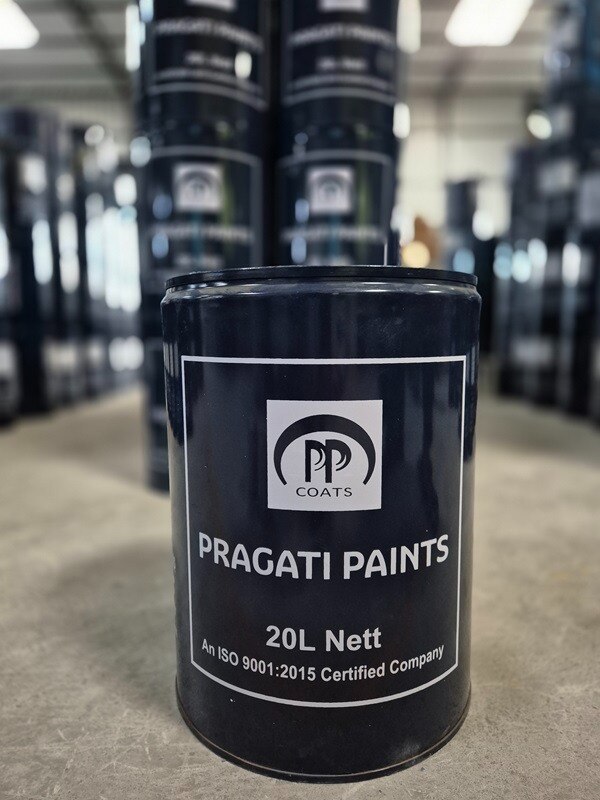
Pragati Paints & Allied Products is one Chennai source to include, provided you verify the exact grade, substrate recommendation, pack configuration and test documents.
Choose an industrial spray applicator with calibrated wet-film gauges and documented panel approval. Schedule coating outside rain and condensation periods; Bay of Bengal exposure belongs in the selection calculation.
Related product
 | Industrial PU Paint (Polyurethane Clear Lacquer) is a high-performance transparent protective coating widely used to enhance the appearance, durability, and longevity of... View product → |
Frequently asked questions
How do you choose between 1K and 2K PU clear lacquer?
Choose based on UV exposure, chemical contact, flexibility, substrate and required durability. A 1K PU-modified acrylic or moisture-cure lacquer does not perform like a 2K polyurethane clearcoat.
What must you check before applying a clear lacquer over a basecoat?
Confirm basecoat compatibility, adhesion, recoat timing and surface cleanliness. Remove oil, dust, moisture and loose material, then test the complete coating system on a representative panel.
How should you apply PU clear lacquer in Chennai weather?
Control substrate temperature, humidity, ventilation, spray pressure, film thickness and flash time. Avoid application when condensation can form or when moisture exceeds the product's technical data sheet limits.
How do you compare PU clear lacquer options and choose pack size?
Compare solids, recommended dry-film thickness, gloss, pot life, drying time and resistance data. Calculate usable coverage from solids and film thickness, then account for transfer loss, waste and touch-up work.