
The best P.U. primer for Chennai monsoon work is not automatically the product labelled moisture-tolerant or anticorrosive. You will be able to make a site-ready choice by checking steel dryness, dew-point separation, surface preparation, cure limits, coating compatibility and the shutdown time your project can tolerate.
Key takeaways
- Reject coating when steel is within 3°C of the dew point.
- Remove flash rust, salts and moisture before priming steel again.
- Select the complete coating system instead of comparing primer labels.
- Approve the final system only after a documented field trial.
Make the dew-point check before choosing or applying a primer
Accept P.U. primer only when the steel is dry and its temperature is at least 3°C above the calculated dew point. Record steel temperature, air temperature, relative humidity and dew point at the work location; a weather app cannot detect rain-cooled steel or condensation at the structure.
For p u primer for monsoon conditions in Chennai, repeat the check after sunset, before morning work and whenever rain passes.
| Condition | Decision | What can go wrong |
|---|---|---|
| Steel at least 3°C above dew point, dry and sheltered | Apply if the product’s temperature and humidity limits are met | Normal wetting and adhesion depend on correct curing |
| Steel within 3°C of dew point | Stop and wait | Condensation can cause pinholing, whitening, bubbling or poor adhesion |
| Visible water, rain, mist or damp steel | Do not apply | A “moisture-tolerant” primer is not permission to coat wet steel |
| High humidity after blasting with flash rust | Reinspect and prepare again to the specification | Uncontrolled flash rust can weaken the coating bond |
For p u primer in rainy weather, protect the steel and fresh film from rain until the manufacturer’s minimum resistance-to-water stage. Before choosing the primer, confirm these points:
- Check the technical data sheet for minimum and maximum substrate temperature, ambient temperature, relative humidity and dew-point separation.
- Confirm the permitted flash-rust grade and maximum blast-to-prime interval.
- Measure again after a shower; rain can cool steel below the dew point even when the air feels warm.
- Do not rely on a “monsoon grade” label without a field trial under the project’s actual shelter and humidity.
Prepare steel again after rain, flash rust or salt exposure
Do not prime over wet steel, visible condensation, uncontrolled flash rust or salt deposits. A P.U. primer for steel structures needs a dry, stable surface; a “moisture-tolerant” label does not permit application during active rain or onto visibly wet steel.
1. Stop work and shelter the steel from rain. Allow it to dry, then inspect welds, crevices, edges and horizontal surfaces for trapped water, mud, oil or white salt residue.
2. Wash salt and dirt with clean fresh water, using pressure suitable for the structure. Let the steel dry completely. Check soluble salts with ISO 8502-6 and ISO 8502-9 Bresle testing when the coating specification sets a limit.
3. Remove flash rust according to the specification. If the permitted grade or blast-to-prime interval has been exceeded, reblast rather than sealing uncontrolled rust under the primer. For long-term protection, specify abrasive blast cleaning to Sa 2½ under ISO 8501-1, or the stated SSPC/NACE equivalent, with a measured surface profile.
4. Vacuum or blow off abrasive and dust; do not leave compressed-air oil or moisture on the steel. Verify cleanliness and profile before mixing paint.
5. Record air temperature, steel temperature, relative humidity and dew point at the work location. Apply only while steel remains at least 3°C above dew point and within the product’s temperature and humidity limits.
Prime within the technical data sheet’s maximum interval after blasting. If rain interrupts that interval, repeat inspection and preparation before restarting; a dry-looking surface is not proof that salts or flash rust are gone.
Choose the coating system, not the primer label
A conventional P.U. primer is the better choice when the specified polyurethane system needs dependable adhesion, a defined recoat window and compatibility with its PU intermediate or topcoat. It is not automatically the strongest corrosion barrier for bare structural steel.
| Option | Choose it when | Avoid it when |
|---|---|---|
| Conventional P.U. primer | The approved PU system prioritises adhesion, rapid recoating or finish compatibility | The specification demands zinc-rich cathodic protection |
| P.U. Zinc Phosphate Primer | You need corrosion-inhibitive pigment within a PU-based system | The job requires the electrical continuity of a zinc-rich primer |
| QD Zinc Phosphate Primer | Short drying and earlier recoating matter, with controlled temperature and humidity | Rain or high humidity will prevent the stated cure |
| Q.D. Primer | A quick-dry, non-zinc system suits a short work window and the specified overcoat | Long-term immersion or severe coastal exposure governs selection |
| Synthetic Primer | Cost, simple application and a compatible synthetic finish are the priority | A high-durability PU topcoat or demanding exposure class is specified |
For p u primer for infrastructure contractors, compare the complete stack: blast profile, primer, intermediate coat, topcoat, dry-film thickness and exposure class. A common heavy-duty arrangement uses zinc-rich or corrosion-inhibitive epoxy primer, epoxy intermediate coat and aliphatic PU finish; replacing one layer changes the protection mechanism.
A polyurethane primer in chennai must also pass the project’s soluble-salt limit and a field trial using the actual steel, spray equipment, thickness and intended topcoat. Choose conventional PU only when that trial confirms adhesion, cure, hardness, compatibility and rain-exposure performance.
Control mixing, curing and inspection inside a monsoon work plan
Treat P.U. primer in rainy weather as a controlled production window, not a race to cover steel before rain. Apply only to dry steel that remains at least 3°C above the calculated dew point, and keep the coated surface under cover until the manufacturer’s stated water-resistance stage.
- Mix under shelter using the specified two-pack ratio, clean tools and the stated thinner, if any. Record the batch number, mixing time and pot-life expiry; discard material after pot life rather than adding solvent.
- Record steel temperature, air temperature, relative humidity and dew point at the work location before spraying and during the shift. Stop when the 3°C margin disappears.
- Apply the specified wet-film or dry-film thickness with equipment suited to the product. Excess thickness can trap solvent, wrinkle the film or extend curing.
- Keep rain, spray and condensation away until the product data sheet permits water exposure. A plastic sheet touching uncured film can cause whitening, pinholes or loss of adhesion, so provide an air gap and drainage.
- Recoat only within the stated minimum and maximum window. If rain interrupts the job or the window expires, inspect for flash rust, chalking and contamination, then reprepare as the coating specification directs.
Release P.U. primer for steel structures only after inspection confirms the specified visual condition, dry-film thickness, cure or hardness, adhesion and compatibility with the PU topcoat. Test a trial panel under the project’s actual preparation, equipment, thickness, shelter and humidity; reject it if rain exposure damages the film or the recorded results miss the specification.
Use a field trial and document the final go-or-no-go decision
Approve a specific product only after it survives a field trial on steel prepared and coated exactly as the named project requires. A “monsoon-grade” label is not evidence: polyurethane primer in Chennai can still fail on wet steel or over soluble salts.
Request the technical data sheet and safety data sheet from the shortlisted supplier, then record these trial controls:
1. Use project steel, the specified abrasive-blast profile, actual spray equipment, target dry-film thickness, drying shelter and intended polyurethane topcoat. Test the p u primer for infrastructure contractors under the same crew and application sequence planned for production.
2. Log air temperature, steel temperature, relative humidity and dew point at the panel. Stop when steel is less than 3°C above dew point, and record any rain, condensation or flash rust before priming.
3. Check soluble contamination with a Bresle-type extraction test when the specification sets a chloride or total-soluble-salt limit. Abrasive blasting does not reliably remove deposited coastal salts.
4. Expose the panel to the project’s rain and drying conditions, then inspect for blistering, whitening, lifting, rusting and loss of adhesion. Measure DFT, confirm cure or hardness, and test compatibility with the specified topcoat.
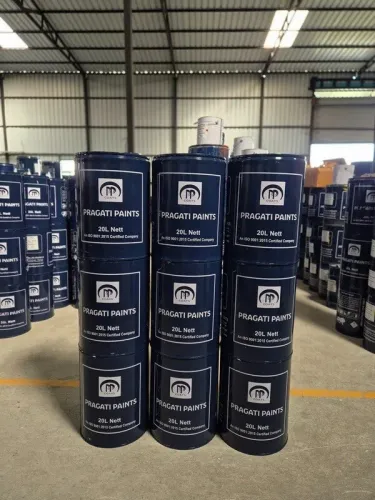
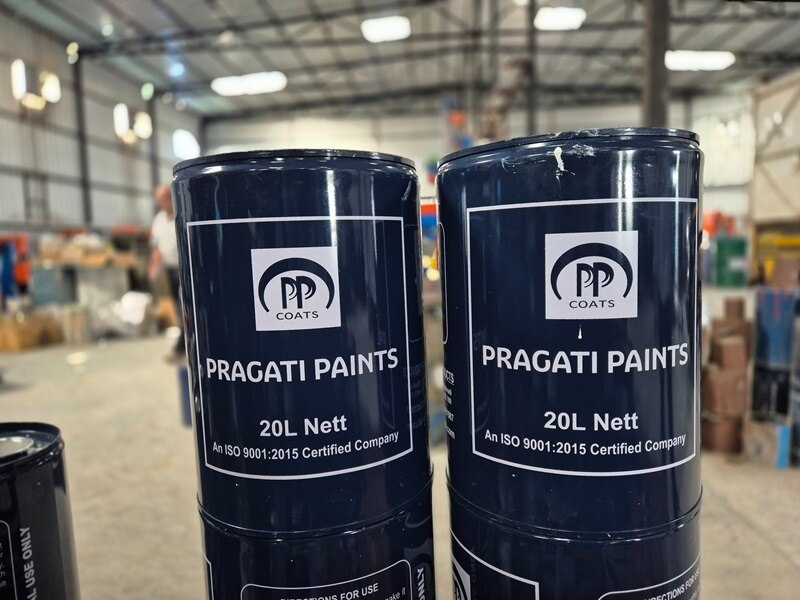
5. Compare results with the product’s stated surface-preparation rule, application temperature and humidity limits, pot life, rain resistance, recoat window and maximum blast-to-prime interval. Pragati Paints & Allied Products can be included in the same documented comparison if its P.U. primer is shortlisted.
Issue a signed go-or-no-go record naming the product, batch, panel conditions, test results, defects, corrective action and approving engineer. That is the evidence for selecting a p u primer for monsoon conditions in Chennai.
Related products
 | Industrial PU Paint P.U. Primer (Polyurethane Primer) is a high-quality base coat specially formulated to enhance adhesion, improve surface uniformity, and increase the overall... |
 | Industrial PU Paint High-Performance Anti-Corrosive Coating for Industrial Protection When it comes to long-lasting metal protection, P.U Zinc Phosphate Primer stands... View product → |
Frequently asked questions
How far above the dew point must steel be before applying P U primer?
Accept P U primer only when the steel temperature is at least 3°C above the calculated dew point. Record steel temperature, air temperature, relative humidity and dew point at the work location.
What should you do before applying P U primer after rain?
Dry the steel, inspect for flash rust and remove salts or other contamination. Repeat surface preparation before applying another coat.
How do you choose a P U primer for steel structures?
Choose the complete coating system, including surface preparation, primer, intermediate coat, topcoat, dry-film thickness and curing requirements. Do not select a primer from its label alone.
How can infrastructure contractors approve P U primer during monsoon work?
Run a field trial under the actual site conditions, then record the weather readings, surface condition, mixing details, application time, curing observations and final go-or-no-go decision.