
The phrase high-build zinc primer covers products with different corrosion mechanisms, film compositions and application limits. By comparing zinc content in the cured film, exposure class, surface preparation, film thickness and recoat conditions, you can select a primer system that fits the steel, schedule and maintenance plan rather than choosing by product name alone.
Key takeaways
- Choose zinc-rich primer for sacrificial cathodic protection at damaged steel.
- Choose zinc phosphate when inhibition and barrier protection meet the exposure demands.
- Specify blast-cleaning grade, surface profile, salts, moisture and steel temperature.
- Set dry-film thickness, application limits and overcoating windows before purchase.
Start with the corrosion mechanism, not the word “zinc”
Steel corrodes when water and oxygen reach its surface, so primer choice depends on whether you need sacrificial metal, inhibition, or a sealed barrier. Metallic zinc protects exposed steel at a scratch only when zinc particles form an electrically continuous network and contact the steel; zinc phosphate does not provide equivalent cathodic protection.
| Option | Protection mechanism | Best fit and limitation |
|---|---|---|
| Organic epoxy zinc-rich primer | Sacrificial galvanic protection plus an epoxy barrier | Scratches and atmospheric steel service; needs conductive zinc contact and a compatible topcoat |
| Inorganic zinc silicate primer | Sacrificial galvanic protection from metallic zinc in a hard, moisture-cured silicate film | Abrasive-blasted steel and demanding atmospheric service; moisture curing and overcoating require tight control |
| High-build zinc phosphate primer | Barrier and inhibitive protection | Smoother, easier-to-overcoat systems where scratch-level cathodic protection is not required |
| Ordinary epoxy primer | Barrier protection only | Sealed systems with compatible intermediates; epoxy alone is not UV durable |
High-build zinc primer selection should start with exposure, maintenance access and repair consequences, not the product name. Zinc-rich protection is valuable on edges and accidental scratches, while zinc phosphate suits a barrier strategy. Inorganic zinc silicate is a distinct zinc-rich technology, not a thicker epoxy.
For outdoor exposure, cover any epoxy primer with a compatible UV-resistant intermediate or topcoat because ultraviolet light chalks epoxy and reduces gloss. An industrial zinc primer comparison should therefore assess the corrosion mechanism, service environment, repair plan and complete coating system—not simply the word “zinc” on the label.
Compare zinc-rich and zinc phosphate formulations by cured-film performance
Compare zinc-rich products on cured-film zinc dust, not the percentage printed for the liquid paint. Solvent evaporation and binder content can make two paints with similar wet-paint zinc percentages produce different dry films.
Request zinc-dust content by weight in the dry film and identify the SSPC Paint 20 class: commonly referenced minimum levels are approximately 65%, 77% and 85%.
| Option | Cured-film performance | Practical trade-off |
|---|---|---|
| Organic epoxy zinc-rich primer | Metallic zinc particles provide sacrificial protection when they contact each other and the steel in a continuous network | Better protection at small scratches, but application defects and difficult overcoating can undermine it |
| Epoxy zinc phosphate primer | Smoother barrier and inhibitive film; it does not provide equivalent cathodic protection | Easier overcoating and a cleaner finish, but scratches depend on the surrounding barrier system |
A higher dry-film zinc percentage is not an automatic performance guarantee. Zinc continuity, binder content, particle contact, film integrity, application quality and exposure decide whether the specified class performs in service. A porous or poorly bonded high-zinc film can fail sooner than a sound lower-zinc coating.
For epoxy paints high build zinc for primer options, match the mechanism to ISO 12944 exposure: atmospheric C-category service, marine splash, chemical exposure and immersion demand different complete systems. Epoxy zinc phosphate primer options suit smooth barrier protection and easier overcoating; zinc-rich primers suit sacrificial protection where scratches threaten steel.
Confirm the intermediate and topcoat design rather than choosing the highest percentage.
Specify the steel surface before specifying the primer
Set bare carbon steel to ISO 8501-1 Sa 2½, or the specified SSPC-SP 10/NACE No. 2 equivalent, before choosing a primer. Remove mill scale, rust, oil and dust; otherwise a technically sound zinc film will fail at the steel interface. Define the abrasive profile under ISO 8503 or ASTM D4417.
- Extract soluble salts under ISO 8502-6 and measure them in the field under ISO 8502-9. Set an acceptance limit, such as 50 mg/m² total soluble salts unless the project specification requires less. Visual cleanliness cannot reveal chloride or sulfate contamination, which can cause osmotic blistering and underfilm corrosion.
- Abrasive blasting is essential for zinc-rich and inorganic zinc silicate primers because zinc particles need reliable electrical and mechanical contact with steel. Accept power-tool preparation only for a documented repair that names the preparation grade, tool method and compatible repair coating.
- Record weld spatter, sharp edges, laminations and heat-tinted weld zones separately; stripe-coat edges and welds where the system requires it. Include these checks in an industrial zinc primer comparison, not just laboratory corrosion results.
| Substrate | Compatibility check |
|---|---|
| Bare steel | Blast-clean and verify profile, salts and dust before priming. |
| Galvanized steel | Remove white rust and contaminants; use the specified adhesion-promoting primer. |
| Previously painted steel | Test adhesion and solvent compatibility before retaining sound coating. |
| Concrete | Verify moisture, alkalinity, laitance and surface profile; steel primers are not automatic concrete primers. |
Control film build, application conditions and overcoating time
A high-build primer saves work only when the applicator can hold its wet film, temperature and recoat window. Excess build creates solvent entrapment, mud cracking, pinholing, sagging, poor cure and intercoat-adhesion failure.
Require the product data sheet before using these indicative DFT ranges:
| High-build zinc phosphate | 75–150 μm |
|---|---|
| Epoxy zinc-rich | 50–100 μm |
| Conventional zinc phosphate | 40–75 μm |
| Inorganic zinc silicate | 50–100 μm |
| Ordinary epoxy | 50–100 μm |
Treat each range as subject to the tested system, not as a universal target. Calculate wet-film thickness as target DFT divided by volume-solids fraction; for 100 μm DFT at 60% volume solids, apply about 167 μm wet film.
Use one or two coats only where the data sheet permits, then check minimum and maximum DFT with ASTM D7091.
For epoxy paints high build zinc for primer options, obtain written values for induction time, pot life, minimum and maximum recoat interval, approved thinner, steel temperature, air temperature, relative humidity and minimum steel-to-dew-point separation.
Two-component epoxy limits depend on mixing, solvent release and cure; zinc silicate also needs controlled moisture conditions for proper curing, so do not transfer epoxy limits to it.
A high build zinc primer selection should include these application controls:
- Apply stripe coats to edges, welds, bolts and cutouts before full coating.
- Confirm the spray tip, pressure and reducer match the data sheet.
- Record DFT readings and investigate high spots before overcoating.
- Ask for the zinc silicate moisture requirement and epoxy surface-conditioning procedure in writing.
Turn the comparison into a purchase specification and workable coating system
Approve a primer only after converting the high build zinc primer selection into a written system specification:
1. Record exposure, ISO 12944 category, immersion or atmospheric service, substrate, ISO 8501-1 preparation grade, ISO 8503 or ASTM D4417 anchor profile, and the soluble-salt limit verified by ISO 8502-6 or ISO 8502-9.
2. Require dry-film zinc content, minimum and maximum DFT, stripe-coat requirement for edges, welds, bolts and cutouts, application equipment, mixing instructions, zinc-settling control, induction time, pot life, temperature, humidity and dew-point limits.
3. Name the compatible intermediate and UV-resistant topcoat, minimum and maximum recoat window, repair procedure, inspection records, and DFT checks under ASTM D7091. Excess epoxy build traps solvent, causes pinholes or mud cracking, and can destroy intercoat adhesion.
4. For zinc silicate, specify removal of loose zinc corrosion products after weathering or condensation exposure, or a tested tie coat; unclean salts can cause the next coat to peel. Do not assume epoxy zinc-rich films accept every overcoat.
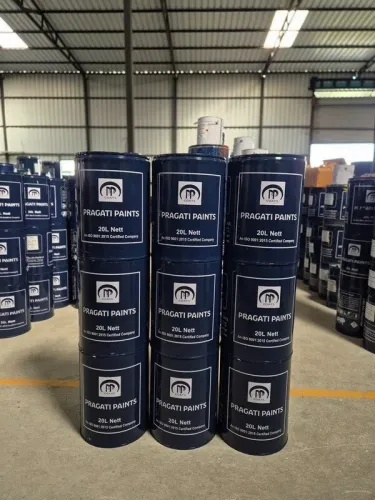
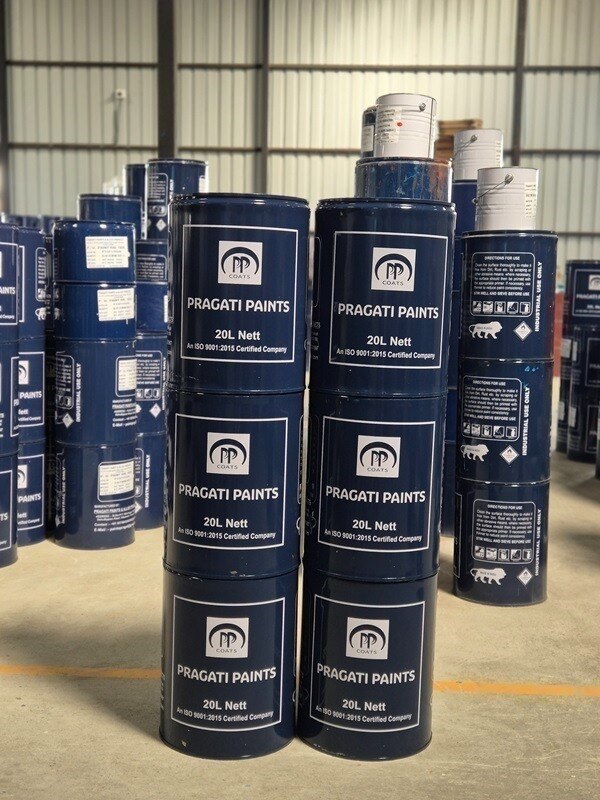
5. Ask Pragati Paints & Allied Products for the product data sheet, system compatibility statement, application limits and test documentation before approving high-build zinc phosphate or competing epoxy zinc phosphate primer options. Compare the stated immersion qualification, repair method and records—not merely the product name—and specify a UV-resistant topcoat for every outdoor system.
Related products
 | Industrial Expoxy Paint Epoxy High Build Zinc Phosphate Primer Advanced Corrosion Protection for Industrial Steel Structures Industrial environments demand coatings that deliver long-lasting corrosion protection,... View product → |
 | Expoxy Paint High-Performance Protection for Steel Structures When it comes to long-term corrosion protection of metal surfaces, Epoxy Zinc Rich Primer is one of... View product → |
Frequently asked questions
How do zinc-rich and zinc phosphate primers protect steel differently?
Zinc-rich primers provide sacrificial cathodic protection when metallic zinc particles form an electrically continuous network contacting the steel. Zinc phosphate primers provide inhibition and barrier protection but do not provide equivalent cathodic protection.
What should you check on the steel surface before selecting a primer?
Specify the steel condition, blast-cleaning standard, surface profile, soluble salts, dust, oil, moisture and steel temperature before choosing the primer.
How do film build and application conditions affect a high-build zinc primer?
Control wet- and dry-film thickness, substrate temperature, humidity, dew-point separation, ventilation and the manufacturer's overcoating interval to prevent defects and adhesion failure.
What belongs in a purchase specification for an industrial zinc primer system?
State the primer chemistry, zinc content or phosphate type, surface-preparation standard, target dry-film thickness, application method, environmental limits, overcoating window and complete coating sequence.
Related products
 | Expoxy Paint Premium Anti-Corrosive Protection for Industrial Metal Surfaces When industries need the highest level of corrosion resistance and strong adhesion,... View product → |
 | Expoxy Paint Epoxy Primer – The Most Reliable Base Coat for Industrial Protection & Strong Adhesion When it comes to industrial painting, durability starts from... View product → |
 | Expoxy Paint Epoxy Inorganic Zinc Silicate Primer Heavy-Duty Anti-Corrosive Protection for Extreme Industrial Conditions When it comes to the highest level of corrosion protection, especially in... View product → |
 | Industrial QD Paint Alkyd Base Zinc Phosphate Primer Reliable Anti-Corrosive Protection for Metal Surfaces Alkyd Base Zinc Phosphate Primer is one of the most trusted primers in the industrial and... View product → |