
The right coating depends on the complete system, not the word “synthetic” or “epoxy” on a paint tin. By comparing resin chemistry, exposure, preparation, application controls, technical data and installed cost, you can select a coating that suits the metal, environment and maintenance interval.
Key takeaways
- Choose epoxy for immersion, chemicals and abrasion; choose alkyd for easier maintenance and weathering.
- Specify primer, intermediate coat and topcoat as one compatible system.
- Remove rust, oil, salts and loose coating before applying new paint.
- Compare dry-film thickness, recoat windows, coverage and supplier test documents.
Compare the Complete Coating System, Not Just the Topcoat Name
Compare synthetic paints or epoxy paints as complete coating systems, not as topcoat names. “Synthetic paint” is a trade description, commonly meaning a one-component solventborne alkyd or modified-alkyd coating, but it can also mean acrylic, polyurethane-modified or another resin system. Alkyd coatings cure by oxidative cross-linking with atmospheric oxygen.
Single-pack handling avoids mixing errors, induction time and pot-life waste, but low temperature, poor ventilation and excessive film thickness can leave the film soft or slow to cure.
Two-component epoxy combines resin with an amine, polyamide or related curing agent. Follow the specified mix ratio by volume or weight, induction time and pot life; extra hardener does not reliably speed curing and can produce an under-cured, soft or chemically vulnerable film.
| Property | Synthetic paints | Epoxy paints |
|---|---|---|
| Hardness and flexibility | Easier application; often more flexible, less abrasion-resistant | Hard, abrasion-resistant; formulation controls brittleness |
| Adhesion and corrosion protection | Suitable primer and dry indoor exposure required | Strong barrier performance when preparation and thickness are correct |
| Water and chemicals | Weaker against immersion, solvents, fuels, acids and alkalis | Often stronger, but chemical, concentration and temperature data decide |
| UV stability and gloss | Better choices exist for exposed finish | Many epoxies chalk and lose gloss in sunlight |
Require the supplier to compare primer, intermediate coat and topcoat together: resin type, curing mechanism, solids by volume, VOC, recommended DFT and service-temperature range. “Epoxy” is not an automatic service rating.
Match the Coating to Exposure, Maintenance and Weather
Choose a one-pack synthetic industrial paint for sheltered indoor steel, small repairs and intermittent maintenance when easy handling, no induction time and low mixing waste matter more than maximum chemical or abrasion resistance.
| Service condition | Preferred system | Selection rule |
|---|---|---|
| Sheltered indoor steel with low-to-moderate exposure | One-pack synthetic system | Use when water, solvent and abrasion exposure remain limited |
| Water, salts, fuels, oils, chemical splash, high humidity or abrasion | Suitable epoxy system | Confirm the chemical, concentration, temperature and immersion test condition on the product data sheet |
| Continuously exposed steel | Epoxy primer or intermediate coat plus polyurethane, polysiloxane or other UV-resistant topcoat | Sunlight can chalk epoxy and reduce gloss even while the underlying film protects steel |
Pune’s monsoon humidity makes condensation a practical failure risk in workshops: do not coat steel that is damp or accumulating moisture. Coastal chloride exposure demands stricter surface cleaning and a corrosion-rated system; sheltered indoor steel does not face the same salt and wetting cycle.
Neither ordinary system is adequate for every service. Specify a tested immersion system for continuous submersion, a heat-resistant coating for elevated temperatures, or a high-build corrosion system for severe rusting.
Include the maintenance interval in your decision. A cheaper synthetic finish that needs frequent cleaning and recoating can cost more than epoxy’s controlled mixing and pot-life waste, while an epoxy system without a UV-resistant topcoat can lose appearance outdoors. Examine the full service schedule, not just the purchase price.
Prepare the Steel and Control the Application
Neither synthetic paint nor epoxy paint can rescue poorly prepared steel. Degrease first, remove mill scale, rust, old loose coating and sharp edges, then use abrasive blasting or power-tool cleaning to the cleanliness grade specified for the project. Use ISO 8501-1 for visual cleanliness and ASTM D4417 for blast profile.
1. Remove dust and test for chloride or sulfate contamination before priming. Soluble salts beneath either coating attract moisture, causing osmotic blistering and under-film corrosion. Record steel temperature, air temperature, relative humidity and dew point before and during painting.
Keep steel at least 3°C above dew point only when the specification requires that rule, and follow the product data sheet’s temperature and humidity limits.
2. Batch epoxy exactly by the stated volume or weight ratio. Observe induction time, use only the specified thinner, provide ventilation, confirm whether spray or brush application is suitable, and track usable pot life after activation. Clean equipment before the material gels.
3. Measure wet-film thickness during application and dry-film thickness after curing, using ASTM D7091 for DFT. Apply the specified number of coats. Excess thickness traps solvent and can cause wrinkling, slow cure, or cracking; low thickness leaves discontinuities and weak edge coverage.
4. Use the technical data sheet for touch-dry, minimum and maximum recoat, and full-cure times at the stated temperature and humidity. This control matters in any epoxy paints comparison because synthetic and epoxy systems have different film-build and curing limits.
Compare Technical Data, Installed Cost and Supplier Documents
Put competing technical data sheets side by side before choosing. Compare the same system basis: primer, coats and topcoat, not isolated claims.
| Data point | Synthetic paint | Epoxy paint |
|---|---|---|
| Volume solids, VOC, DFT and WFT | Record stated values; calculate coverage at specified DFT | Record stated values; higher-build films can change litres required |
| Coats, coverage and cure schedule | Note theoretical coverage, coats, touch-dry and recoat times | Note induction time, pot life, cure schedule and recoat limits |
| Performance evidence | Check hardness, abrasion result and chemical-resistance list | Check hardness, abrasion result, chemical-resistance list and salt-spray method |
| Service limits | Record service-temperature range and weathering limits | Record service-temperature range and UV limitations |
Do not compare adhesion values without checking ASTM D4541 conditions, coating age, substrate preparation, film thickness and failure mode. A cohesive coating failure or glue failure does not prove the same interface performance as adhesive failure at the substrate.
Calculate material cost from litres required at the specified DFT, not pack price alone. Add primer, topcoat, thinner, mixing waste, spray or brush labour, preparation, equipment cleaning, downtime, recoat risk and expected maintenance frequency.
Epoxy’s performance can be offset by pot-life waste and stricter labour controls; a cheaper synthetic finish can cost more when corrosion protection is inadequate.
Ask for:
- Product data sheet, safety data sheet, batch number, shelf life, colour and pack size
- Mixing ratio, thinner, application method, coverage, recoat interval and required primer
- Warranty conditions and confirmation of whether the quotation is a complete system or only a topcoat
Pragati Paints & Allied Products can supply these documents and clarify that system boundary.
Related products
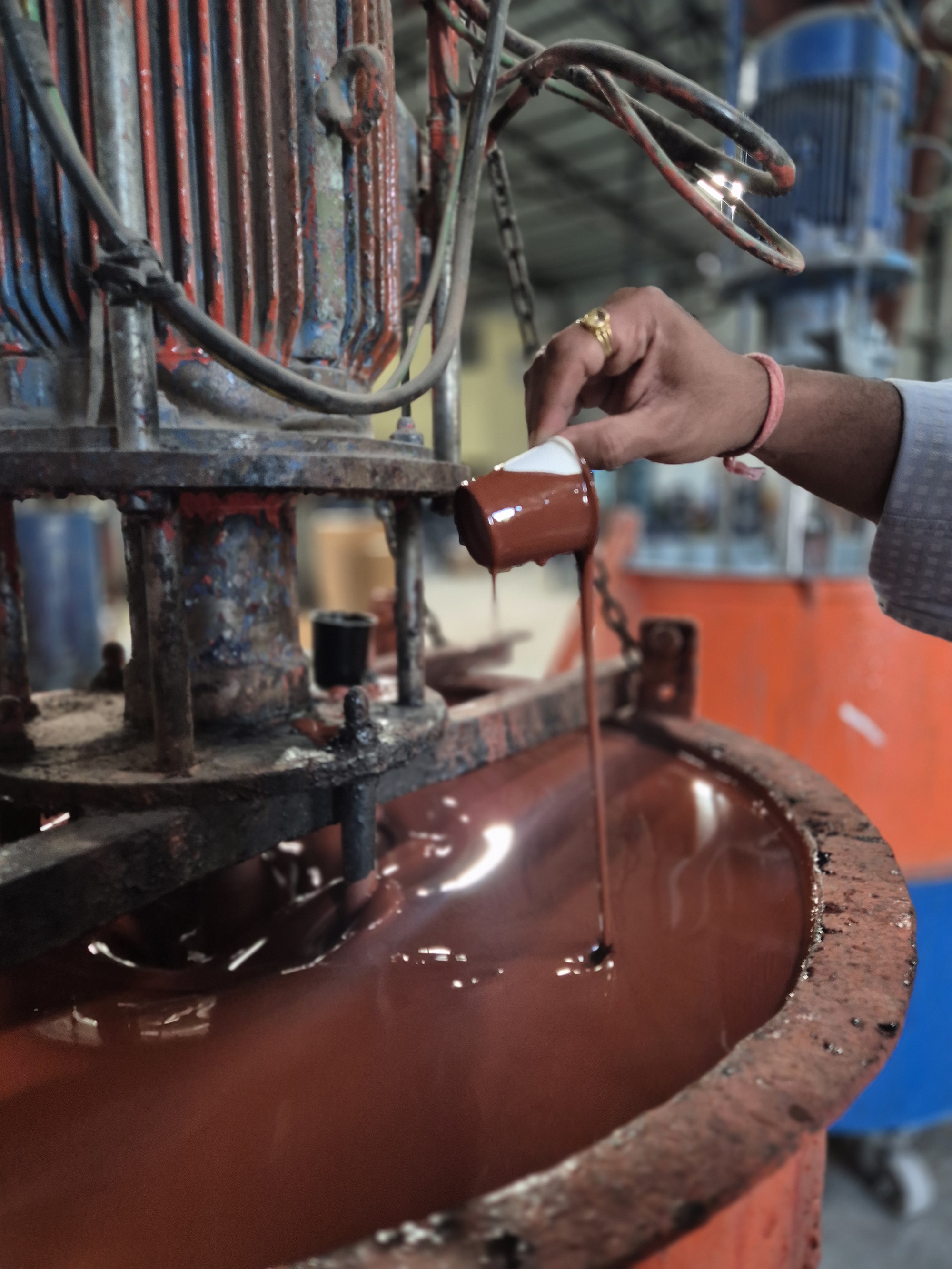 | Expoxy Paint Epoxy Paints –The Ultimate High-Performance Coating for Industrial & Commercial Protection Epoxy paints have become the top choice for industries,... View product → |
 | Synthetic Paints & Primer Durable, Affordable & Versatile Coating Solution for All Surfaces Synthetic paints are among the most widely used industrial and household coatings... View product → |
Check Compatibility and Diagnose Coating Failure Before Recoating
An existing coating is not automatically a sound substrate. Synthetic paints over cured epoxy, or epoxy over alkyd or an unknown coating, require the product-specific technical data sheet, a solvent test where appropriate, cleaning, mechanical sanding and a test patch followed by an intercoat-adhesion check.
That epoxy paints comparison is incomplete without testing the actual old film.
1. Identify the old coating, its cure state and damage. Record the minimum and maximum recoat windows for both products, because temperature, film thickness and formulation change them. After the maximum interval, clean and abrade as directed. Never assume a solventborne synthetic topcoat will adhere to, or avoid lifting, an inadequately cured epoxy film.
2. Remove oil, dust, salts, loose paint and corrosion. Check steel temperature, air temperature, relative humidity and dew point. Stop work when condensation, poor ventilation or the coating’s pot-life limit invalidates application.
3. Apply the test patch at the specified thickness and let it cure. Check intercoat adhesion before releasing the full area; a failed patch means more preparation or a different system, not another coat.
4. Match each failure to its cause and correction:
| Symptom | Likely cause | Corrective action |
|---|---|---|
| Peeling | Weak preparation or intercoat adhesion | Remove loose film, prepare and retest |
| Bubbling | Moisture or soluble salts | Wash, test salts, dry and abrade |
| Rust bleed-through | Remaining corrosion or insufficient film | Remove rust and restore specified thickness |
| Cratering | Contamination or incorrect spray conditions | Clean equipment and surface; correct spraying |
| Wrinkling | Excessive thickness or solvent entrapment | Remove defective film and control DFT |
| Amine blush | Waxy epoxy surface from cool, damp cure | Clean, abrade and verify |
| Chalking | Unsuitable UV exposure or topcoat | Select a UV-resistant topcoat |
| Flash rust or pinholing | Damp steel, substrate or application conditions | Stop, dry, prepare and correct application |
Frequently asked questions
Are synthetic paints or epoxy paints better for industrial metal?
Neither is universally better. Choose the system that matches exposure, maintenance intervals, weather, surface preparation and application controls. Synthetic alkyd systems suit many atmospheric environments, while epoxy systems provide stronger chemical, abrasion and barrier resistance but need stricter preparation and recoat control.
How should you prepare steel before applying synthetic or epoxy paint?
Remove oil, grease, salts, mill scale, rust and loose coating. Use the specified abrasive blast or mechanical-cleaning standard, achieve the required surface profile, remove dust, and apply the primer within its specified time and environmental limits.
What technical data should you compare for industrial metal paint?
Compare resin type, primer compatibility, recommended dry-film thickness, wet-film thickness, volume solids, theoretical coverage, pot life, touch-dry and recoat times, temperature limits, thinner, surface preparation standard and chemical-resistance data.
Why does industrial paint fail after recoating?
Common causes include incompatible coats, trapped contamination, inadequate surface profile, excessive or insufficient film thickness, condensation, missed recoat windows and incorrect thinner use. Identify the failure mode and test adhesion before recoating.
Related products
 | Expoxy Paint Epoxy Primer – The Most Reliable Base Coat for Industrial Protection & Strong Adhesion When it comes to industrial painting, durability starts from... View product → |
 | Industrial Expoxy Paint Epoxy High Build Zinc Phosphate Primer Advanced Corrosion Protection for Industrial Steel Structures Industrial environments demand coatings that deliver long-lasting corrosion protection,... View product → |
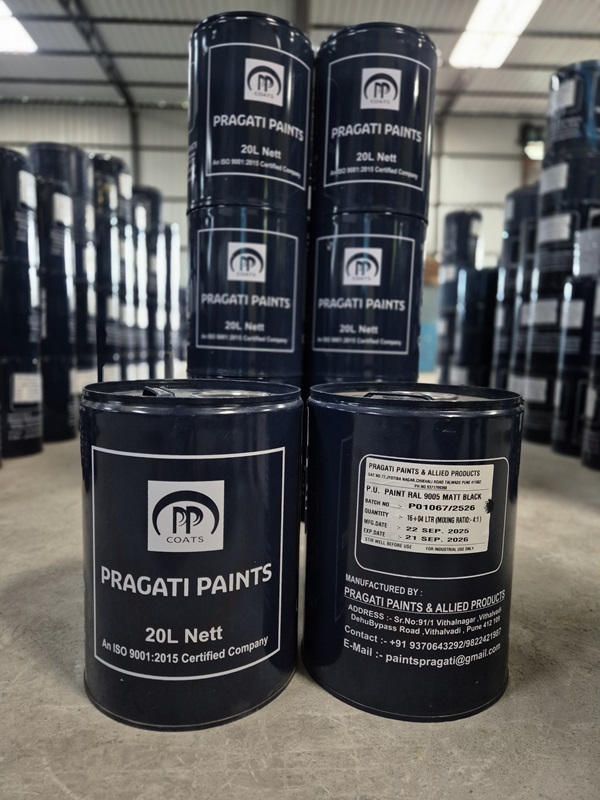 | Industrial PU Paint Premium Polyurethane Coating for Heavy-Duty Industrial Protection Industrial PU Paint RAL 9005 is a high-performance 2K polyurethane coating... View product → |