
Chlorinated rubber paint is a solvent-borne, physically drying coating whose name describes its resin chemistry, not a finish that remains soft like natural rubber. By the end, you will be able to judge whether it suits your steelwork, select the right coating system, and specify the preparation and product information needed to avoid early failure.
Key takeaways
- Choose it for chemical splash, moisture and fast recoating—not every steel structure.
- Do not apply over damp, oily or poorly prepared steel.
- Use a compatible primer when corrosion protection requires a complete system.
- Check immersion, heat, solvent and overcoating limits before specifying it.
What chlorinated rubber paint becomes after it dries
Chlorinated rubber paint is a solvent-borne coating made with chlorinated rubber resin, pigments and additives. Manufacturers produce the resin by chlorinating natural or synthetic rubber, but the finished paint is not ordinary rubber in liquid form. “Rubber paint” is a loose commercial label; identify the binder as chlorinated rubber before comparing products.
After application, solvent evaporates and leaves a continuous thermoplastic film. It does not harden through oxidative curing or chemical cross-linking. The dry film is usually tough, reasonably flexible and resistant to water, but it is not as elastic as natural rubber and should not be treated as a rubber sheet.
Thermoplastic behavior brings a useful advantage: fresh solvent can partially soften the old film, allowing a compatible recoat to fuse with it during maintenance. The same property creates a weakness. Strong solvents or an incompatible topcoat can soften, wrinkle or lift the coating, even after it looks dry.
Heat resistance is normally lower than that of a fully cured epoxy or polyurethane system. Use the product data sheet’s continuous service-temperature range rather than assuming every chlorinated rubber coating performs alike. Apply the specified film thickness; one heavy coat can trap solvent, causing slow drying or wrinkles.
A specification that says only “industrial rubber paint” leaves the resin, thickness and exposure limits unknown.
Where chlorinated rubber coating works—and where it fails
Rapid drying and easy recoating make chlorinated rubber paint useful on steel that stays above ground and faces weather, spray, or intermittent wetting. Common chlorinated rubber paint uses include structural steel, pipes, tanks, marine fittings, coastal structures, water-treatment surroundings, pool interiors, concrete floors and walls, and some traffic-marking products.
The formulation matters: a pool coating is not automatically suitable for a steel bridge.
Use this comparison to screen the exposure before specifying it.
| Exposure | Where it fits | Where it fails |
|---|---|---|
| Atmospheric weathering | Above-ground steel, machinery, pipes, marine structures, and coastal steel | Severe corrosion service without adequate preparation, thickness, and maintenance |
| Water and splash | Pool interiors, splash zones, damp concrete, and water-treatment areas | Continuous immersion unless the product data sheet gives immersion approval and test data |
| Heat | Cool to moderately warm service within the stated temperature limit | Hot pipes, exhausts, boilers, and continuous heat beyond that limit |
| Chemicals | Mild, identified contaminants when the manufacturer lists resistance | Aggressive solvents, strong acids, strong alkalis, or unknown chemical exposure |
| Abrasion | Light-duty floors, walls, and marked surfaces | Heavy traffic, impact, dragging equipment, or abrasive slurry |
“Industrial rubber paint” is not a resin specification. It can describe chlorinated rubber, acrylic elastomer, polyurethane, bituminous rubber, or another binder, so require the resin name, dry-film thickness, service-temperature range, and chemical or immersion data.
Choose epoxy or polyurethane instead when heat, solvent exposure, severe abrasion, or long maintenance intervals dominate the decision. Safety and ventilation also matter because solvent-borne products can produce substantial emissions during application.
Does steelwork need chlorinated rubber paint?
Steelwork does not inherently need chlorinated rubber paint. Select it only when the exposure, preparation method, temperature range, immersion conditions and maintenance plan match the product data sheet.
Use this checklist before choosing the system:
- Identify the exposure: dry atmosphere, coastal salt, splash zone, continuous immersion, pool water, chemicals or water-treatment surroundings.
- Set the performance target: expected service life, abrasion resistance, chemical resistance and acceptable maintenance interval.
- Check temperature: reject the coating if operating or cleaning temperatures exceed its stated range.
- Inspect the steel and access: remove rust, mill scale, oil, salts and loose old paint; demanding service may require abrasive blast cleaning.
- Test compatibility with existing paint: unknown or poorly bonded layers can detach beneath a sound new film.
- Specify the complete system: primer, intermediate coat, chlorinated rubber paint, preparation grade and dry-film thickness, assessed against ISO 12944 where structural corrosion protection is claimed.
A rubber coating for steel is not a precise technical category. “Industrial rubber paint” can describe chlorinated rubber, acrylic elastomer, polyurethane, bituminous rubber or styrene-butadiene products, so confirm the resin type rather than trusting the label.
Choose epoxy, zinc-rich, polyurethane, alkyd or another system when the structure needs higher durability, severe chemical or abrasion resistance, elevated-temperature service or continuous immersion. Chlorinated rubber paint is a poor choice if the specification cannot control recoat windows, ventilation and film thickness; excessive wet thickness can trap solvent, wrinkle and dry slowly.
Primer, topcoat, or complete system?
A chlorinated rubber coating is usually a topcoat within a compatible system, not a complete corrosion package by itself. On bare steel, the primer provides adhesion and initial corrosion control; an intermediate layer can build barrier thickness; the topcoat provides the specified finish and exposure resistance.
Use the manufacturer’s complete system when the data sheet identifies compatible primers, recoat windows and dry-film thicknesses.
“Industrial rubber paint” and “rubber coating for steel” are commercial descriptions, not precise resin classes. Confirm the binder before buying: a product sold under those terms could contain chlorinated rubber, styrene-butadiene, acrylic elastomer, polyurethane or bituminous rubber.
| System | Main advantage | Main limitation |
|---|---|---|
| Chlorinated rubber system | Fast-drying barrier for selected atmospheric or splash exposures | Thermoplastic film; temperature and chemical resistance are product-specific |
| Epoxy with polyurethane topcoat | Strong adhesion, barrier protection and better durability for demanding steelwork | Requires stricter preparation and recoat control |
| Zinc-rich primer with epoxy and polyurethane | High-performance corrosion system for defined exposure categories | Needs specified blast preparation, thickness and application control |
| Alkyd or acrylic system | Simpler maintenance coating for lower-demand atmospheric service | Weaker choice for immersion, severe chemicals or long design life |
For a defined durability claim, assess the entire system under ISO 12944: preparation grade, primer, intermediate, topcoat, dry-film thickness and environment. Do not specify only “chlorinated rubber paint” or “industrial rubber paint.”
How to prepare steel and specify the coating
Rust left under the film will keep spreading, so steel preparation matters more than the word “rubber” on the tin.
Remove oil and grease, salts, mill scale, loose rust and poorly bonded old paint; abrasive blast cleaning to the grade named in the specification, often Sa 2½ for demanding service, gives the coating a reliable surface.
1. Confirm the exposure before choosing the product. Record atmospheric or immersed service, splash-zone wetting, chemical contact, abrasion, steel temperature and required life. Do not specify only “industrial rubber paint”; name the chlorinated rubber resin, primer, dry-film thickness, temperature limit and immersion rating.
2. Apply the approved primer promptly after preparation, then apply chlorinated rubber paint within its product-data-sheet recoat window. Check steel temperature, humidity and dew-point separation; condensation can destroy adhesion. Measure each coat’s wet or dry film thickness, and use only the specified thinner and application method.
3. Test compatibility before painting existing steel. Scrape and solvent-check old layers, remove anything loose or chalking, and apply a trial patch. Unknown alkyd, epoxy or polyurethane layers can wrinkle, soften or delaminate beneath a thermoplastic coating; do not assume a new topcoat will solve that failure.
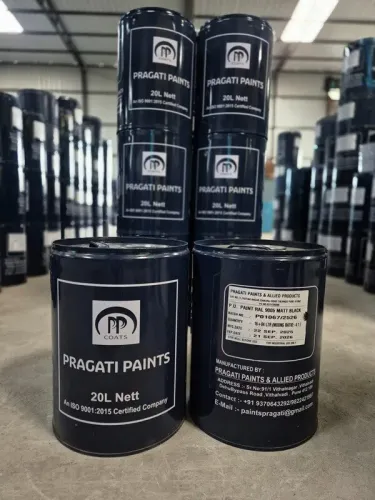
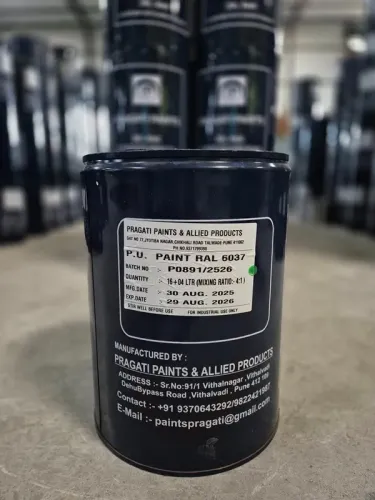
4. Request the product data sheet and safety data sheet, batch number, colour, shelf life and coverage basis. Ask Pragati Paints & Allied Products to identify the complete compatible system, not simply supply a tin labelled industrial rubber paint; compare its preparation grade and tested performance with an ISO 12944-based specification.
Related product
 | Q.D. Paints & Primer High-Performance Protective Coating for Industrial & Marine Applications. View product → |
Frequently asked questions
What does chlorinated rubber paint become after it dries?
It forms a continuous solvent-resistant film from chlorinated rubber resin, pigments and additives; it is not liquid rubber.
Where does chlorinated rubber coating work, and where does it fail?
It suits selected chemical, moisture and surface-finishing environments, but fails when exposure exceeds its temperature, solvent, immersion or adhesion limits.
Does steelwork need chlorinated rubber paint?
No. Steel needs a coating selected for its corrosion exposure, surface condition, temperature and maintenance plan; chlorinated rubber is one possible option.
Should chlorinated rubber paint be used as a primer or topcoat?
Use it as a primer, topcoat or complete system only when the product data sheet confirms that role and lists compatibility with the other coats.