
A product sold as an epoxy etch primer may be a true two-component epoxy, a conventional acid-etch wash primer, or a trade name for another chemistry. By checking the technical data sheet, matching the primer to each metal, and controlling preparation, application, drying, and inspection, you can avoid adhesion failures and incompatible coating systems.
Key takeaways
- Confirm whether the product is a reactive etch primer or two-pack epoxy.
- Remove mill scale, rust, oil, and weld residues before priming.
- Stripe-coat welds and edges before spraying or rolling broad faces.
- Record temperature, humidity, dew point, film thickness, and recoat time.
Is the product an epoxy primer, an acid-etch primer, or both?
“Epoxy paints etch primer” is not a defined technical category. Identify the chemistry before specifying it. A conventional etch or wash primer is a thin, reactive tie coat, often based on polyvinyl butyral or another resin, while a normal epoxy primer is a two-component, non-etching barrier coating that cures when resin and hardener react.
Request the current technical data sheet and confirm:
- The resin and curing mechanism, including the component ratio, intended substrates, specified dry-film thickness, and whether the product contains phosphoric acid or another metal-reactive ingredient.
- Whether it is a true epoxy etch primer, a conventional acid-etch primer, or a trade name for another chemistry.
- The approved application sequence. An etch primer and epoxy primer can be compatible layers only when the manufacturer states that sequence; they are not automatically interchangeable, and you must not mix them unless the data sheet explicitly permits it.
An etch primer is a tie coat, not a high-build corrosion barrier. It will not reliably fill an abrasive-blast profile or replace the barrier thickness of a high-build epoxy.
For ordinary carbon-steel fabrication, the system often uses epoxy primer directly over properly prepared steel. Add an etch tie coat only when the specified system requires it, such as for a named substrate or adhesion problem.
Treating every acid-etch product as an epoxy primer can produce weak adhesion, inadequate corrosion protection, or an incompatible next coat.
Which metals and preparation grades can accept the primer?
Mild and carbon steel are the clearest candidates for etch primer metal fabrication, but surface preparation determines whether the coating survives.
| Metal | Preparation required | Decision |
|---|---|---|
| Mild or carbon steel | Remove cutting oil, weld spatter, sharp burrs, mill scale, loose rust, and dust. Abrasive blast to ISO 8501-1 Sa 2½ for durable epoxy systems; St 3 power-tool cleaning is a lower-performance alternative. | Use only the specified primer system. |
| Aluminium | Degrease and abrade as the technical data sheet directs. | Obtain aluminium-specific approval; do not assume carbon-steel acid chemistry works. |
| Stainless steel | Remove oil and contamination, then use the approved abrasion or chemical treatment. | Require stainless-steel approval and preparation instructions. |
| Zinc die-castings | Clean and abrade only by the approved method. | Confirm zinc-alloy compatibility before coating. |
| Galvanized steel | Remove oil, white rust, passivation or chromate residue, and fabrication contamination. Sweep blasting or scuffing may be specified. | Confirm compatibility with the galvanizer’s treatment and the primer supplier. |
| Previously painted steel | Test adhesion, remove loose coating, feather sound edges, and verify solvent compatibility. | Apply only over a sound, chemically compatible coating. |
Match blast profile to the primer’s specified range. Check roughness with an ISO 8503 comparator or equivalent measurement; an excessively coarse profile can leave peaks under-covered at the target film thickness.
Treat soluble salts as a separate inspection item. Use ISO 8502-6 extraction followed by ISO 8502-9 conductometric assessment, because visually clean steel can still blister or corrode beneath the film.
How should a fabricator apply the coating to edges, welds, and faces?
Use this etch primer for fabrication work sequence: degrease the steel before abrasive preparation, because blasting can drive cutting oil into the surface. Keep the work area clean throughout.
1. Remove weld spatter and burrs, then grind sharp edges and weld toes to the radius specified for the coating system. Prepare the steel to the specified grade and blast profile.
2. Vacuum the surface or blow it with clean, dry air. Inspect the steel for moisture, oil, soluble salt, dust, and visible contamination before mixing any material.
3. Apply a stripe coat to edges, corners, welds, bolt heads, drilled edges, crevices, and difficult-to-reach areas. Do this before spraying the large flat faces; spray application leaves low film thickness and pinholes on projections.
4. Spray the flat faces to the specified thickness. Do not compensate for missed edges by making every panel excessively thick, because sagging, solvent entrapment, and slow curing can follow.
5. Follow the technical data sheet for the two-component resin-to-hardener ratio, mechanical mixing method, induction time, pot life, approved thinner, thinner percentage, spray nozzle, and atomising pressure. Brush application suits stripe coats but may not produce the specified finish on broad panels.
Extra thinner, hardener, accelerator, or an unapproved solvent can cause soft cure, reduced chemical resistance, pinholing, sagging, or weak intercoat adhesion. Keep mixed material in a shallow container: heat buildup in a deep container shortens pot life.
What Mumbai conditions determine drying, recoating, and inspection?
1. A nominal touch-dry time is not enough in Mumbai: monsoon humidity, evening cooling, and hot or cold steel change curing speed. Obtain the batch-specific touch-dry, handling, minimum overcoating, maximum overcoating, and full-cure times from the product data sheet at the expected material and steel temperatures.
2. Keep steel at least 3 °C above the calculated dew point during application and early cure. Check this during humid weather, after evening temperature drops, and inside hollow sections, where condensation can remain after the outside feels dry. Record air temperature, steel temperature, relative humidity, and dew point for each application area.
3. Do not recoat before the minimum interval has elapsed: the next coat can trap solvent or damage the soft film. If the maximum interval has passed, follow the data sheet’s abrasion or solvent-cleaning procedure before recoating; applying epoxy directly can cause weak intercoat adhesion.
4. After cure, measure dry-film thickness with a calibrated gauge. Define nominal, minimum local, and maximum thickness, plus inspection frequency, using ISO 19840. Acid and epoxy primers are not automatically weld-through products: remove coating from specified weld zones, then prepare and repair exposed or heat-damaged areas after welding.
Exterior steel usually needs a compatible polyurethane or polysiloxane topcoat because epoxy chalks during prolonged ultraviolet exposure.
What should you request before buying an epoxy etch system in Mumbai?
Do not approve a product from the words “epoxy etch primer” alone. Request the current technical data sheet and identify whether it is a reactive acid-etch or wash primer, a two-component non-etching epoxy, or a stated combination. Confirm the resin, curing mechanism, phosphoric acid or other metal-reactive ingredient, approved metals, and specified layer sequence.
| Option | What it provides | When it applies |
|---|---|---|
| Acid-etch primer | Thin reactive tie coat, not barrier thickness | Only where the system approves it for the metal |
| Direct epoxy primer | Thicker corrosion barrier | Prepared carbon or mild steel needing build |
| Etch plus epoxy | Layered system with stated compatibility | Only when the manufacturer specifies the sequence |
Put these items on the purchase checklist:
- Surface-preparation grade, blast-profile range, stripe-coat requirement, nominal and maximum dry-film thickness, and ISO 19840 inspection limits.
- Resin-to-hardener ratio, mechanical mixing method, induction time, pot life at the expected Mumbai temperature, approved thinner and percentage limit, application equipment, touch-dry time, minimum and maximum recoat windows, full-cure time, and repair procedure.
- Batch number, manufacture date, shelf life, safety data sheet, and current technical data sheet.
Compare the proposal with a direct high-build epoxy primer when barrier thickness matters, and specify a compatible UV-resistant polyurethane or polysiloxane topcoat for exterior steel. Ask Pragati Paints & Allied Products for these documents and substrate-specific recommendations if evaluating a local supply option.
Base the decision on the complete coating system, metal, future welding plan, and inspection records—not the word epoxy.
Related product
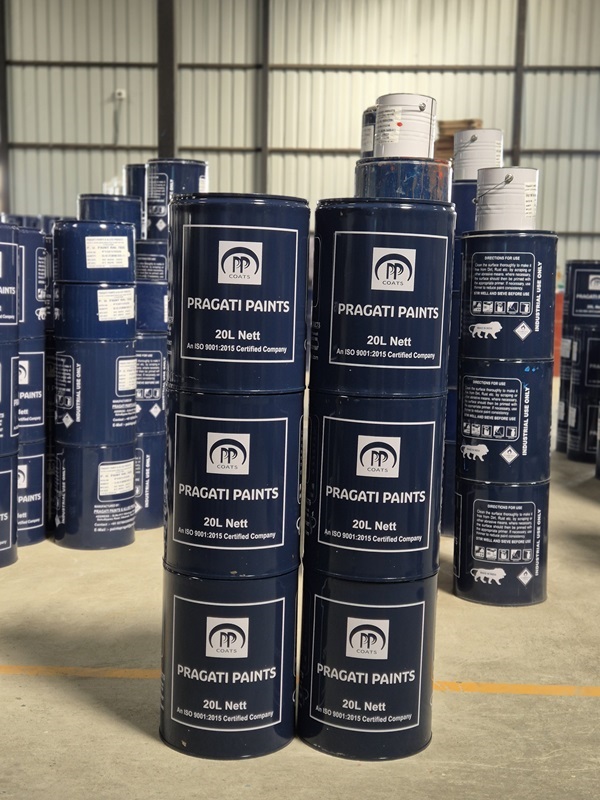 | Expoxy Paint Etch Primer – The Ultimate Solution for Superior Adhesion on Metal Surfaces When coating smooth, non-porous, or galvanized metal surfaces, achieving... View product → |
Frequently asked questions
Is an epoxy etch primer both an epoxy primer and an acid-etch primer?
Not automatically. An etch or wash primer is a thin reactive tie coat, while a conventional epoxy primer is a two-component non-etching barrier coating. Confirm the resin and hardener chemistry on the technical data sheet.
Which metals and preparation grades can accept an etch primer for fabrication work?
Check the product data sheet for approved substrates, including carbon steel, galvanised steel, aluminium, or stainless steel. Confirm whether it accepts abrasive-blasted steel, mechanically abraded surfaces, or only clean, lightly etched metal.
How should fabricators apply primer to welds, edges, and faces?
Remove weld spatter, slag, oil, and sharp burrs first. Apply a stripe coat to welds, corners, cut edges, and other low-film areas, then coat the broad faces at the specified wet-film thickness.
Which Mumbai conditions affect drying and recoating?
Measure air temperature, steel temperature, relative humidity, and dew point. Do not coat when steel is within 3°C of the dew point, and follow the product’s minimum drying and recoat times under the measured conditions.
What should you request before buying an epoxy etch system in Mumbai?
Request the technical data sheet, safety data sheet, batch number, mixing ratio, induction time, pot life, coverage or film-thickness range, substrate limits, preparation standard, drying times, and compatibility statement for the planned topcoat.