Failed or partly intact primer on factory steel cannot be recovered safely by simply adding another coat. You need to separate sound, repairable, and failed areas; verify contamination, adhesion, thickness, and compatibility; then match preparation and recoating to Mumbai’s wet, salt-laden service conditions. By the end, you will have a practical recovery sequence, rejection criteria, and maintenance plan.
Key takeaways
- Retain primer only when it is bonded, clean, dry, and corrosion-free.
- Inspect a representative grid instead of trusting one sound-looking panel.
- Match the recovery system to corrosion, heat, chemicals, and service exposure.
- Record coating checks and set clear dates or conditions for reinspection.
Decide Whether the Existing Primer Can Stay
Retain the old primer only when it is tightly bonded, clean, dry, and free from active corrosion. For epoxy paints zinc phosphate primer for recovery, inspect a representative grid rather than judging the surface from one good-looking panel.
- Keep and overcoat sound areas when the film is continuous, firmly attached, and free from blistering, flaking, rust creep, underfilm corrosion, chalking severe enough to expose pigment, oil, dampness, weld spatter, and sharp uncoated edges.
- Remove local defects when corrosion is limited to pits, edges, welds, fasteners, or damaged patches. Feather sound coating around each repair, clean to St 3 by power tool where abrasive blasting is impractical, and stripe-coat difficult geometry.
- Remove the coating completely when blisters are widespread, adhesion fails around intact-looking areas, rust runs beneath the film, oil remains after cleaning, or steel has measurable section loss. Primer cannot restore metal lost to pitting; obtain an engineering assessment before repair.
Check adhesion with a cross-cut test to ISO 2409 or pull-off testing to ISO 4624 where the specification requires quantified results. Record dry-film thickness and compare it with the original product data sheet, not an assumed nominal value. Test soluble salts under ISO 8502; a salty surface can defeat the new coat.
| Decision | Surface condition | Action |
|---|---|---|
| Retain | Sound, bonded, uncontaminated film | Abrade, clean, and overcoat within the specified recoat limits |
| Local removal | Isolated failure or corrosion | Prepare repairs to St 3 or Sa 2½ and blend edges |
| Full removal | Widespread failure or section loss | Blast, assess steel, and redesign the system |
“Restore zinc phosphate primer” does not mean painting over loose rust or damp contamination. A fully cured, glossy film also needs abrasion; solvent wiping alone will not provide a dependable key.
Prepare Mumbai Factory Steel to a Measurable Standard
Set acceptance before cleaning: exposed steel must reach the agreed ISO 8501-1 grade, not merely look brighter. For broad corrosion, specify Sa 2½ abrasive blast cleaning; reserve St 2 or St 3 power-tool cleaning for limited repairs, because it leaves a different profile and cleanliness level.
1. Map the damage before disturbing the film. Mark blisters, rust creep, flaking, chalking, weld spatter, sharp edges, coating-thickness loss, crevices, and pits. Probe suspect areas after cleaning; primer cannot replace steel lost to corrosion, so deep pitting requires filling, weld repair, or an engineering assessment of remaining thickness.
2. Remove oil, grease, process residue, and salts before abrasive work. Use a compatible detergent or alkaline cleaner, rinse with clean water, and collect the wash water rather than pushing contamination into drains or adjacent equipment. Check soluble salts with ISO 8502-6 extraction and ISO 8502-9 conductivity; set the project limit in the coating specification.
3. Blast sound exposed steel to Sa 2½, then remove dust under ISO 8502-3. For small isolated areas, use St 3 and feather the surrounding intact coating. Abrade glossy cured primer inside the recoat zone; solvent wiping alone will not provide a dependable key after the original recoat window closes.
4. Measure steel temperature, air temperature, relative humidity, and dew point. Keep steel at least 3°C above dew point during application, and stop if condensation, rain, wash water, or visible flash rust appears.
This is the preparation needed to restore zinc phosphate primer safely, not a coat over contamination; it defines epoxy primer factory metal recovery.
Choose the Recovery System for the Actual Service
Use epoxy paints zinc phosphate primer for recovery when the retained coating is firmly bonded, contamination has been removed, corrosion is localised, and the service is ordinary atmospheric exposure. Apply it as part of a compatible primer-and-topcoat system, not as the final outdoor finish: unprotected epoxy chalks under ultraviolet light and loses appearance.
| Condition | Specify | Reason |
|---|---|---|
| Sound coating with localised breakdown | Epoxy zinc phosphate primer maintenance, followed by the approved topcoat | Restores prepared bare areas without burying widespread defects |
| Severe ultraviolet exposure, immersion, chemical contact, or high heat | A system tested for that service, such as a compatible polyurethane, novolac epoxy, polysiloxane, or heat-resistant coating | Standard epoxy zinc phosphate primer may not withstand the actual exposure |
| Widespread blistering, flaking, underfilm rust, oil contamination, active crevice corrosion, or section loss | Full removal and engineering-led repair or steel replacement | Another primer layer conceals failure and cannot restore lost metal |
Do not confuse zinc phosphate epoxy with zinc-rich primer. Zinc phosphate inhibits corrosion within an organic binder; it does not provide the sacrificial galvanic protection of metallic zinc. Specify zinc-rich protection or galvanizing when that mechanism is required.
Stripe-coat welds, edges, bolt heads, corners, and crevices with a compatible material at the specified stage. If pitting has reduced steel thickness, stop coating and obtain an engineering assessment before choosing recovery. Temperature, humidity, and dew-point limits for application must come from the product data sheet and project specification.
Control Mixing, Application, and Factory Shutdown Work
A reliable repair starts with the product data sheet, not the paint pot. Confirm the resin-to-hardener ratio, induction time, pot life, thinner restriction, application temperature, steel-temperature limit, relative-humidity limit, dew-point separation, wet-film target, dry-film target, recoat window, and cure time before returning equipment to service.
Put these records in the job pack:
- Current product data sheet and safety data sheet, including the approved thinner
- Batch numbers, mix quantities, start time, induction time, and pot-life expiry
- Steel temperature, air temperature, relative humidity, and dew-point readings
- Surface-preparation acceptance, stripe-coat completion, wet-film readings, and application times
- Equipment calibration, applicator names, access permits, isolation details, and photographs
Stripe-coat welds, edges, bolt heads, corners, crevices, and other shadowed geometry with a compatible coat at the stage specified by the system. Repair pinholes, missed edges, and exposed steel after the stripe coat; do not hide these corrections as undocumented touch-ups. Keep zinc-phosphate epoxy off wet or condensing steel.
For epoxy primer factory metal recovery, measure repaired zones separately from surrounding coating and calibrate the dry-film-thickness gauge for the blast profile. Plan labour around isolation, ventilation, access, mixing intervals, recoat windows, curing time, and inspection hold points rather than the shutdown clock alone.
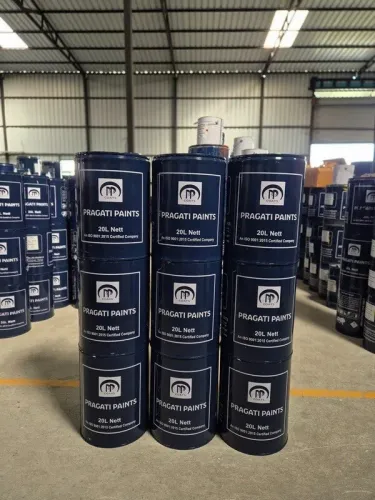
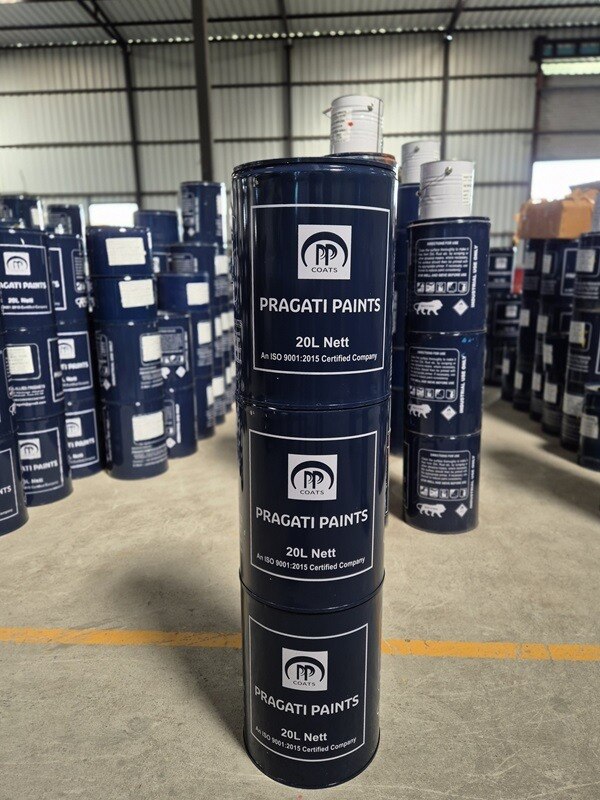
Pragati Paints & Allied Products can help confirm batch-specific mixing and recoat controls for epoxy zinc phosphate primer maintenance; record that confirmation in the work pack, not in an informal phone message.
Related products
 | Industrial Expoxy Paint Epoxy High Build Zinc Phosphate Primer Advanced Corrosion Protection for Industrial Steel Structures Industrial environments demand coatings that deliver long-lasting corrosion protection,... View product → |
 | Expoxy Paint Premium Anti-Corrosive Protection for Industrial Metal Surfaces When industries need the highest level of corrosion resistance and strong adhesion,... View product → |
Verify the Repaired Coating and Set Reinspection Triggers
Release the repair only after testing the repaired zones and representative surrounding steel. Measure dry-film thickness under ASTM D7091, calibrating the gauge for the steel substrate and blast profile; do not accept one average that hides thin edges or excessive primer. Compare readings with the product data sheet and project specification.
Confirm the epoxy primer factory metal recovery with these checks:
- Take adhesion tests on representative areas using ASTM D4541 pull-off testing, or ASTM D3359 cross-cut testing where the coating thickness and access suit that method. Record failure location, not only the numerical result.
- Verify curing through the product data sheet’s recoat and full-cure times, steel temperature, relative humidity, and dew-point records. A solvent-rub check such as ASTM D5402 applies only when the specified system permits it.
- Inspect the finish for pinholes, runs, sags, dry spray, missed edges, exposed steel, blistering, rust bleed, and incompatible topcoat defects. Check gloss or colour against the approved standard when appearance matters.
- Confirm that the zinc phosphate primer has its required compatible topcoat in UV-exposed or weather-facing service; exposed epoxy can chalk even while steel protection remains.
Set the next inspection by service severity and failure evidence, not by the city name alone. Epoxy zinc phosphate primer maintenance needs shorter intervals for coastal air, washdown, chemical fumes, standing water, or repeated impact. Record the inspection date, locations, thickness readings, adhesion results, photographs, and environmental exposure.
| Condition | Action |
|---|---|
| Any blistering, rust creep, or peeling | Inspect immediately and repair the affected zone |
| Process change, impact, leak, or washdown failure | Reinspect after the event |
| Stable sheltered indoor steel | Use the project maintenance interval |
| Coastal or chemical exposure | Set a documented shorter interval after baseline inspection |
Frequently asked questions
When can existing zinc phosphate primer remain on factory steel?
Keep it only when the primer is tightly bonded, clean, dry, and free from active corrosion. Inspect a representative grid across the installation before deciding.
How should Mumbai factory steel be prepared before recovery coating?
Remove loose coating, contamination, and active corrosion, then define and record a measurable surface-preparation standard before painting.
How do you choose an epoxy recovery system for factory metal?
Match the system to the actual service: corrosion exposure, heat, chemicals, moisture, abrasion, and the condition of the retained primer.
What must you verify after repairing the coating?
Check surface condition, application records, curing, adhesion, dry-film thickness, visible defects, and the triggers for the next inspection.