
Finished steel is not ready for paint when welding and grinding stop. You need to verify the steel, remove contamination, control condensation, select a coating system for the exposure, and distinguish factory application from field repair. By following that sequence, you can decide where synthetic paint fits and reject it when the service demands a stronger system.
Key takeaways
- Reject steel with oil, dust, weld spatter, or unresolved fabrication damage.
- Paint only after welding, grinding, drilling, trial assembly, and dimensional checks finish.
- Control surface preparation, weather, film thickness, and drying between coats.
- Choose coating systems for exposure and repair access, not litre price alone.
Set the finished-steel acceptance gate before painting
A fabricated steel item is ready for painting only after every operation that can damage its surface is complete: welding, grinding, drilling, cutting, trial assembly, and dimensional checks. The final fabrication date is not an acceptance date.
1. Inspect welds for visible cracks, pinholes, undercut, slag inclusions, spatter, and abrupt transitions. Remove burrs, round exposed edges and corners, and smooth sharp weld profiles that could receive a thin film.
2. Confirm that bolts, cut-outs, gussets, drains, and concealed faces remain accessible for preparation and coating. Remove trapped water from boxed sections and horizontal pockets; the steel must be dry.
3. Measure steel temperature and calculate dew point. Keep the steel about 3 °C above dew point during painting and early curing, or condensation can form beneath a sound-looking coating.
4. Complete synthetic paints fabrication in this order: finish fabrication, inspect welds and treat edges, clean the steel, apply primer, stripe-coat welds and difficult geometry, apply specified intermediate coats, then apply the synthetic topcoat after the stated recoat interval.
5. Approve a coating schedule before work starts. It must name the preparation grade, products, nominal dry-film thickness, stripe coats, and inspection criteria.
This gate prevents a costly mistake in synthetic paints for finished steel fabrication: painting areas that will later be drilled, welded, or heavily ground, then dismissing the exposed steel as a minor scratch.
Prepare steel and control the conditions that determine adhesion
Adhesion depends on what remains after cleaning, not on how bright the steel looks. Before applying synthetic paints for steel, remove every barrier between coating and sound metal; otherwise mill scale or rust can keep corrosion active beneath the film.
1. Solvent-clean oil and grease before mechanical preparation. Remove cutting residue, dust, welding slag, spatter, and poorly bonded old paint. Oil causes fisheyes and weak adhesion; dust forms a loose intercoat layer, while soluble salts draw moisture through the coating.
2. Use abrasive blasting when the specification requires it. Record the ISO 8501-1 grade: Sa 2, Sa 2½, or Sa 3. Where the project permits hand or power tools, use St 2 or St 3 instead.
3. Measure the blast-created anchor profile with the agreed comparator or gauge, not by appearance. A coarse profile can leave peaks under-covered by a thin primer; a shallow profile reduces mechanical keying.
4. Remove abrasive dust after preparation, then recheck for soluble salts, remaining contamination, and flash rust. Do not paint over any of them.
5. Check condensation before and during painting. Keep steel about 3 °C above the calculated dew point; recently washed or blasted steel can remain colder than surrounding air. Condensation under the coating damages adhesion.
These controls are central to synthetic paints metal finishing. A smooth-looking surface is not necessarily clean, and skipping one check can turn a sound synthetic coating into early blistering, peeling, or under-film corrosion.
Build and apply the synthetic coating system without trapping defects
In synthetic paints fabrication, synthetic paint means an air-drying alkyd, modified-alkyd, or synthetic-enamel system. Its film cures mainly through oxidative cross-linking, not solvent evaporation alone.
1. Obtain the technical data sheet before mixing or thinning. Confirm the resin type, compatible primer and topcoat, volume solids, regulatory VOC, allowable thinner, application method, minimum and maximum recoat intervals, curing temperature, and recommended dry-film thickness (DFT).
2. Apply the specified primer to prepared steel. Stripe-coat welds, edges, corners, bolt heads, cut-outs, and other low-build areas before or between full coats; spraying extra passes across a flat panel will not reliably protect its edges.
3. Apply the intermediate coat and finish coat in the stated sequence and within the recoat window. Calculate wet-film thickness (WFT) as required DFT divided by the volume-solids fraction. At 60% solids, 100 µm WFT produces about 60 µm DFT before application losses when the target is 60 µm.
4. Measure final DFT under a defined plan such as ISO 19840, using readings across the item rather than one convenient spot. Do not treat excess thickness as extra protection: a fast skin over a soft under-film can trap solvent and cause wrinkling, sagging, mud-cracking, slow oxidative cure, or poor intercoat adhesion.
Low temperature, high humidity, weak ventilation, and condensation extend handling and service times. Surface-dry does not mean ready for stacking, recoating, or synthetic paints industrial use.
Match the system to exposure instead of choosing by litre price
Choose synthetic paint only after defining the steel’s exposure and maintenance plan. “Synthetic” describes an air-drying alkyd, modified-alkyd, or enamel family; it does not establish immersion resistance, chemical resistance, corrosion life, or service temperature.
| Exposure or requirement | Suitable direction | Decision point |
|---|---|---|
| Dry indoor steel, C1–C2 atmospheric service | Alkyd or modified-alkyd system | Use the specified preparation, DFT, colour, gloss, and maintenance interval |
| Outdoor rain, humidity, and UV, C3–C5 | Specified alkyd system or a higher-performance system | Check UV resistance, corrosion category, cleaning, and recoat needs |
| CX, marine, offshore, immersion, chemicals, or severe abrasion | Epoxy, polyurethane, vinyl ester, zinc-rich, zinc-silicate, or another service-specific system | Confirm every coat’s compatibility and service limits |
| Heat, buried steel, or fireproofing | Dedicated high-temperature, buried-service, or fire-protection system | Do not treat ordinary synthetic paint as the default |
ISO 12944 categories run from C1 through C5 and CX. Its durability figure means expected time to first major maintenance, not a warranty. Consider humidity, rain, UV, chemical contact, abrasion, heat, colour, gloss, cleaning regime, and the required maintenance interval before comparing litre prices.
Painted galvanized steel needs separate approval: smooth zinc, passivation, white rust, oil, and alkaline residue can defeat adhesion. For synthetic paints for steel, use a primer approved for galvanized surfaces.
In synthetic paints industrial use, Pragati Paints & Allied Products can help assemble a primer, intermediate, and finish-coat schedule, but the exposure category and technical data sheet must control selection.
Related products
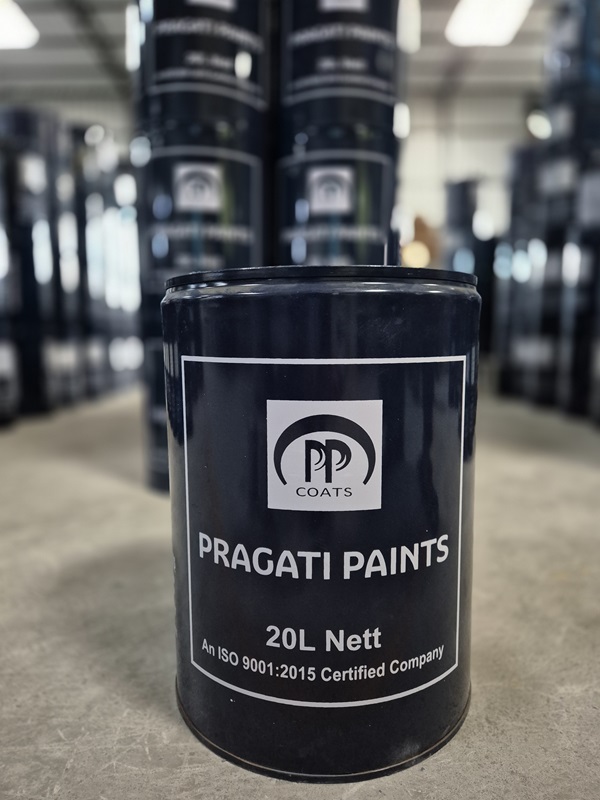 | Synthetic Paints & Primer Durable, Affordable & Versatile Coating Solution for All Surfaces Synthetic paints are among the most widely used industrial and household coatings... View product → |
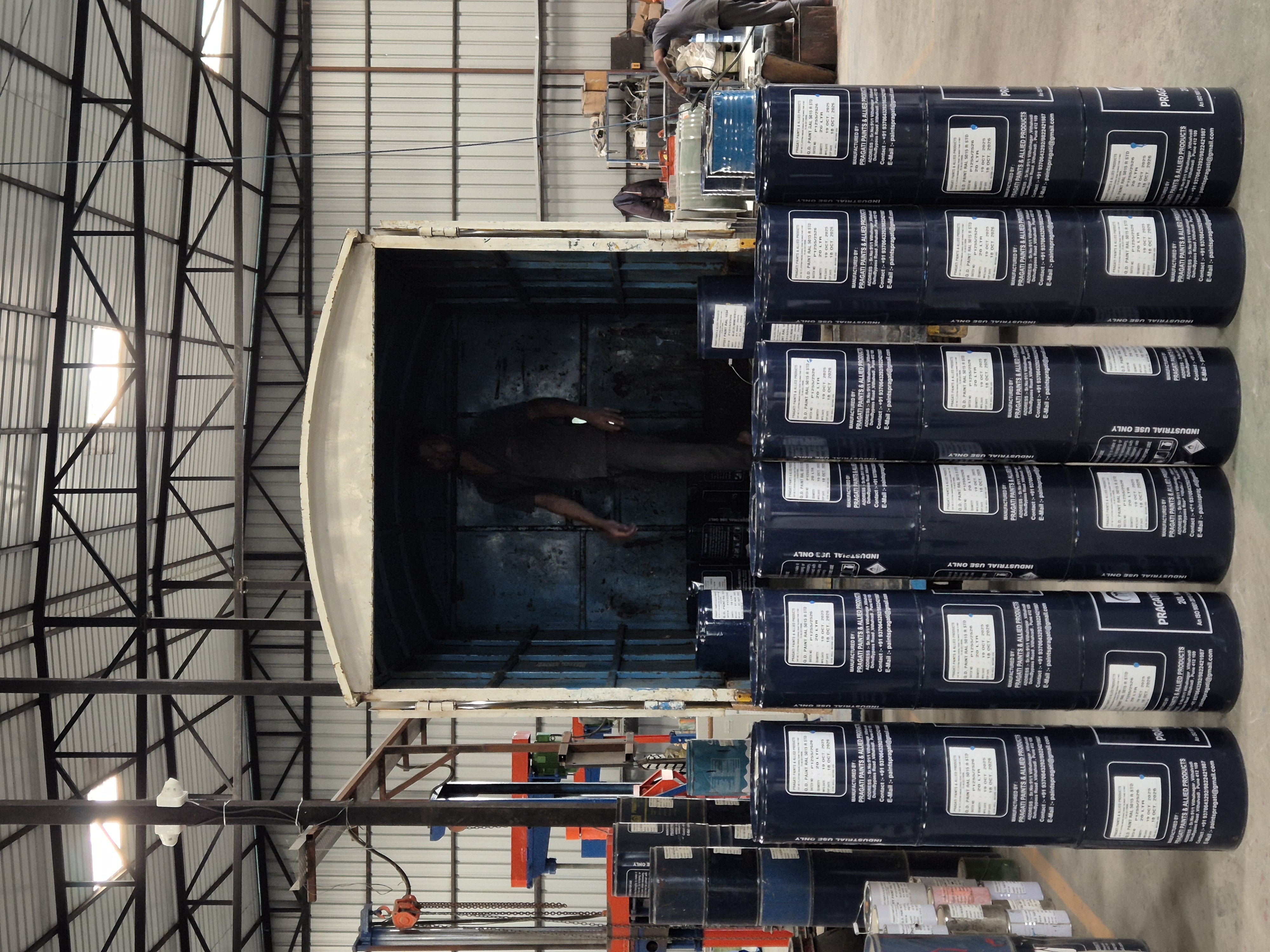 | Industrial QD Paint Synthetic Primer – The Perfect Base Coat for Smooth, Durable & Long-Lasting Painting Results When it comes to painting metal, wood, or general... View product → |
Separate workshop coating from transport, erection, and site repairs
Workshop coating ends when fabrication is complete; transport, erection, and site work require a controlled repair process, not a quick brush-over. Chains, lifting points, stacking, bolting, drilling, grinding, impacts, and site welding can expose steel or damage the cured film.
1. Map every damaged area and decide whether the defect reaches steel. Mark bare metal, rust, loose coating, weld spatter, and impact damage before cleaning.
2. Remove rust, weld slag, spatter, salts, grease, dust, and loose paint. Use the specified preparation grade, such as Sa 2½ for abrasive blasting or St 3 for power-tool cleaning. Feather sound coating around the repair and abrade the intact boundary; new paint will not bond reliably to a glossy edge.
3. Apply the specified repair primer and topcoat. Do not substitute a general synthetic enamel or paint over contamination. For site welds, clean the weld and heat-affected zone, prepare the surrounding steel, and reinstate the complete coating sequence.
4. Test an existing film before repainting it. Identify its binder, check adhesion and chalking, clean and abrade it, then run a small compatibility trial. A strong solvent in the new coat can soften or wrinkle an incompatible film.
5. Record batch numbers, temperatures, dew point, preparation grade, wet-film readings, final DFT, repair locations, and recoat times. Check VOC limits, flash point, ventilation, and flammable-material controls before industrial use.
This record-based workflow keeps synthetic paints for finished steel fabrication and synthetic paints metal finishing from becoming uncontrolled touch-up work after delivery.
Frequently asked questions
When is finished steel ready for painting?
Paint after welding, grinding, drilling, cutting, trial assembly, dimensional checks, and every operation that could damage the surface are complete.
How do fabricators prepare steel for synthetic paint?
Remove oil, grease, dust, rust, weld spatter, sharp edges, and other contaminants, then verify the surface and application conditions before coating.
How should you choose synthetic paints for steel fabrication?
Match the coating system to exposure, corrosion risk, temperature, handling, and repair requirements instead of comparing only litre prices.
What happens after workshop painting?
Protect the coating during transport and erection, inspect for damage, and complete compatible site repairs before handover.
Related products
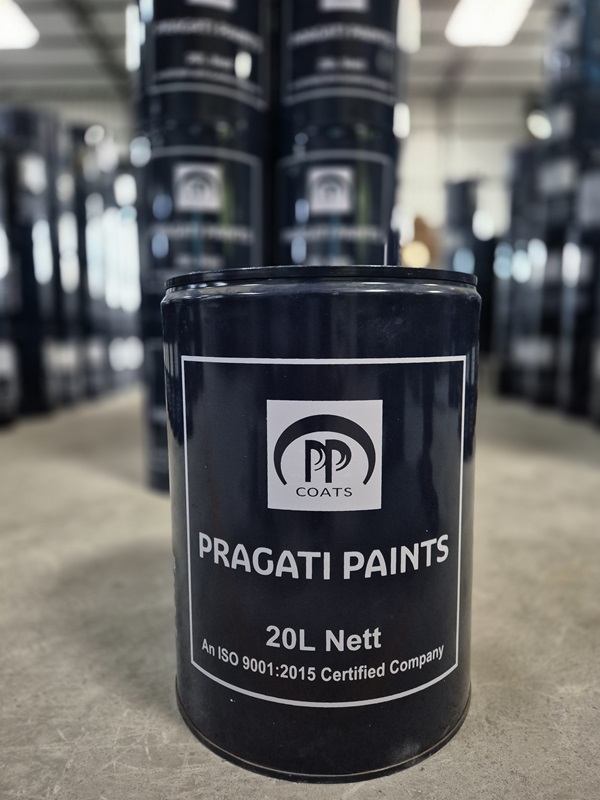 | Industrial QD Paint Alkyd Base Zinc Phosphate Primer Reliable Anti-Corrosive Protection for Metal Surfaces Alkyd Base Zinc Phosphate Primer is one of the most trusted primers in the industrial and... View product → |
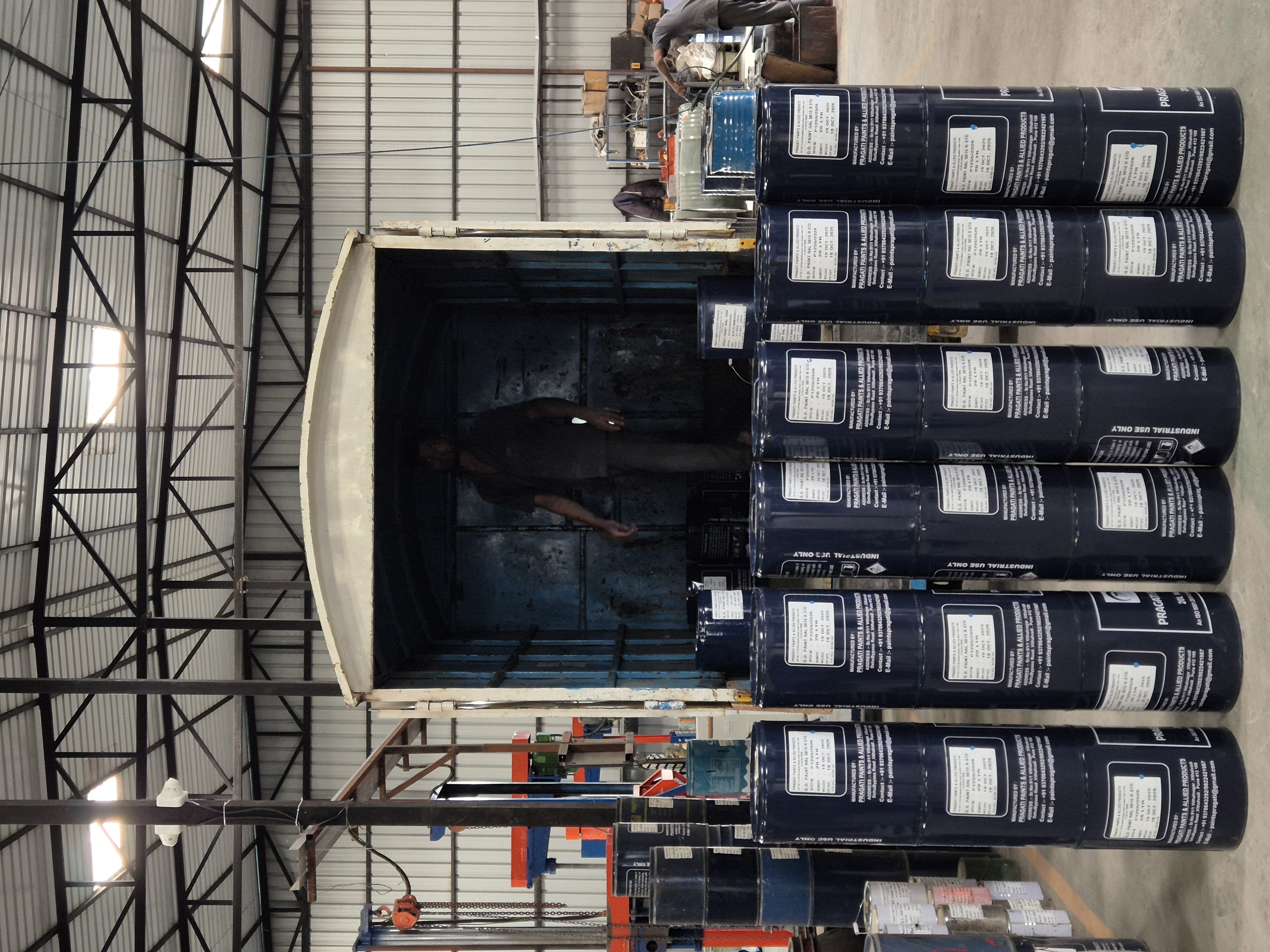 | Q.D. Paints & Primer Q.D. Paints Fast-Drying Industrial Coatings for Quick & Efficient Protection In fast-paced industrial environments, reducing downtime while ensuring high-quality... |