
PU primer earns its extra preparation and handling time when equipment needs a durable, abrasion-resistant system with fast return to service, but it is not automatically the best corrosion primer for every plant surface. You will be able to judge the coating by substrate, exposure, preparation standard, cure schedule, safety controls and installed cost before approving the work.
Key takeaways
- Use PU primer where sunlight, abrasion, oils or cleaning chemicals challenge simpler coatings.
- Reject application over oil, dust, rust scale, moisture or surfaces outside the product data sheet.
- Record mixing ratio, induction time, pot life, wet-film thickness and recoat window.
- Compare quotations by preparation, coating thickness, materials, testing and warranty—not litres alone.
When is PU primer worth the extra maintenance time?
PU primer is worth the extra preparation, mixing, application and recoat time when service exposure will damage a simpler coating. Industrial PU primer uses include machine frames, guards, panels, pumps, compressors, conveyors and fabricated steel exposed to sunlight, abrasion, oils, cleaning chemicals, repeated handling or a chemically resistant PU finish.
PU primer for machinery maintenance is less defensible for low-exposure indoor assets.
“PU primer” covers 1K moisture-cured, 2K polyol/isocyanate, solvent-borne, water-borne, zinc-phosphate and adhesion-promoting products. Define the service first: dry indoor, humid process area, chemical splash, immersion, outdoor UV or high temperature. Then check the complete coating system against the project specification or ISO 12944 corrosivity category.
| Substrate | What to verify | Why the choice changes |
|---|---|---|
| Carbon steel | Blast cleanliness and profile | A primer suited to blasted steel may fail elsewhere |
| Galvanised steel | Degreasing, light abrasion and adhesion testing | Smooth zinc can reject an unsuitable primer |
| Aluminium | Oxide removal and a compatible adhesion promoter | Steel primers may lose adhesion |
| Concrete | Moisture, alkalinity, porosity and compatible sealer | PU film can blister or detach |
| Wood | Moisture, sanding and edge sealing | Absorption can create uneven film thickness |
| Previously painted surfaces | Adhesion, solvent sensitivity and compatibility | A sound old coating can still lift |
Choose PU when finish durability, abrasion resistance, appearance retention and return-to-service justify the work. Choose another system when corrosion-barrier performance or minimal touch-up complexity matters more. Badly contaminated equipment, a shutdown too short for preparation and cure, or an indoor asset with little exposure makes PU poor value.
A p u primer for industrial maintenance work in sambhaji nagar is therefore an exposure decision, not a product-name decision.
What preparation and field checks determine whether PU primer will hold?
A PU primer will not rescue a contaminated or poorly prepared surface. For p u primer coating work, complete this sequence before opening the primer:
- Isolate the equipment, stop nearby dusty work, and clean the surface.
- Degrease oil and grease with a cleaner confirmed compatible with the substrate and primer.
- Remove loose paint, rust, dirt, salts, mill scale and welding residues. Do not coat over mill scale or loose rust.
- Remove weld spatter and round sharp edges so the film does not thin or break at projections.
- Abrasive-blast carbon steel to the cleanliness grade and surface profile stated in the product data sheet or project specification.
- Use power-tool abrasion only where blasting is impractical; it is a compromise, not an equivalent substitute.
- Remove dust with clean, dry compressed air or a vacuum, then confirm the surface is dry.
Feather the edges of intact old paint. Test unknown, alkyd, chlorinated-rubber and bituminous coatings for adhesion, solvent sensitivity and compatibility; apply a trial patch, then use cross-cut or pull-off testing before broad application.
Record visible cleanliness, substrate moisture, air temperature, substrate temperature, relative humidity and dew point. Keep the substrate several degrees above dew point with no condensation; use the exact margin in the data sheet or specification.
Monsoon rain, high humidity, plant dust and water in compressed air, thinner or tools can cause bubbling, foaming, pinholes, gloss loss and poor intercoat adhesion. Moisture-cured PU still needs protection from rain, condensation and standing water during p u primer applications in sambhaji nagar.
How should you mix, apply and recoat PU primer during a shutdown?
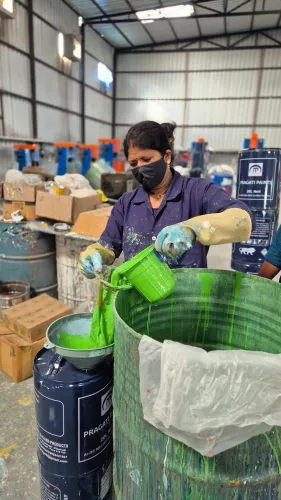
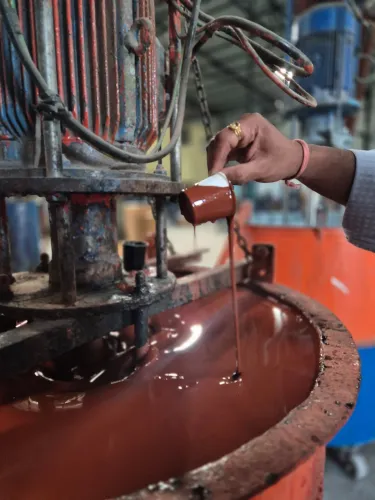
After preparation, treat one-pack and two-pack PU primers as different jobs. Stir a one-pack product as directed and keep its container closed. For a 2K polyol/isocyanate system, use the specified resin-to-hardener ratio, mix completely, allow the stated induction time where applicable, and write the pot-life expiry on the container.
During PU primer coating work, use this shutdown checklist:
- Never guess a partial-kit ratio or add extra thinner; unreacted material can reduce hardness and adhesion.
- Discard material after pot life; late use can create uneven cure across one machine or plant section.
- Set a target dry-film thickness, permitted range, wet-film gauge method and dry-film verification.
- Correct under-application, holidays and weak coverage; excessive thickness can prolong solvent release, wrinkle, crack or damage recoat adhesion.
- Record temperature and humidity, then follow minimum and maximum recoat intervals for those conditions—not only a cure time at 25 °C.
Brush-and-roller touch-up on operating plant is less forgiving than a single-pack maintenance coating because access, mixing control and pot life are limited. If the specification permits, a lower-performance spot-repair product can be safer for a small repair; accept lower durability or chemical resistance as the trade-off.
For industrial PU primer uses involving spraying, read the product SDS and provide ventilation, skin and eye protection, suitable respiratory protection, and applicable Indian occupational-safety controls. A nuisance-dust mask is not an adequate substitute.
Should you choose PU primer or epoxy primer for the service?
Epoxy is usually the stronger starting point when barrier protection, adhesion to prepared steel, chemical exposure or immersion controls the specification. PU becomes more defensible as the exposed finish, where UV stability, colour and gloss retention, abrasion resistance and maintenance appearance matter.
| Option | Main strength | Best fit |
|---|---|---|
| Epoxy primer | Barrier protection and prepared-steel adhesion | Structural steel, plant equipment and chemical service |
| Standard PU primer | Finish compatibility and appearance retention | Systems needing a PU finish and outdoor exposure |
| PU Zinc Phosphate Primer | Anticorrosive pigment package | Corrosion-exposed maintenance where the full system supports it |
For industrial PU primer uses, select a complete primer, intermediate and topcoat system rated for the named chemical, concentration, temperature and immersion condition. Do not infer an immersion rating from the word “industrial” or from the primer alone.
For structural steel and plant equipment, epoxy can provide the corrosion-control foundation while PU supplies the exposed finish; confirm intercoat compatibility and the manufacturer’s minimum and maximum recoat window.
For PU primer for machinery maintenance, test previously painted machinery before choosing either system. A sound old film that is incompatible with the new coating can lift across a large area, so check adhesion, solvent sensitivity and compatibility on a trial patch.
Choose by exposure and the full coating sequence—not by primer price in isolation. Use zinc phosphate when corrosion exposure justifies it, but approve the complete tested system, not merely the pigment label.
How can you compare a PU primer quotation before approving the work?
A quotation for PU primer for industrial maintenance work in Sambhaji Nagar is comparable only when it states the installed result, not just the drum price. Check these fields before comparing suppliers:
| Item | Require in quotation | Why it matters |
|---|---|---|
| Resin and cure | 1K moisture-cured or 2K polyol/isocyanate; mixed ratio and pot life | Wrong ratios and expired pot life cause soft, uneven films |
| Film and coverage | Solids by volume, target and permitted DFT, wet-film method, expected coverage | Low solids can mean extra coats |
| Cure schedule | Touch-dry, through-cure, minimum and maximum recoat intervals at expected temperature and humidity | Recoat delays extend shutdowns |
| Application limits | Thinner limit, surface-preparation grade, temperature, humidity and dew-point limits | Excess thinner weakens protection |
| Maintenance plan | Repair procedure and topcoat compatibility statement | Future patching may fail across an incompatible film |
Price the whole job: degreasing, rust and paint removal, blasting or mechanical abrasion, masking, access, mixing losses, ventilation, inspection, extra coats, shutdown time and recoat delays. A low price per litre can conceal short pot life or mandatory additional coats.
For PU primer applications in Sambhaji Nagar, require a weather-dependent method statement covering monsoon humidity, rain, dust and recorded dew-point readings. Request the technical data sheet, safety data sheet, batch number and shelf life.
Pragati Paints & Allied Products is useful when it supplies traceability, substrate-specific advice and repair guidance for comparing PU, epoxy or simpler coatings.
Approve only when the schedule fits the shutdown, the substrate can meet the specified condition, the crew can control application and the complete system suits exposure; otherwise choose a simpler or more corrosion-focused alternative.
Related products
 | Industrial PU Paint P.U. Primer (Polyurethane Primer) is a high-quality base coat specially formulated to enhance adhesion, improve surface uniformity, and increase the overall... |
 | Industrial PU Paint High-Performance Anti-Corrosive Coating for Industrial Protection When it comes to long-lasting metal protection, P.U Zinc Phosphate Primer stands... View product → |
Frequently asked questions
When is PU primer worth the extra maintenance time?
PU primer is worth it when equipment faces sunlight, abrasion, oils, cleaning chemicals, repeated handling or a chemically resistant PU finish. Typical uses include machine frames, guards, panels, pumps, compressors, conveyors and fabricated steel.
What preparation and field checks determine whether PU primer will hold?
Remove oil, grease, dust, rust scale and loose coating before application. Check surface profile, dryness, dew point, ambient conditions, product shelf life, batch number and substrate temperature against the product data sheet.
How should you mix, apply and recoat PU primer during a shutdown?
Confirm the specified base-to-hardener ratio, mix thoroughly, observe the stated induction time, track pot life, apply the specified wet-film thickness and recoat within the product data sheet window. Record temperature, humidity and application times.
Should you choose PU primer or epoxy primer for the service?
Choose PU primer when sunlight, colour retention or a PU topcoat matters. Choose epoxy primer when adhesion, corrosion resistance and chemical or immersion service dominate. Select the complete coating system, not primer alone.
How can you compare a PU primer quotation before approving the work?
Compare surface-preparation grade, primer and thinner quantities, specified dry-film thickness, number of coats, application method, curing and recoat times, inspection records, access equipment, waste, testing and warranty terms.